
Rethinking Governance: Engaging the Digital Citizenry via Social Injection
15846_Rethinking governance via social networking the case of direct vs. indirect stakeholder injection.
The paper introduces the WeGov Project, a framework and toolkit designed to bridge e-Governance and e-Society by leveraging existing Social Networking Sites (SNS) like Facebook and Twitter. Its core contribution is the distinction between "Direct" and "Indirect" stakeholder injection to facilitate two-way policy dialogues.
TL;DR
The WeGov Project shifts the e-Participation paradigm from isolated government websites to the heart of the social web. By introducing the concepts of Direct and Indirect Stakeholder Injection, it allows policy makers to seed, monitor, and analyze public debates on platforms like Facebook and YouTube, turning social noise into actionable policy insight.
Background: Why "Bespoke" Government Platforms Fail
For years, e-Governance has been synonymous with "bespoke" portals—official websites where citizens are expected to register and voice opinions. These sites often become digital ghost towns. The WeGov Project recognizes that the "e-Society" already participates in vibrant discussions on Social Networking Sites (SNS). The challenge isn't to build a new platform, but to bridge the gap between policy makers and the platforms where citizens already live.
The Core Mechanism: Direct vs. Indirect Injection
The breakthrough of this research lies in the distinction between how a politician enters a digital conversation:
- Direct Injection: The policy maker acts as a first-class citizen of the SNS (e.g., posting a statement on their own Facebook wall).
- Indirect Injection: This is the "clout tracking" of the political world. It involves tracking how a politician’s statement—made in a newspaper or a speech—is cited, shared, and debated by third parties across the web.
Methodology & Toolset
The WeGov toolkit acts as a centralized dashboard for the "Feedback Life Cycle." It enables:
- Seeding & Monitoring: Creating threads on YouTube or Facebook and tracking the subsequent engagement.
- Analysis: Using "Hot Topic" and "User Behavior" analysis to find which comments have the highest impact on a debate's trajectory.
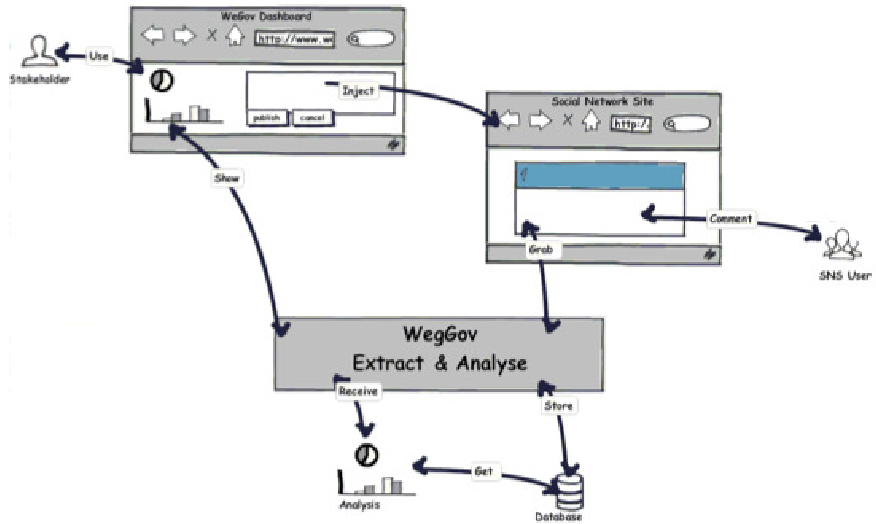 Figure 1: The WeGov prototype workflow illustrating the feedback loop between policy makers and SNS users.
Real-World Evidence
The paper highlights a case study of Christian Lindner, a prominent German politician. By analyzing its "Direct Injection" on Facebook regarding women's leadership quotas, the team could identify "impact comments"—posts that fundamentally shifted the tone or frequency of the debate.
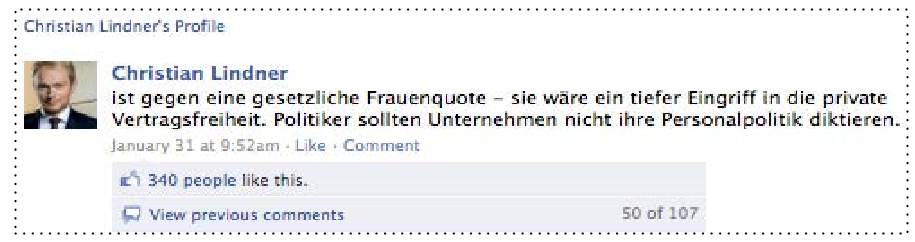 Figure 2: Analysis of Christian Lindner's direct statement, which garnered significant public interaction.
Furthermore, the "Indirect Injection" case showed that even when a party (like the CSU) uploads a video to YouTube, the most critical discussions often happen on third-party news walls (like Spiegel Online). The toolkit catches these "echoes," ensuring policy makers aren't blind to critiques happening outside their immediate view.
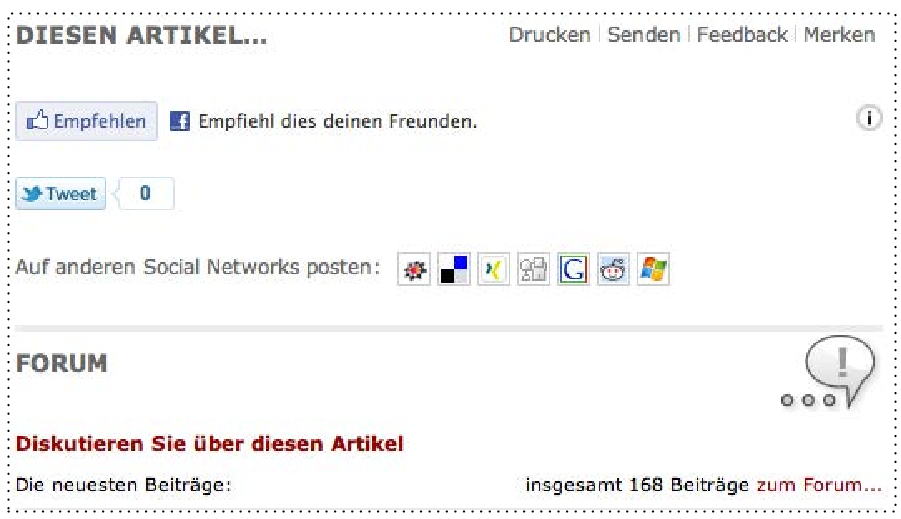 Figure 5: Example of a statement being discussed on a news site, representing an indirect injection point.
Critical Insight: The "Shadow" Discourse
The study's most profound finding is that Indirect Injection might be more valuable than Direct. Because many politicians lack the time or inclination to manage a personal SNS profile, their digital presence is often defined by others. By providing a tool to monitor this "shadow discourse," WeGov offers a more transparent and inclusive view of public opinion than any official survey could.
Conclusion & Future Outlook
The WeGov Project demonstrates that modern governance is an adaptive system. By moving away from rigid, government-centric portals toward a flexible, injection-based model, policy makers can foster a sense of urgency and transparency. The next frontier? Refining the search algorithms to better detect "indirect" citations in the increasingly fragmented landscape of decentralized social media.