
20 Years of IT Professional: A Masterclass in Bridging the Academia-Industry Divide
13234_Retrospectives and Reflections 20 Years of IT Professional.
This commemorative article celebrates the 20th anniversary of IEEE IT Professional, documenting its evolution from a practitioner-focused niche magazine to an ISI-indexed scholarly publication. It features reflections from the advisory chair and four past Editors-in-Chief (EICs) on bridging the gap between computer science theory and IT industry practice.
TL;DR
In a field where the "bleeding edge" moves at lightning speed, IT Professional has survived and thrived for two decades. This retrospective chronicles its transformation from a marginalized practitioner's newsletter to a prestigious, ISI-indexed scholarly magazine. It explores the delicate balance between theoretical rigor and the practical "how-to" needed by industry executives.
The Strategic Intuition: Beyond Theoretical Ivory Towers
In 1997, the IEEE Computer Society was a bastion of pure computer science. Practitioners—the electrical engineers and IT managers building the real Windows 98 and the first commercial lithium-ion systems—felt like outsiders. The founding of IT Professional was not just a launch; it was an act of "plotting" by industry veterans to broaden the Society’s scope.
The core motivation was clear: theory is essential, but the implications of emerging technologies (like the then-imminent Y2K bug) required a different kind of expertise—one that combined technical depth with management intuition.
Methodology: The "T-Shaped" Editorial Evolution
The article details how the magazine overcame the "volunteer fatigue" of its early years through a structured four-stage evolution:
1. The Practitioner Foundation (1999–2001)
Led by Bill Chou, the magazine established its identity. The focus was tutorial-based content designed to enhance readers' skills in managing enterprise systems.
2. The Thematic Pivot (2002–2005)
Frank Ferrante introduced the concept of "Floating Topics" alongside core themes. This allowed the magazine to react to global shifts like 9/11 and offshoring, proving that IT does not exist in a vacuum.
3. The Academic Integration (2010–2013)
Simon Liu’s tenure was the "Golden Era" of scaling. By enlisting in the ISI Index, the magazine provided the necessary "prestige" (low acceptance rates and high citation counts) to attract academic researchers, while doubling download counts.
4. Community Expansion (2014–2017)
San Murugesan broadened the magazine’s reach into conferences, launching the IT in Practice (ITiP) symposium to create a physical space for the dialogue between researchers and developers.
 Figure 1: Reflections from the pioneers who shaped the bridge between deep theory and professional practice.
Institutional Results: Quantifying Success
The impact of these strategic shifts wasn't merely qualitative. The retrospective highlights several key performance indicators (KPIs):
- Engagement: A 100% increase in manuscript submissions and article downloads within a four-year window.
- Diversity: Editorial boards transitioned from local pools to including editors from nine countries and a 50/50 split between academia and industry.
- Longevity: Coverage evolved seamlessly from RFID and Grid Computing in 2004 to Deep Learning and cybersecurity in 2018.
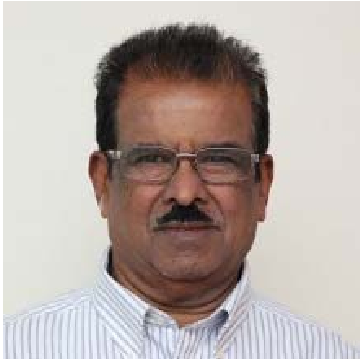 Figure 2: The trajectory of IT Pro, showing its expansion into specialized departments and global symposia.
Critical Insights: Deepened Professionalism
The magazine’s survival is attributed to the "T-shaped professional" philosophy. To be relevant today, an IT professional needs:
- Horizontal Breadth: Understanding socio-economic impacts, ethics, and diverse technology management.
- Vertical Depth: Mastery of a specific niche (e.g., Cloud Computing or Cybersecurity).
The Limitation: The article acknowledges that in the early days, operating within the IEEE Computer Society’s culture was difficult. The traditional "metrics of quality" (low acceptance rates) were often at odds with the need for timely, practical tutorials.
Conclusion: Preparing for the Next 20 Years
The journey of IT Professional serves as a blueprint for technical communication. It proves that a publication survives not just by reporting on tech, but by providing a "trusted source of unbiased views" that helps professionals avoid technological obsolescence.
As we enter a "new digital landscape," the magazine’s mission remains the same: ensuring that the people who build our digital world stay "professionally fit."