
Digital Footprints as Evidence: Modernizing OSN Investigations
A Review of Using Online Social Networks for Investigative Activities
This paper reviews the role of Online Social Networks (OSNs) in law enforcement, proposing a forensic framework that integrates behavioral and emotional analysis. It evaluates current investigative practices and criminal trends—ranging from digital identity theft to OSN-facilitated "classical" crimes—supported by a quantitative study of law enforcement professionals in Turkey.
TL;DR
Social media has moved beyond a platform for connection to a primary arena for both digital and "classical" crimes. This paper explores how law enforcement utilizes Online Social Networks (OSNs), proposes an improved forensic framework centered on emotional and behavioral visualization, and highlights the significant gap between the potential of OSN data and current legal/technical capabilities in law enforcement agencies.
The Shift: From Socializing to Crime Facilitation
The transition of criminal activity to OSNs is bifurcated into two categories:
- Classical Crimes: Burglary and kidnapping facilitated by over-sharing location data. For instance, the paper cites that 78% of burglars use Facebook and Twitter to select targets.
- Digital Crimes: Cyber-stalking, social engineering, and identity theft where the network itself is the medium.
The authors argue that we are no longer just looking for "files" but for "behaviors." The current bottleneck is not the lack of data, but the lack of a systematic framework to turn social noise into actionable evidence.
Methodology: The Behavioral Forensics Framework
The researchers propose a structured approach to OSN forensics that moves beyond simple data scraping.
1. The Multi-Tiered Investigation Model
Investigation is categorized by scale:
- Private: Murder, rape, or kidnapping.
- National: Domestic violence and civil unrest.
- Global: Organized crime and terrorism.
2. Behavioral & Emotional Mapping
The core innovation proposed is the integration of Temporal and Spatial Sentiment Analysis. By mapping a user's geographical "peaks" in activity alongside their linguistic expressions of emotion (e.g., sadness, excitement, anger), investigators can correlate a suspect's state of mind with the exact time of an incident.
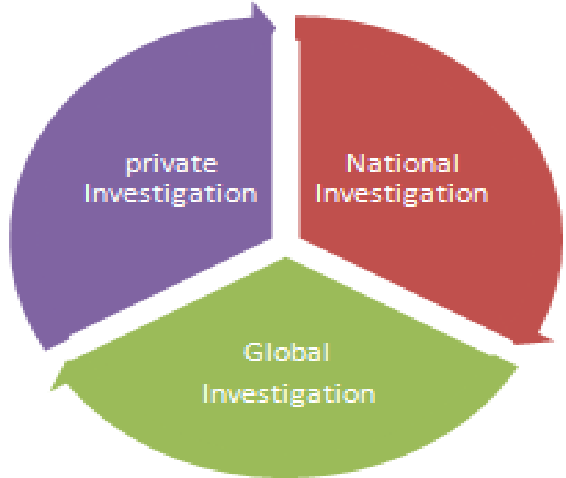 Figure: The proposed framework detailing the flow from data acquisition to behavioral comparison with real-time incidents.
Real-World Findings: The Turkey Case Study
To ground their theory, the authors surveyed veteran law enforcers (10-19+ years experience) in Turkey. The findings highlight a "capability gap":
- Skill Deficit: Most officers are self-taught, using personal OSN knowledge rather than formal forensic training.
- The "Undercover" Norm: The most common method to obtain restricted data is creating fake accounts, a practice that raises ethical questions in some jurisdictions but is widely accepted among the survey participants.
- Legal Barriers: In Turkey, OSN data is currently used for intelligence only and cannot yet serve as the sole basis for a court-issued search warrant.
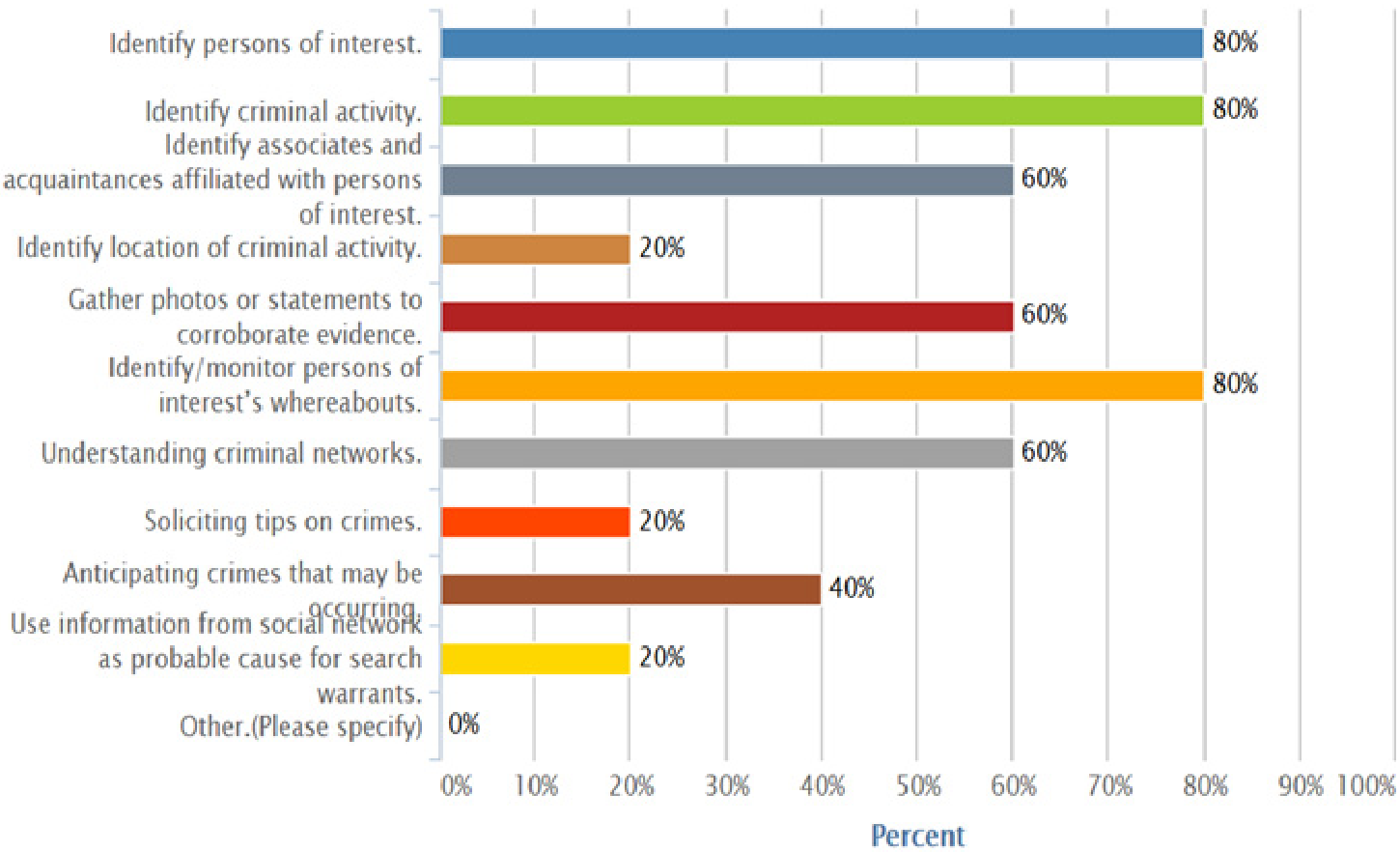 Figure: Breakdown of how OSNs are utilized, showing high usage for identifying persons of interest but lower usage for actual warrant execution.
Critical Insight & Future Outlook
While the paper identifies the "What" (crimes) and the "How" (framework), it exposes an uncomfortable truth about digital forensics: The technology is outpacing the law.
The authors' vision of a visualization tool that maps "moods over time" is technically feasible with modern NLP but faces immense hurdles in privacy ethics and data admissibility. For this framework to be viable, law enforcement must transition from "social snapshots" to "dynamic behavioral analysis," requiring a fundamental shift in how digital evidence is authenticated in court.
Takeaway for Practitioners: Future investigative tools should not just "capture" data; they must "contextualize" it. The ability to geographically visualize a suspect's emotional trajectory before and after a crime is the next frontier of digital forensics.