
Beyond the Pitch: Teaching Civic Crowdfunding as the New Frontier of Technical Communication
Rhetorical Work in Crowd-Based Entrepreneurship: Lessons Learned From Teaching Crowdfunding as an Emerging Site of Professional and Technical Communication
This teaching case explores the integration of "Civic Crowdfunding" into Professional and Technical Communication (PTC) pedagogy. Authors Kyle P. Vealey and Jeffrey M. Gerding developed a 10-week project sequence that shifts entrepreneurship education from profit-centric models to social advocacy, utilizing platforms like Kickstarter to teach students ethical stakeholder engagement and rhetorical problem-framing.
TL;DR
In a rapidly shifting economic landscape, the "lone wolf" entrepreneur is being replaced by crowd-based innovation. This teaching case by Vealey and Gerding redefines Business Writing by tasking students to launch Civic Crowdfunding campaigns. By blending primary research with digital storytelling, students learn that the most vital skill for a modern entrepreneur isn't just selling a product—it's rhetorically constructing a "matter of concern" that compels a community to act.
The Motivation: Why the Business Plan is Dying
For decades, the "Business Plan" was the holy grail of professional writing pedagogy. However, current data suggests its utility drops significantly once a business actually starts operating. Moreover, the rise of platforms like Kickstarter has transformed the "Elevator Pitch" into a viral, multi-modal narrative.
The authors identified a critical gap: students were entering the workforce with the ability to speak to a small group of "Venture Capitalists" but lacked the rhetorical agility to engage a diverse "Public." The mission was to pivot from for-profit ventures to social entrepreneurship, where the goal is the accumulation of social capital rather than just financial gain.
Methodology: From Research to Rhetoric
The authors designed a rigorous 10-week sequence that prioritized "Problem-Setting" over "Problem-Solving."
Phase 1: The White Paper (The Foundation)
Students were not allowed to jump straight to a solution. Instead, they spent six weeks conducting primary interviews and secondary research into local issues. This phase resulted in a 10-12 page White Paper using Adobe InDesign, ensuring students mastered professional document design while establishing an empirical basis for their later advocacy.
Phase 2: The Campaign (The Execution)
With research in hand, teams developed the digital infrastructure for a crowdfunding campaign.
- A Persuasive Project Description: Translating complex research into accessible, urgent prose.
- The 90-Second Video: A multi-modal pitch requiring students to script, shoot, and edit a narrative.
- Budgeting & Risk Management: Addressing the ethics of accountability and feasibility.
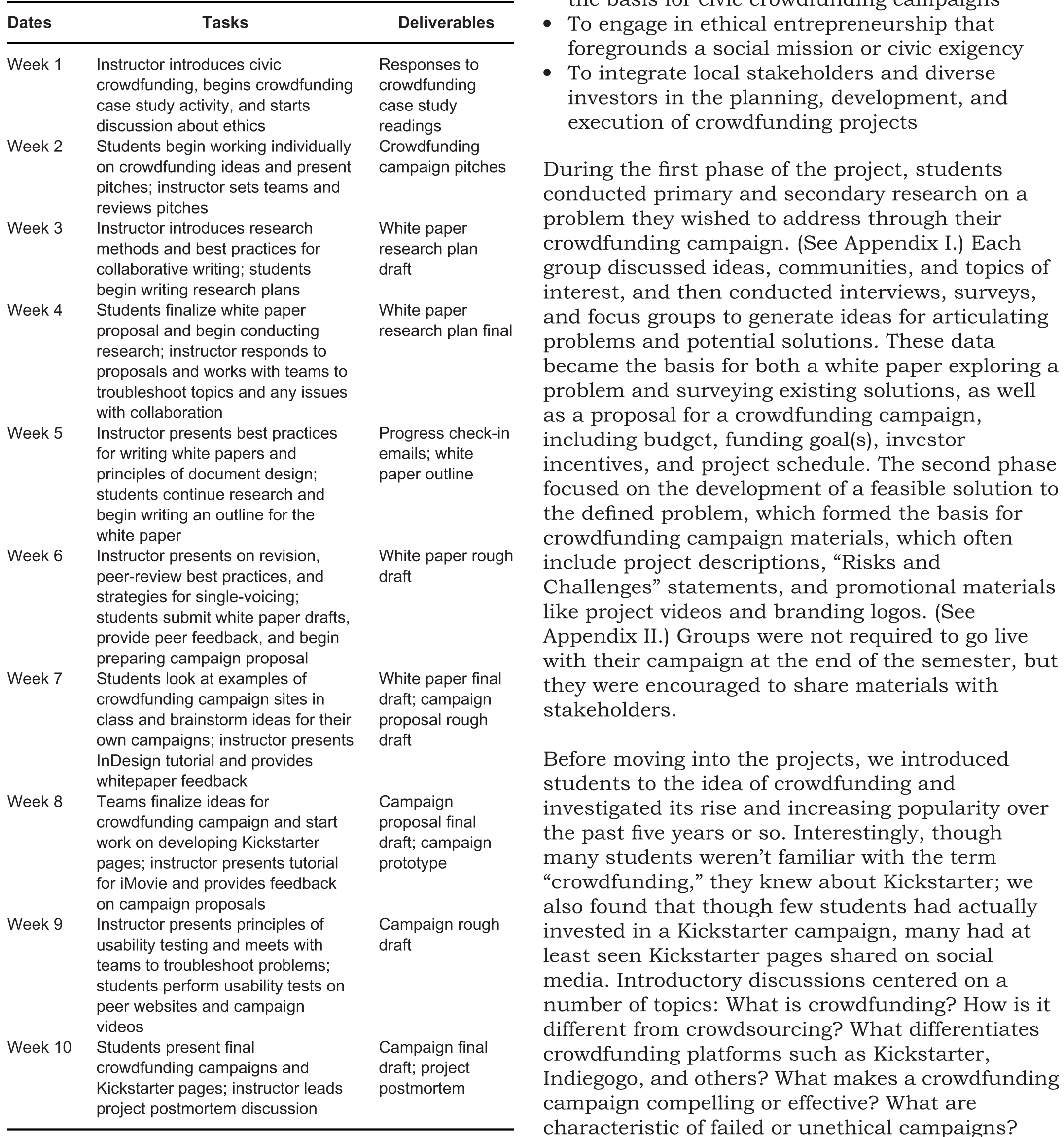 Table: The 10-week project roadmap from inception to postmortem.
Case Studies: When the Unreal Becomes Real
Two projects illustrated the potential of this pedagogy:
- "Care Kits": Students discovered a lack of resources for homeless individuals with pets. Through primary research, they reframed the "problem" from general homelessness to a specific, invisible need, building a campaign that advocated for pet care supplies as a tool for "empathy and compassion."
- "SNAP": A team partnered with a local Special Needs Aquatic Program. They realized that Kickstarter’s rules against "donative" projects required them to pivot from generic fundraising to specific, measurable outcomes (e.g., pool rental fees, instructor certification).
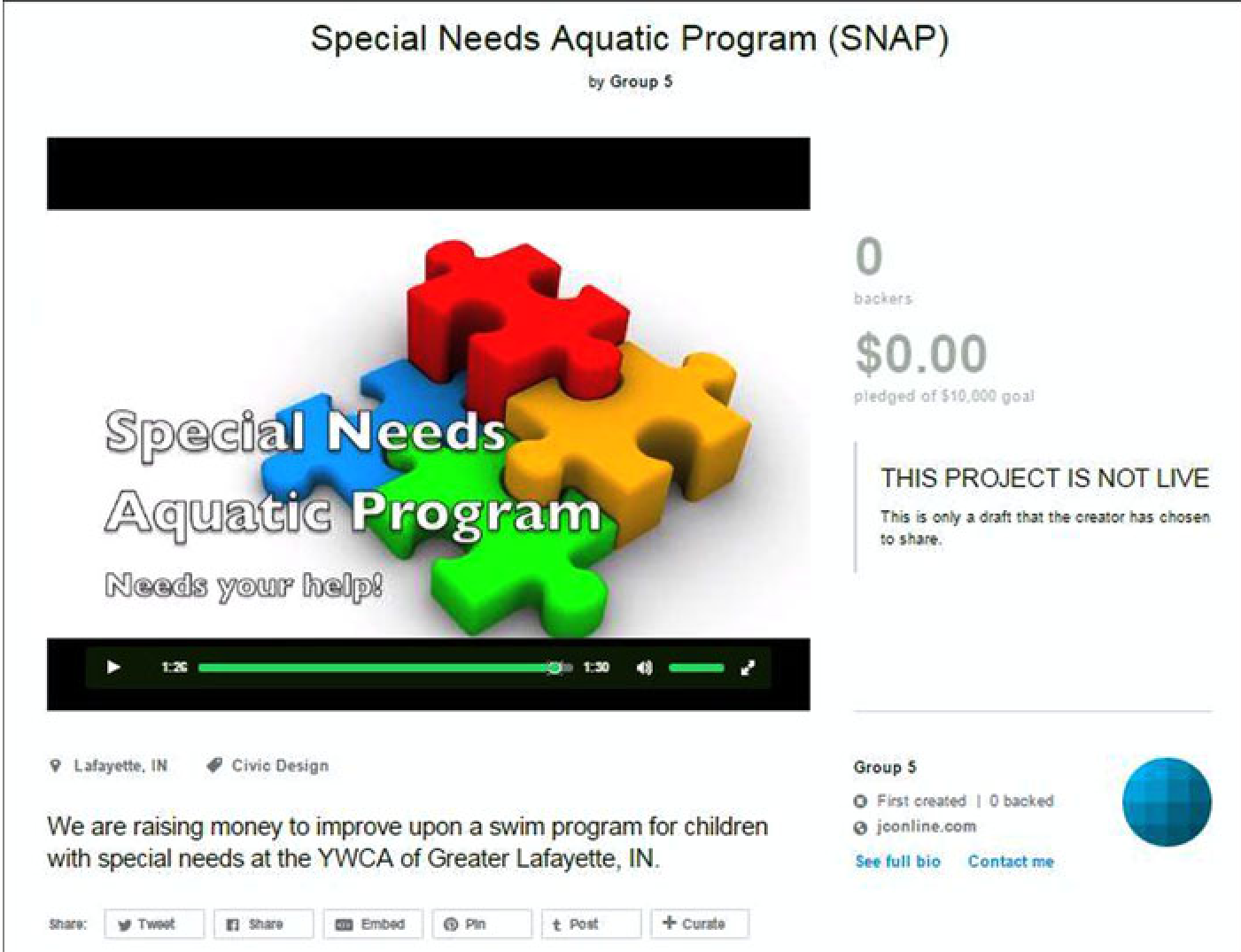 Figure: A campaign draft for SNAP showcasing the integration of goal-setting and stakeholder identification.
Deep Insights: The Ethical Challenge
One of the most profound takeaways from the study was the role of "Honest Failure." By studying failed campaigns (like the Scribble Pen), students learned that transparency is a rhetorical asset. The course highlighted that entrepreneurship is a "messy collaboration" rather than a solo achievement.
Limitations and Ethics
The authors acknowledge a "Simulation Gap"—most students did not "go live" with their projects. However, they argue that making the decision to go live a rhetorical choice helps students practice professional judgment. It asks: Is your work of sufficient quality and ethics to be seen by the public?
Conclusion: A New Blueprint for PTC
This teaching case proves that Technical Communication is the backbone of modern entrepreneurship. Whether it is defining a "wicked problem," managing a crowd’s expectations, or designing a user-centered interface, the skill set is inherently rhetorical.
For educators, the message is clear: Stop teaching students how to write for a boss, and start teaching them how to write for a community.
Final Takeaway: Civic crowdfunding transforms students from passive document-producers into active "citizens-entrepreneurs" who can identify, frame, and fund systemic change.