
Robot-Assisted Diagnosis: Bridging the Expert Gap in Autism Detection
Robot Assisted Diagnosis for Autism in Children
This paper proposes a multimodal robot-assisted diagnostic protocol for early detection of Autism Spectrum Disorder (ASD) in children. Leveraging Socially Assistive Robots (SAR) and machine learning, the system aims to automate behavioral assessment using onboard sensors to achieve objective diagnostic outcomes.
TL;DR
Early detection of Autism Spectrum Disorder (ASD) is critical for effective intervention, yet the diagnostic process remains subjective, complex, and resource-heavy. This paper introduces a multimodal framework using Socially Assistive Robots (SAR) to assist clinicians in India. By leveraging onboard sensors and machine learning, the robot acts as both a facilitator and an objective evaluator, aiming to democratize expert-level diagnostic capabilities.
Problem & Motivation: The Diagnostic Bottleneck
The diagnosis of ASD currently relies on observing behavioral symptoms and parental reports. This "human-centric" approach faces three major hurdles:
- Subjectivity: Symptoms are often misjudged or confused with other mental conditions.
- Scarcity: In India, there are only 0.3 psychiatrists per 100,000 people, making specialized care a luxury.
- Complexity: Traditional tools like ADOS require years of training to administer and interpret correctly.
The Insight: Children with ASD often prefer interacting with predictable technological tools over humans. Socially Assistive Robots (SAR) provide a repeatable, low-pressure environment that can capture subtle behavioral cues (gaze, infantile squeals, hyperactivity) that a human observer might miss.
Methodology: The Multimodal Scalpel
The proposed system isn't just a recording device; it’s an active diagnostic participant. The authors map behavioral cues from the Indian Scale for Assessment of Autism (ISAA) to specific technical sensors.
1. The Interaction Model
Using the Response to Name (RNC) task from ADOS Module 2, the robot initiates a social sequence. If the child fails to respond to multiple name calls—including reinforced calls—the robot logs this as a potential symptom.
2. Sensor Fusion & Perception
The robot’s "brain" processes data from multiple streams:
- Vision: Eye gaze tracking and facial expression analysis to detect "poor eye contact" or "inappropriate emotional response."
- Audio: Speech analysis to identify "infantile squeals" or "atypical vocalizations."
- Logic: Using Partially Observable Markov Decision Processes (POMDP), the robot models the uncertainty of the child's internal state to decide the next best action in the diagnostic protocol.
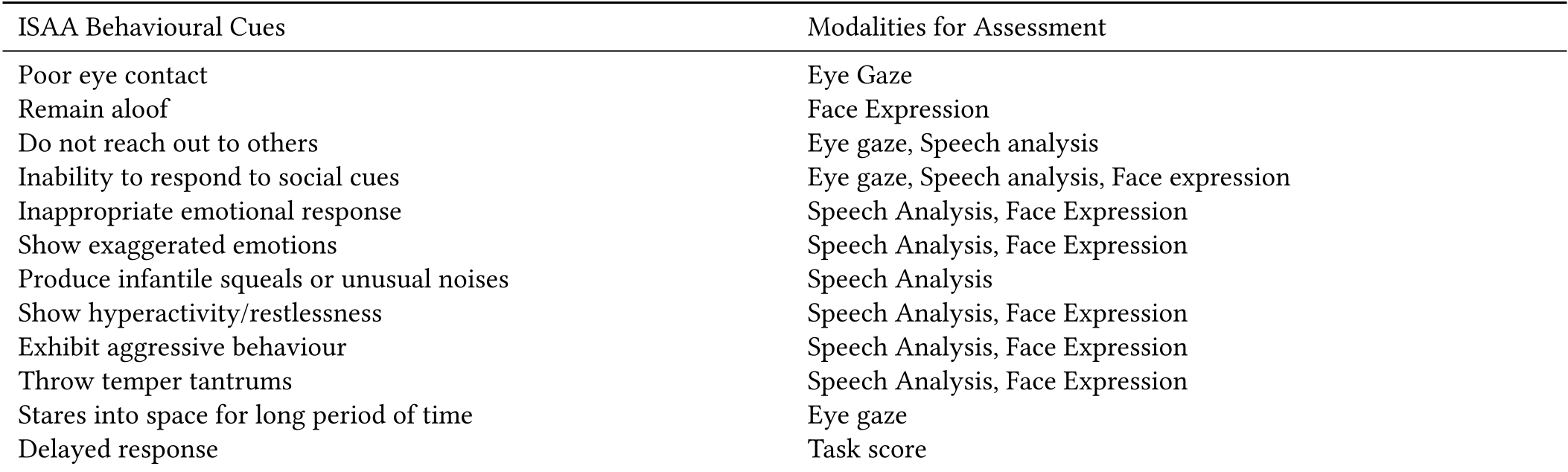 Table 1: Mapping clinical ISAA cues to robotic sensing modalities.
Experimental Setup: From Lab to Clinic
The research design involves a controlled study with 30 children (ages 3-6) in New Delhi. The setup positions the robot as the primary interactor while the specialist remains in the background, intervening only for safety or "fail-safe" modes.
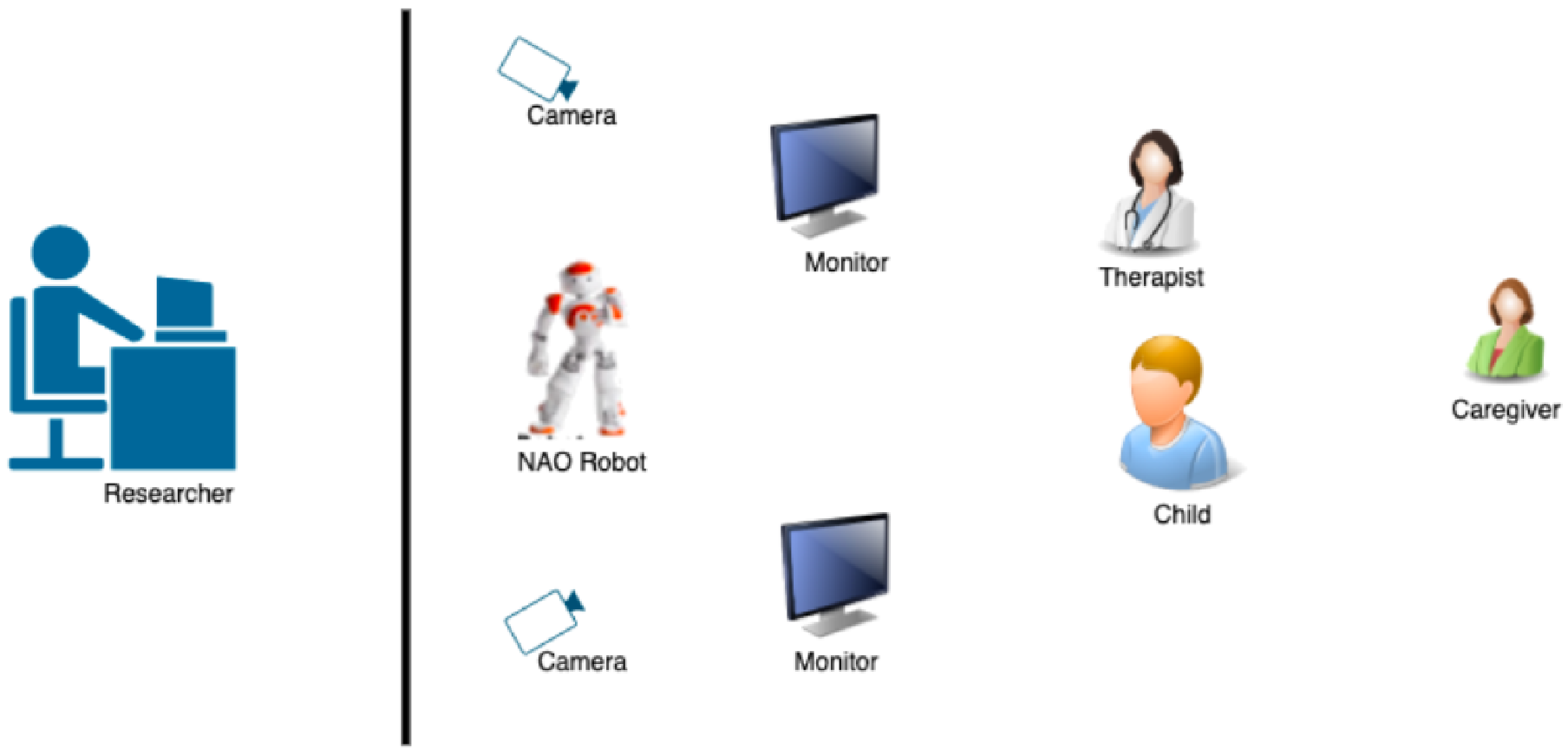 Figure 1: The physical arrangement of the robot-assisted diagnostic session.
The goal is to move from qualitative observation (a clinician's "feeling") to quantitative metrics (milliseconds of gaze avoidance, frequency of repetitive gestures).
Critical Analysis & Future Outlook
While the study is a significant step toward "AI-driven healthcare," several challenges remain:
- Cultural Nuance: ASD symptoms can manifest differently across cultures. The authors' focus on a specifically Indian demographic (via ISAA) is a vital contribution.
- Acceptance: Will parents trust a machine's diagnosis? The paper addresses this through a participatory design involving caregivers.
- Technological Limits: Current onboard sensors may struggle with the high-energy, unpredictable movement of hyperactive children.
The Verdict: This work marks a shift in Robotics from therapy to diagnosis. By automating the "coding" of behavior, we can potentially reach a future where an initial ASD screening is as accessible as a standard pediatric check-up.
Future Work
The research will move toward full integration of Reinforcement Learning to allow the robot to adapt its diagnostic strategy in real-time, making the assessment truly personalized to the child's unique behavioral profile.