
From Actors to Real People: Identifying Robust Acoustic Features for "In-the-Wild" Emotion Recognition
From simulated speech to natural speech, what are the robust features for emotion recognition?
This paper investigates the robustness of acoustic features (Spectral, Prosody, and Voice Quality) for Speech Emotion Recognition (SER) across three levels of data authenticity: Simulated, Elicited, and Natural corpora. Utilizing six different datasets and multiple machine learning classifiers like Random Forest and SVM, the study identifies that while prosody excels in acted scenarios, spectral features are most robust for real-world spontaneous speech.
TL;DR
Is an AI's ability to "hear" emotion just an artifact of good acting? This study rigorously compares how machine learning models perform across simulated, elicited, and natural speech corpora. The key finding: while professional actors convey emotion through pitch and voice quality (prosody), real-world emotional signals are most reliably captured through spectral features (MFCC), which remain stable even when background noise increases and emotional cues become subtle.
The "Acting" Problem in Affective Computing
Most early successes in Speech Emotion Recognition (SER) were built on a lie—specifically, the exaggerated performances of professional actors in soundproof studios. When these models face the "wild" (real-world conversations, TV shows, or call centers), their accuracy collapses.
The researchers identified a fundamental gap: we don't know if the features used to detect theatrical anger (like sharp increases in pitch) are the same ones present in a real person's frustration. This study bridges that gap by testing 2,276 features across the spectrum of human expression.
Methodology: The Three Pillars of Sound
The authors categorized acoustic low-level descriptors (LLDs) into three distinct buckets to test their "staying power":
- Prosody: Pitch (F0) and Loudness. The "melody" of speech.
- Voice Quality (VQ): Jitter, Shimmer, and breathiness. The "texture" of the voice.
- Spectral: MFCCs and Spectral Slopes. The "vocal tract shape" and timbre.
They tested these against datasets ranging from the Berlin Emotional Database (highly acted) to CHEAVD/AFEW (extracted from real films and TV spontaneous clips).
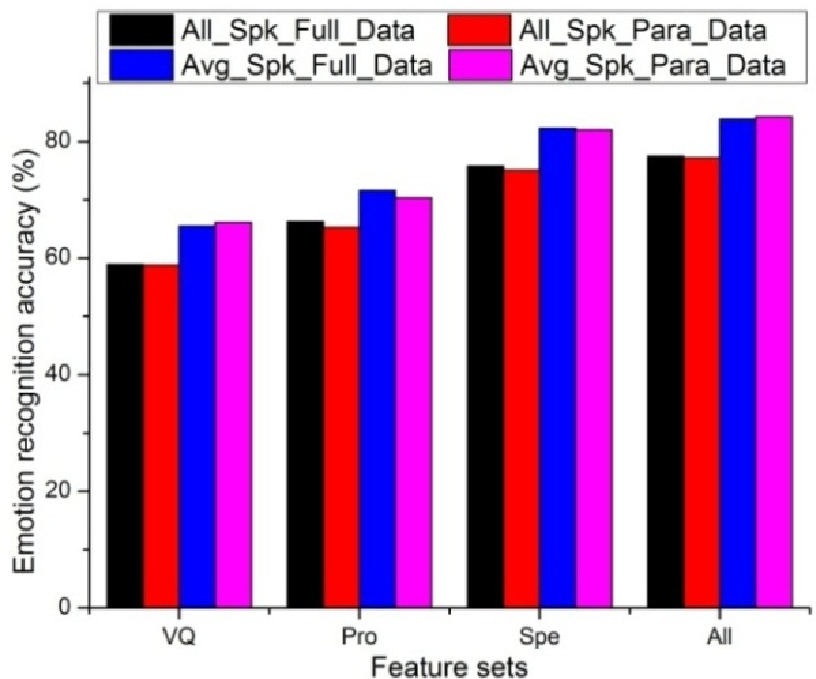 Fig 1: Recognition accuracies showing a clear downward trend as data moves from controlled (Simulated) to uncontrolled (Natural) environments.
Key Insights: Why Spectral Features Win in the Wild
The study's most provocative finding is the shift in feature importance.
1. Simulated Speech = Prosody Dominance
In professional recordings (like CASIA), the models relied heavily on Prosody and Voice Quality. This makes sense: actors use "stereotypical" cues—they shout when angry and whisper when sad.
2. Natural Speech = Spectral Dominance
In natural, spontaneous speech, spectral features (MFCC) became the most robust. Why?
- Extraction Reliability: Pitch (F0) is notoriously difficult to track accurately in noisy, "wild" settings.
- Articulatory Priority: In real life, speakers prioritize being understood (intelligibility). They modulate their vocal tracts to maintain clarity, meaning the spectral envelope (captured by MFCCs) remains a more consistent, "honest" signal of their emotional state than volatile pitch shifts.
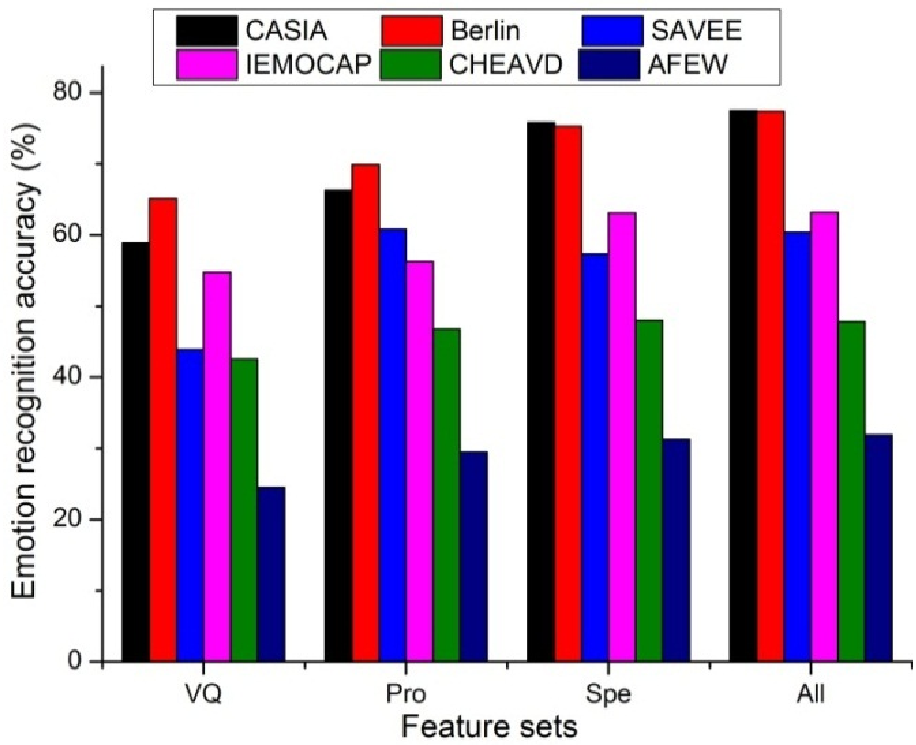 Table 10: Speaker-dependent experiments show that while MFCCs (Spectral) depend on the speaker, they consistently outperform prosody even when the text is identical.
Critical Analysis & Conclusion
Takeaway
If you are building an emotion-aware system for a real-world product (e.g., an AI customer service agent), do not rely solely on pitch-tracking. Your model must be grounded in spectral analysis to survive the transition from the lab to the living room.
Limitations & Future Work
The study acknowledges that current "Natural" datasets are often still clips from movies—which, while spontaneous, are still "performed" to some degree. The next frontier is Audio-Visual fusion; combining these robust spectral audio features with facial micro-expression analysis to reach the levels of accuracy once seen only in simulated data.
The verdict is clear: The vocal tract's shape (Spectral) tells a more reliable emotional story in the noise of real life than the vocal cords' tension (Prosody).