
Role Awareness & Adaptive Clustering: A New Frontier in Fresh Food Last-Mile Logistics
Solving Last-Mile Logistics Problem in Spatiotemporal Crowdsourcing via Role Awareness With Adaptive Clustering
This paper introduces an Adaptive Role Awareness (ARA) method based on the Group Role Assignment (GRA) framework to solve the Last-Mile Assignment Problem (LMAP) for fresh produce. By utilizing adaptive clustering in spatiotemporal crowdsourcing, it optimizes the allocation of delivery tasks to couriers, significantly improving service quality and team performance.
TL;DR
The "last mile" is the most expensive and complex part of the supply chain, especially for fresh produce. This paper transforms the delivery problem into a Group Role Assignment (GRA) challenge. By using Adaptive Role Awareness (ARA), the system doesn't just assign tasks; it dynamically "invents" the tasks every day based on order density and time constraints, doubling delivery efficiency.
The Perishable Problem: Why Fresh Produce is Different
In standard logistics, a courier has a zone and delivers whatever falls into it. However, for fresh produce, time is the ultimate enemy. The authors identify three critical pain points:
- Strict Timeliness: Products spoil quickly outside cold chains.
- The Hit Rate: If a customer isn't home, the product often degrades in a collection station or requires a costly second attempt.
- Rigid Allocation: Traditional fixed-region delivery cannot handle the "high mix, low volume" nature of daily e-commerce fluctuations.
Methodology: The E-CARGO Model & Role Awareness
The researchers utilize the E-CARGO (Environments, Classes, Agents, Roles, Groups, Objects) framework. The core innovation lies in Role Awareness. Instead of treating a "role" as a static job description, it is treated as a collection of delivery orders grouped by an Adaptive Clustering algorithm.
1. Adaptive Role Formulation
Using an enhanced k-means++ algorithm, the system clusters orders by considering both spatial distance (km) and temporal distance (request time).
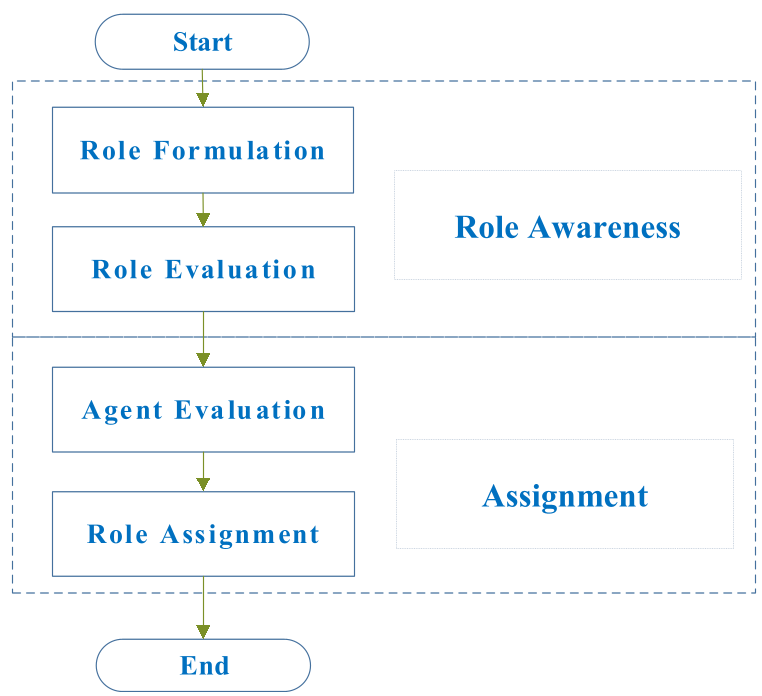 Fig 1: The system architecture from order intake to CPLEX optimization.
2. Mathematical Evaluation
A role's quality is calculated using a 3D distribution function that penalizes tasks that are too heavy (exceeding insulation can capacity), too spread out (high distance), or too time-consuming.
Experimental Battle: ARA vs. Traditional Methods
The authors put their ARA method against a standard hourly-regional clustering baseline.
Key Findings:
- Performance Spike: The ARA method achieved a performance score of 16.19, compared to 8.01 for the baseline—over a 100% improvement.
- The Conflict Matrix: The system successfully accounted for "role conflicts" (where one courier cannot be in two places at once) using a conflict matrix .
- Scalability: While the adaptive search is computationally heavy ( in the worst case for integer programming), the authors discovered that the optimal number of clusters () and the time coefficient () follow a predictable trend as the number of orders () grows. By narrowing the search range, they optimized the processing time.
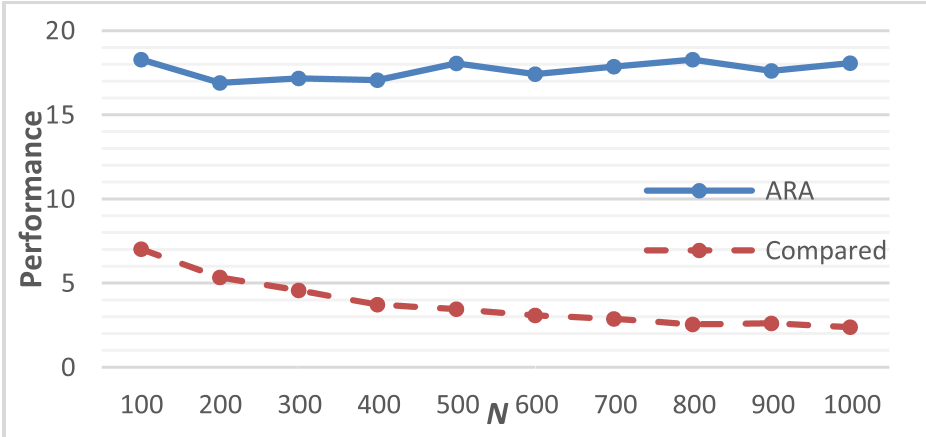 Fig 2: ARA (Solid line) significantly outperforms the baseline in team efficiency across various scales.
Critical Analysis & Takeaways
The brilliance of this work is the realization that task granularity is a variable, not a constant. By allowing the platform to dynamically reshape what a "delivery task" looks like based on the specific "pulse" of that day's orders, they maximize the unique strengths (familiarity and qualification) of each courier.
Limitations: The current model assumes a static "familiarity" for agents, whereas, in real crowdsourcing, courier availability and skill might change dynamically.
Future Outlook: Bridging this high-level assignment with real-time Path Planning (Vehicle Routing Problems) would create an end-to-end powerhouse for companies like Meituan, Instacart, or Amazon Fresh.