
The Expert Gap: Why the Tertiary Educated are Passive Observers in Social Media
The role of experts in social media - Are the tertiary educated engaged?
This paper presents a pilot survey examining how tertiary educated users in Australia engage with social media. It identifies a significant gap between awareness and active participation, revealing that even highly educated individuals act primarily as passive consumers rather than content creators or "prosumers."
TL;DR
Higher education should, in theory, fuel the "prosumer" movement where users both consume and produce high-quality content. However, this pilot study reveals a "participation paradox": tertiary educated users are highly aware of social media's capabilities but remain stuck in passive consumption mode. While they find the technology easy to use, they rarely contribute their expertise, primarily due to "leisure-only" perceptions and time constraints.
Problem & Motivation: The Myth of the Global Conversation
We are told that Social Media is a participatory democracy. Terms like Pedagogy 2.0 suggest a world where students and experts collaboratively build knowledge on Wikis and Blogs.
However, the reality is a stark contrast. The authors argue that while social media usage has exploded (growing 29% in Australia by 2009 alone), the quality of content remains a major hurdle. "Quality control" in open environments like Wikipedia and YouTube is a persistent pain point. The logical solution is to involve tertiary educated experts, yet these are the very people who seem to be the most "time-poor" and hesitant to engage formally.
Methodology: Peering into the Educated User’s Habits
The researchers deployed a survey targeting University staff and students to understand the Why and How of their digital footprint. They focused on five key dimensions:
- Temporal Penetration: Frequency of access.
- Activity Depth: Contribution (writing/uploading) vs. Consumption (reading/viewing).
- Access Modality: Mobile vs. Desktop.
- Purpose: Work, Leisure, or Education.
- Usability: Perceived difficulty of sharing.
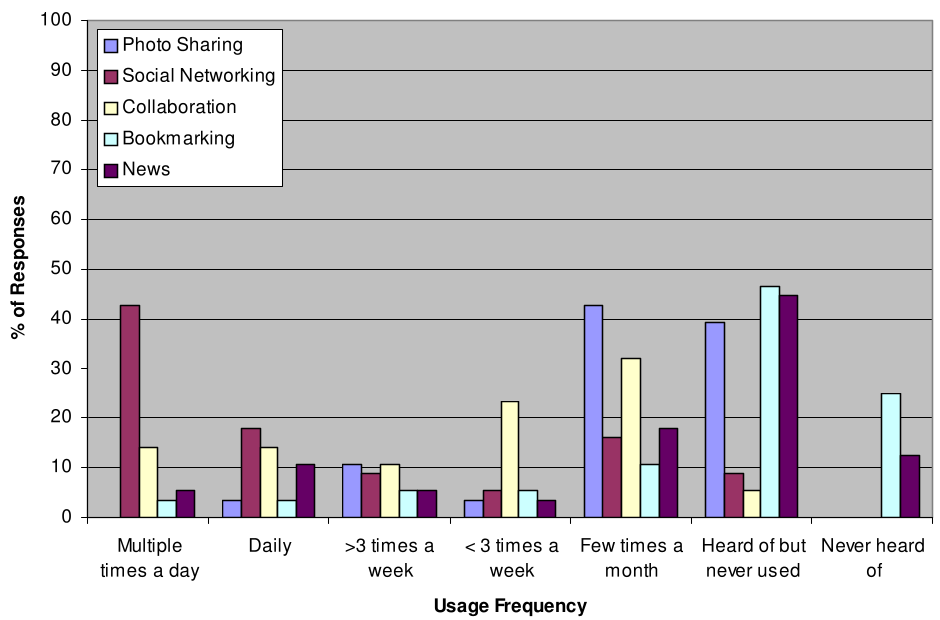 Figure 1: The demographic skew toward highly educated individuals (90% tertiary educated).
Key Findings: The Passive Expert
The data paints a fascinating, if slightly disappointing, picture of the "Digital Expert":
- Awareness vs. Action: Most users have heard of social bookmarking (Delicious) or Q&A sites (Yahoo! Answers), but participation in these "utility" areas is at an all-time low compared to social networking (Facebook).
- The Consumption Trap: In activities like blogging and collaboration (Wiki editing), the dominant behavior is "passive reading." While 40% use blogs for work, only 7% actually contribute original posts.
- The Leisure Label: Over 90% of users view social networking and photo sharing as "purely for fun." This creates a psychological barrier; experts often feel that these spaces are "leisure-only" zones where professional contribution feels out of place or like an "invasion" of student space.
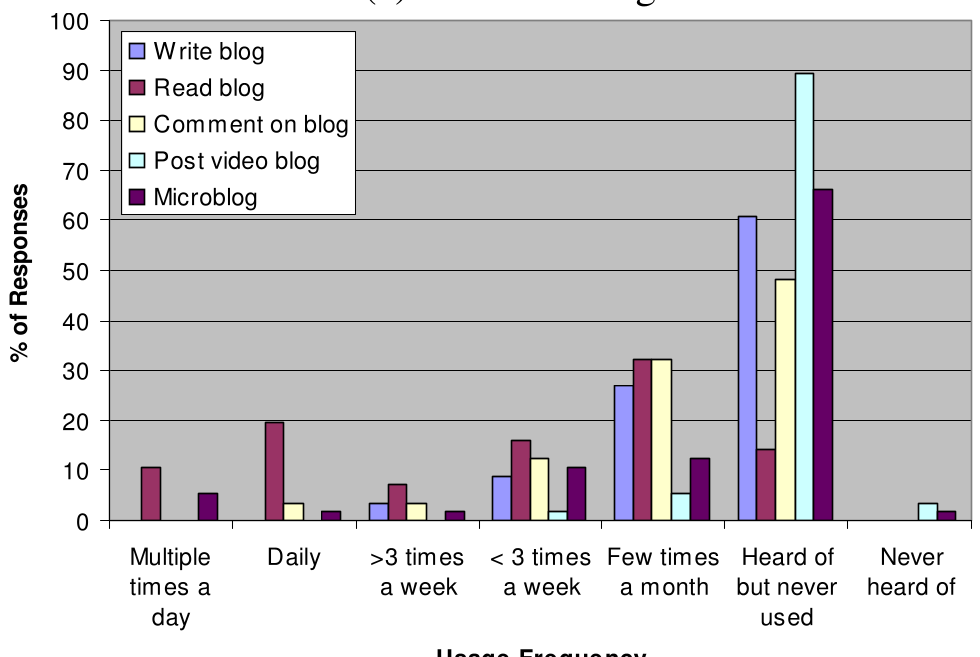 Figure 2: Collaboration activities remain predominantly passive (wiki reading) rather than active (editing).
Methodology: From Leisure to "Tag!t"
The authors don't just identify the problem; they propose a technical catalyst. They argue that "bridging technologies" are required to move social media from the playground to the classroom.
They highlight Tag!t, an e-learning tool adapted for the Moodle environment. Instead of asking experts to join a "leisure" site, Tag!t allows students and teachers to interact with educational multimedia through temporal tagging (commenting on specific timestamps in a video). This leverages the "social" back-end of Web 2.0 but reframes it for a professional, academic purpose.
Critical Insight & Conclusion
The Takeaway
The barrier to a more "intelligent" social web isn't the difficulty of the software—91% of respondents said sharing is easy. The barrier is context.
Educated users are "time-poor" and view current social platforms as leisure destinations. To harness their expertise, we need:
- Adaptive Interfaces: UIs that change based on whether a user is an expert contributor or a casual viewer.
- Institutional Integration: Moving social technologies inside the Learning Management Systems (LMS) like Moodle to legitimize their use for work and study.
Limitations
The pilot study’s small sample size (N=56) means these findings are preliminary. Furthermore, the paper was written in a pre-AI era (2009-2010); today, the "prosumer" landscape has been further complicated by automated content, though the core issue of expert verification remains as relevant as ever.
The future of social media isn't just about more users—it's about getting the right users to move from the sidelines into the game.