
Distrust in the DHT: How Routing Attacks Cripple Decentralized Social Networks
The Impact of Routing Attacks on Pastry-Based P2P Online Social Networks
This paper investigates the vulnerability of the Pastry distributed hash table (DHT) to three specific routing attacks: DROP, LDF, and AMP, within the context of decentralized peer-to-peer (P2P) social networks. Through large-scale simulations using PeerfactSim.KOM, the authors demonstrate that even a minority of malicious nodes can severely degrade network performance or lead to total lookup failure.
TL;DR
Decentralized social networks promise freedom from censorship, but they are built on a fragile foundation: trust. This paper explores how malicious nodes can exploit the Pastry DHT—the backbone of the LifeSocial platform—using clever routing subversions. By shifting from simple packet dropping to deceptive "slow-routing" strategies, attackers can bloat network latency and resource consumption without being easily detected.
Context: The Social P2P Landscape
The rise of centralized giants like Facebook has highlighted risks of censorship and data mining. Peer-to-Peer (P2P) alternatives like LifeSocial use Pastry, a Structured Overlay, to store data across a global network of users. In Pastry, every node is equal, and messages are routed based on "NodeID" proximity. However, because routing is performed by neighbors, the system is inherently vulnerable to those who refuse to follow the protocol.
The Anatomy of Subversion: Three Attack Strategies
The authors identify and simulate three distinct ways an adversary can break the network:
- DROP (Blocking any Request): The "Black Hole" approach. A node participates in the network but refuses to forward any message that isn't for itself.
- LDF (Largest Distance First): The "Detour" approach. Instead of moving the message closer to the target, the attacker sends it to the known node furthest from the destination. This maximizes hops and physical travel distance.
- AMP (Approach at Minimum Pace): The "Stalling" approach. The attacker moves the message toward the target, but only by the smallest possible increment. This is the most insidious attack because it mimics "correct" behavior while drastically slowing the network.
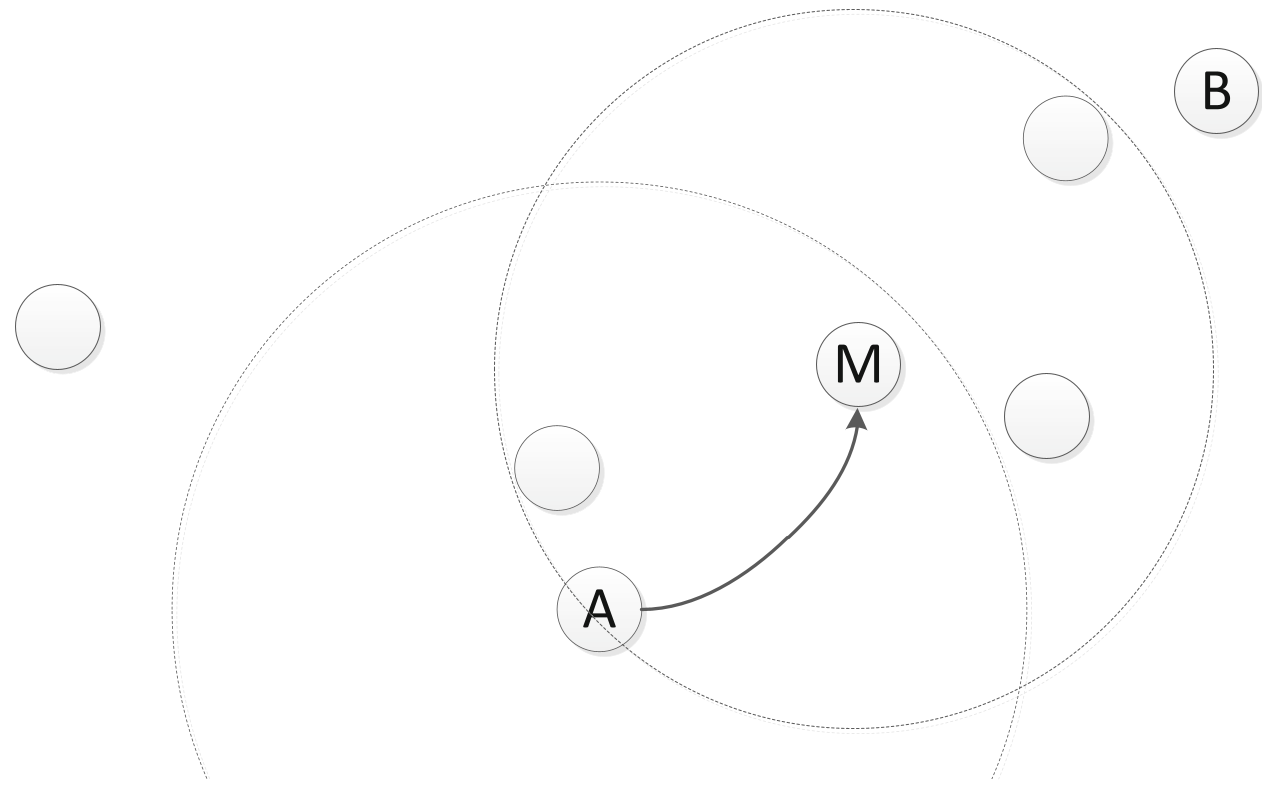 Fig 1: Illustrating how malicious nodes redirect traffic away from the optimal path.
Methodology: High-Fidelity Simulation
Using PeerfactSim.KOM, the researchers simulated networks of 1,000 and 10,000 nodes. They introduced varying "contamination levels" (from 0% to 50% malicious nodes) to measure two key metrics: Lookup Success Rate and Average Hops per Lookup.
Critical Results: Efficiency vs. Availability
The results reveal a stark contrast between "loud" and "quiet" attacks:
- The Availability Crisis (DROP): As seen in the figure below, the DROP strategy is devastating. In a 10,000-node network, a 30% malicious ratio causes nearly 80% of lookups to fail. Because longer paths (more hops) are more likely to hit a malicious node, larger networks are actually more vulnerable to this attack.
- The Efficiency Drain (LDF & AMP): Interestingly, LDF and AMP have negligible effects on the success rate (remaining near 100% success). However, the cost of success sky-rockets. The number of hops required to find a piece of data increases linearly with the number of attackers, turning a high-performance DHT into a sluggish, overloaded system.
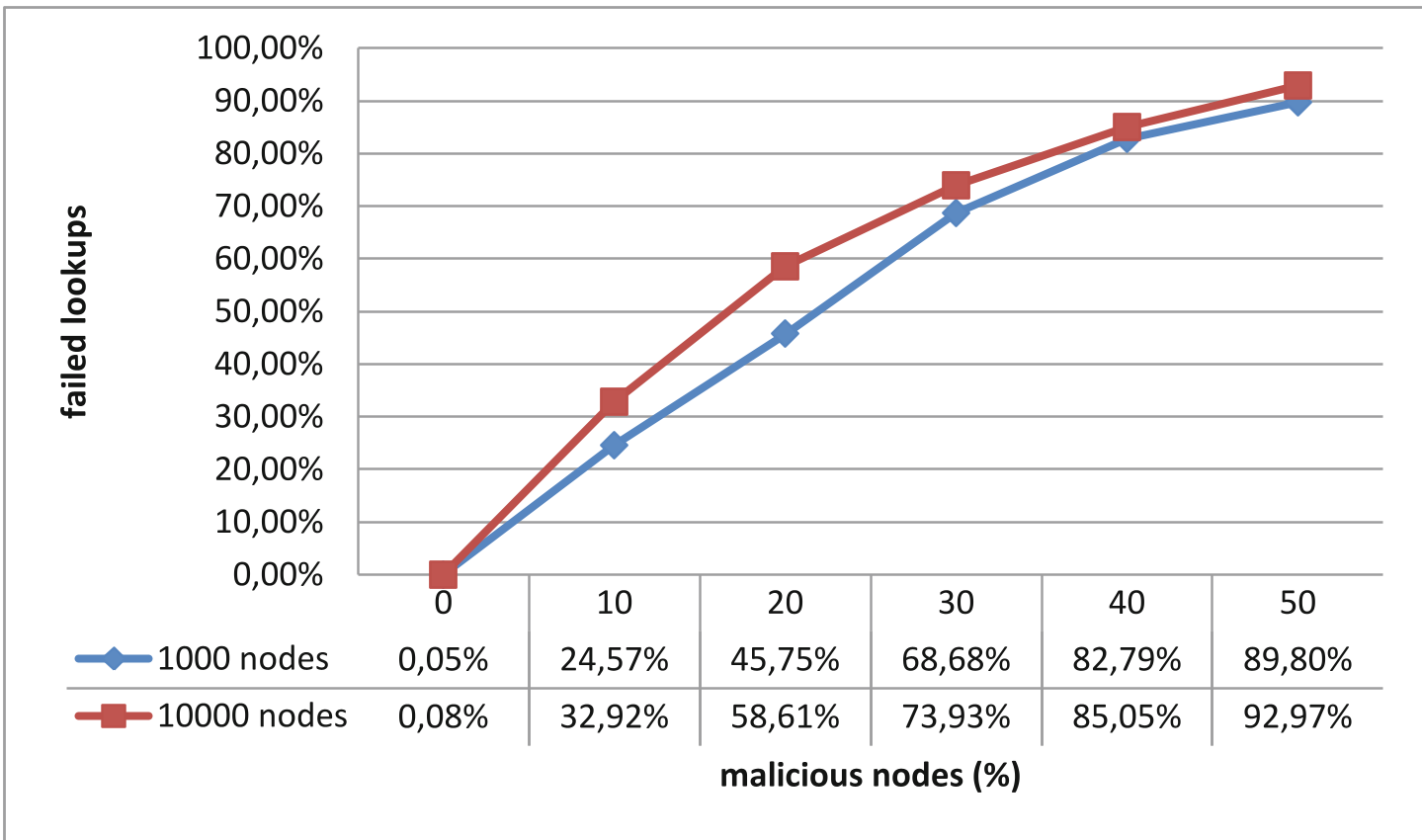 Fig 2: The exponential impact of DROP attacks on lookup success as malicious node ratios increase.
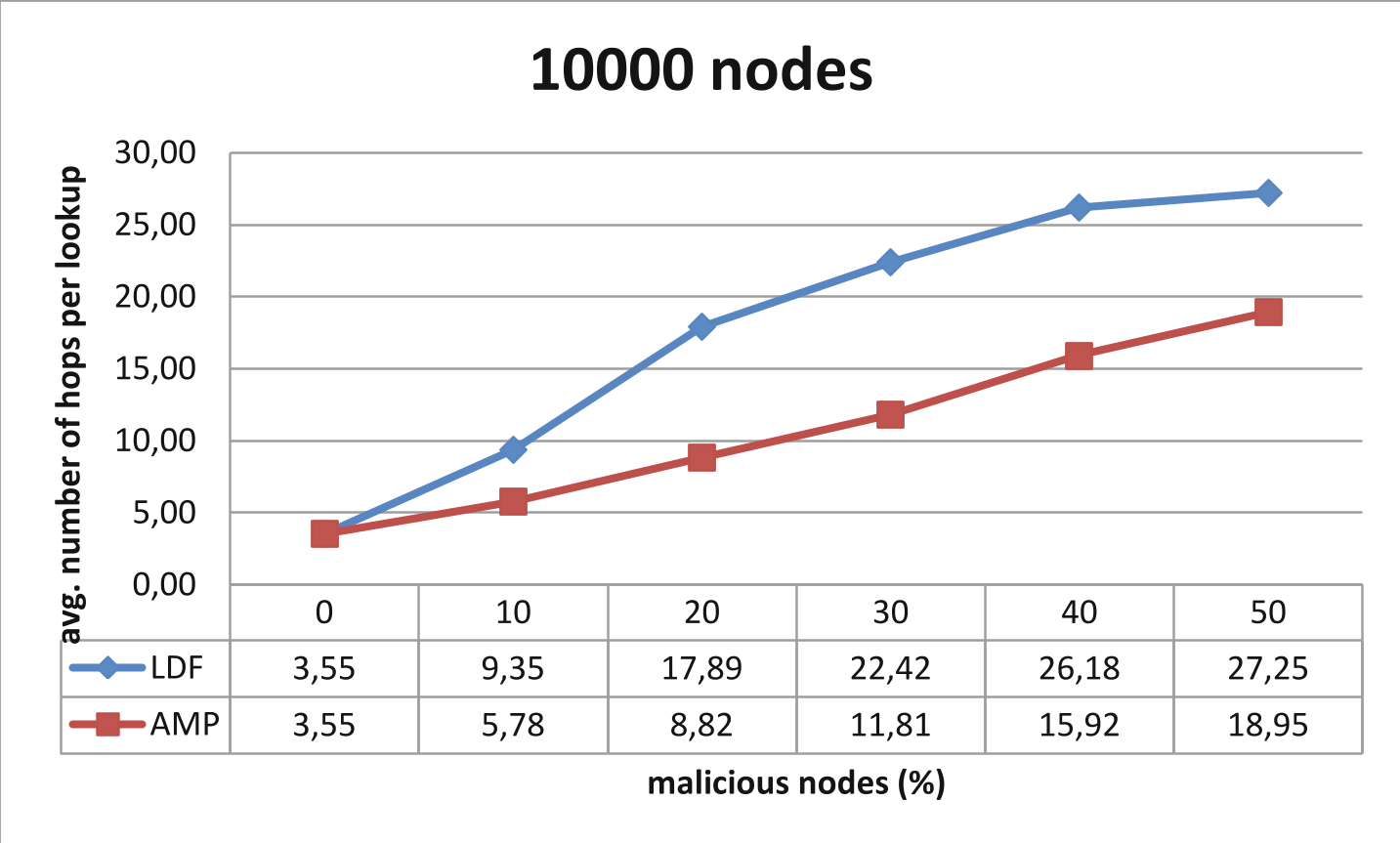 Fig 3: The LDF strategy causes a much sharper increase in hop counts compared to the more "polite" AMP strategy.
Deep Insight: Why Detection is the Next Frontier
The paper concludes that Pastry, in its vanilla form, is insufficiently robust for a truly "indestructible" social network. While DROP attacks are easy to detect (the destination is never reached), AMP and LDF are far more dangerous for the long-term health of a P2P community. They consume the bandwidth and CPU of honest nodes while providing just enough service to avoid being blacklisted.
Future Outlook
For P2P social networks to survive, developers must move beyond simple DHTs toward "Secure Overlays." This includes:
- Reputation Systems: Tracking which neighbors consistently provide low-latency, "direct" routes.
- Verifiable Path Histories: Using cryptographic proofs to ensure a message actually took the shortest logical path.
- Redundant Routing: Sending requests through multiple disjoint paths to bypass clusters of malicious nodes.
Without these, decentralized social networks remain a "fair-weather" technology, vulnerable to any organized group that wishes to silence the conversation by simply slowing it down to a crawl.