
To Search or to Ask: The Hidden Logic of How We Seek Information
To search or to ask: the routing of information needs between traditional search engines and social networks
This study investigates "Status Message Question Asking" (SMQA) by comparing how users route information needs between traditional search engines (Google/Bing) and social networks (Facebook/Twitter). Findings show that while search engines remain the dominant choice, users leverage social networks for 20% of their needs, often using SMQA as a complement rather than a substitute for search queries.
TL;DR
In the digital age, we face a split-second decision for every curiosity: "Do I Google this or post it on Facebook?" This paper explores the "routing" behavior of 82 participants, revealing that while we trust Google for facts, we trust our friends for the truth. Users leverage social networks for about 20% of their needs, often seeking subjective validation that a search engine simply cannot provide.
Context: The Social Sidebar Era
This research sits at the intersection of Information Retrieval (IR) and Computer-Supported Cooperative Work (CSCW). It addresses a time when tech giants began experimenting with "Social Search" (e.g., Bing’s Social Sidebar). The core question is: is social media a competitor to search engines, or a necessary extension?
The "U-Shaped Curve" of Specificity
The authors identify a fascinating cognitive boundary they call the U-shaped curve of specificity.
- High Specificity (Navigational): For "Nike's website," we use search engines. They are fast and accurate.
- Low Specificity (Exploratory): For "find a new hobby," we also use search engines. We don't want to bother our friends with vague, open-ended brainstorming.
- Medium Specificity (The Social Sweet Spot): Recommendations, opinions, and personal favors live here. This is where SMQA thrives.
Methodology: Bridging Two Worlds
The researchers built a custom interface to track these split-second routing decisions in real-time.
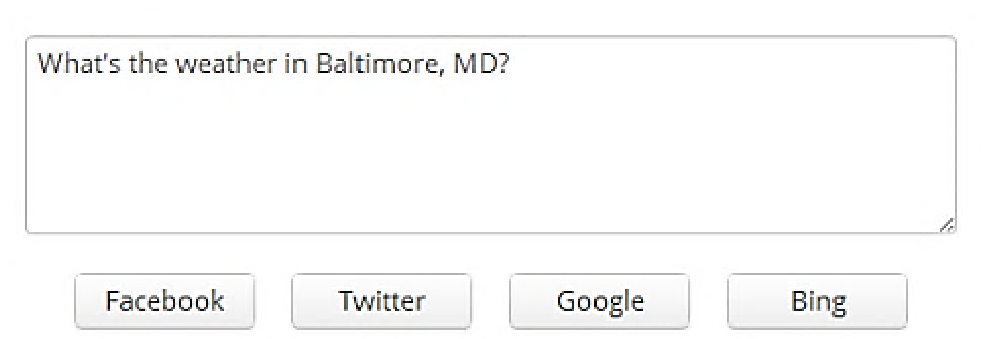
Participants were given 30 types of prompts—ranging from "Finding a gift" to "Fixing a tech product"—and had to decide which "gate" to send their query through.
Key Results: Trust vs. Value
The study unearthed a "Trust Contradiction":
- Service Trust: Users trust search engines more as a service. They believe Google is more reliable for "knowledge."
- Source Trust: Users trust the individual responses from friends significantly more than they trust specific websites discovered via search.
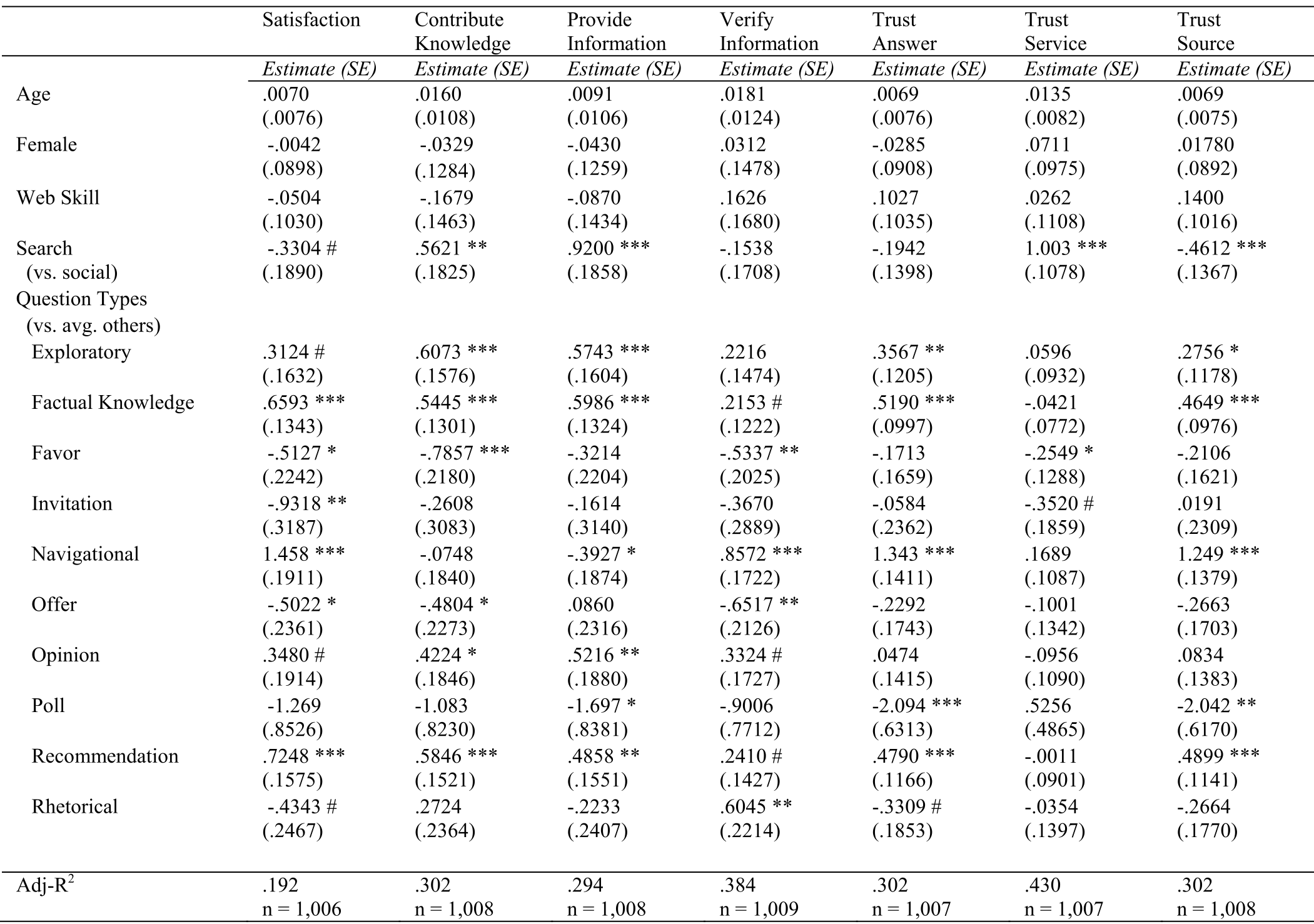
As shown in the table above, Factual Knowledge and Navigational queries perform best on search engines, while Recommendations and Opinions highlight the strength of social routing.
Why We Don't Post: Social Costs
A major contribution of this work is identifying why people don't ask their networks.
- Disruption Fear: Users avoid posting political or controversial questions to prevent "heated unpleasant arguments."
- Redundancy/Speed: Why wait 5 hours for a Facebook reply when Google answers in 0.5 seconds?
- Context Collapse: Users sometimes avoid Facebook because they don't want their "entire network" (parents, coworkers, friends) to see a niche or personal interest.
Final Insight: The Paradox of Exploratory Search
Ironically, exploratory search (finding a new interest) is where search engines struggle most due to their "query-response" rigidity—yet users rarely turn to social networks for this, fearing they will look "lost" or "spammy." This suggests a massive design opportunity for tools that can facilitate social brainstorming without the social "capital cost."
Takeaway for Builders
If you are building an information system, don't just provide facts. Provide contextual validation. A search engine that can say, "Your friend John also liked this restaurant," bridges the gap between high information value and high social trust.