
Beyond Pairwise: Optimizing Social Networks via Multi-Node Contact & Network Coding
Routing protocol-independent Contact Optimization for opportunistic social networks
This paper introduces a Routing Protocol-Independent Contact Optimization (ConOpt) algorithm for Opportunistic Social Networks (OSNs). By leveraging Multi-node Contacts and Network Coding, it optimizes packet delivery schedules to reduce redundant transmissions while maintaining the Packet Delivery Ratio (PDR) and Delay (PDD) of base protocols like Epidemic and Spray&Wait.
Executive Summary
TL;DR: Most opportunistic routing protocols treat meeting a friend like a private phone call (1-to-1). This paper argues it’s more like a group chat (1-to-many). By recognizing that people often meet in groups—Multi-node Contacts—and applying Network Coding, the authors reduce network traffic by 20% without losing a single packet.
Background: This work sits at the intersection of Social-based Routing and Information Theory. It moves beyond the "sparse contact" assumption of early Delay Tolerant Networks (DTNs) to embrace the dense, clustered reality of human mobility.
The "Pairwise" Blind Spot
Traditional opportunistic routing (like Epidemic or Spray&Wait) is built on a simple rule: if Node A meets Node B and has a packet Node B lacks, it sends it.
However, the authors discovered a major inefficiency:
- Redundant Senders: If Nodes A and B both have a packet and meet Node C, both might try to send it simultaneously.
- Redundant Receivers: If Node A meets both B and C, it sends the same packet twice—once to each.
In real-world traces (like Infocom and Cambridge), the authors found that up to 99% of links actually involve more than two nodes. Treating these as isolated pairs is a waste of precious bandwidth.
Methodology: The Contact Optimization (ConOpt) Algorithm
The core innovation is viewing a multi-node meeting as an opportunity for Wireless Broadcast Advantage.
1. Mathematical Intuition
Instead of sending raw packets, the algorithm uses Network Coding (XOR).
- Scenario: Node has packet , Node has , and Node (in the middle) has both.
- Efficiency: broadcasts . Node decodes using its , and node decodes using its . Total transmissions: 3 (instead of 4).
2. The Maximum Clique Approach
The algorithm constructs a "Want/Has" graph for every node. It identifies which packets can be XORed together to satisfy the most neighbors at once. This is mapped to finding the Maximum Clique in a conflict graph—a classic NP-hard problem solved here via a local heuristic.
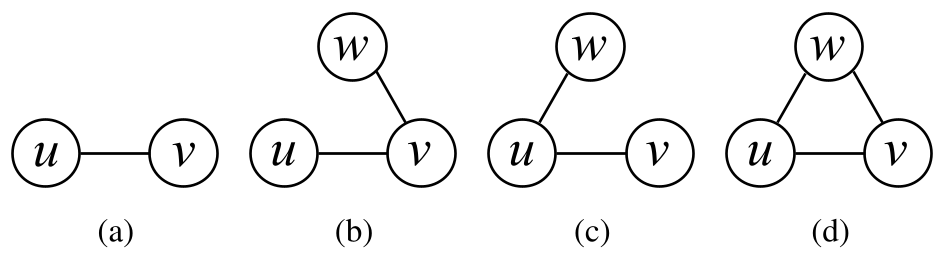 Fig 1: Representation of how simple pairwise links (a) evolve into complex multi-node topologies (b-d).
Experimental Results
The authors tested ConOpt against standard protocols using the Cambridge mobility trace.
- Transmission Reduction: The algorithm consistently reduced the number of transmissions. In dense environments (15:00-18:00 time windows), the reduction reached 20%.
- Stability: The "Multi-links" they identified weren't just fleeting glitches; their durations were stable enough (often 50% of the total pair-link duration) to complete large file transfers.
- Delivery Performance: Remarkably, the Packet Delivery Ratio (PDR) stayed the same or slightly improved, proving that "less is more" when transmissions are smarter.
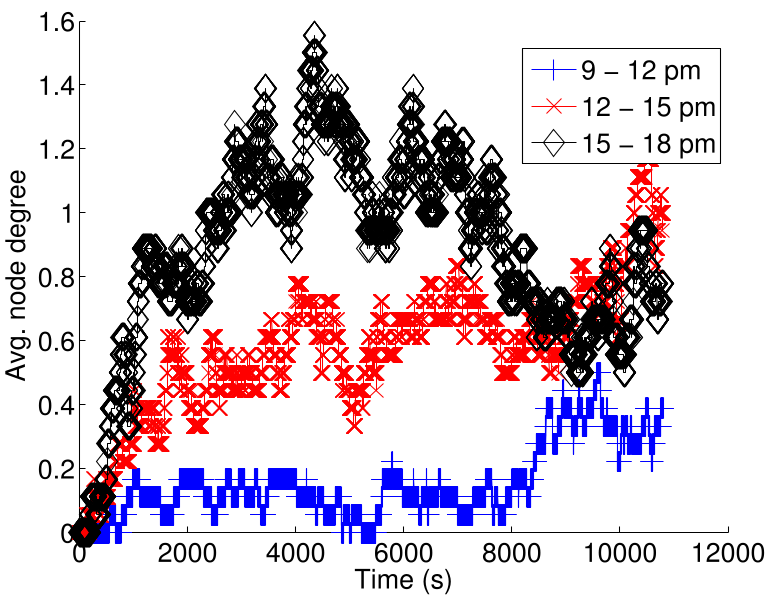 Fig 2: As network load increases, ConOpt maintains higher efficiency and lower transmission overhead compared to standard Epidemic routing.
Critical Insight & Conclusion
The true value of this paper lies in challenging the Inductive Bias of DTN research. For a decade, researchers assumed contacts were rare. This paper proves that in social settings, contacts are clusters.
Takeaways:
- Network Coding is a "Free Lunch": In broadcast mediums like Wi-Fi/Bluetooth, coding costs almost nothing but saves significant airtime.
- Protocol Agnostic: Because ConOpt acts as a "scheduler" beneath the routing layer, it can be plugged into any existing protocol.
Limitations: The current algorithm is centralized (requires a global view of who has what within the cluster). For real-world deployment, a distributed handshake protocol will be needed to negotiate these XOR operations without a master controller.