
Mapping the Digital Soil: The Evolution of China’s Rural Informatization Policy
Rural informatization policy evolution in China: a bibliometric study
This paper presents a comprehensive bibliometric study of China's rural informatization policies from 1992 to 2018. Using co-word analysis, social network mapping, and citation impact metrics on 382 policy documents, it identifies key evolutionary clusters and the dominant role of the Ministry of Agriculture (MOA) in bridging the rural digital divide.
TL;DR
This study provides a 26-year longitudinal map (1992–2018) of how China transitioned from basic rural telephony to a sophisticated digital agricultural ecosystem. By analyzing 382 policy documents, the research highlights a massive shift in 2006 toward infrastructure and service integration, primarily driven by the Ministry of Agriculture but increasingly reliant on cross-agency cooperation.
Problem & Motivation: Beyond the Digital Divide
For decades, rural China faced a "triple threat" of limited infrastructure, economic stagnation, and talent shortages. While the government pivoted toward informatization to solve these issues, the academic community lacked a macro-level quantitative understanding of the policy lifecycle.
Existing literature often treated policies as mere "background noise" or focused on single case studies (like Sichuan province). This paper addresses the gap by asking: How do these policies evolve, who actually writes them, and do they actually carry weight in local governance?
Methodology: The Bibliometric Lens
The authors turned the tools of scientific citation analysis onto government documents. By treating policies as "scholarly articles" with authors (agencies) and citations (administrative references), they performed:
- Co-word Analysis: Grouping 451 keywords to identify thematic clusters.
- Social Network Analysis: Mapping the "Power Grid" of agencies like the MOA, NDRC, and MOST.
- Citation Impact: Using the Beida Fabao database to track how a central "Notice" ripples down to provincial "Opinions."
Methodology Detail: The Three Pillars
The research identifies three distinct clusters that define the Chinese approach to rural tech:
- Infrastructure (The Hardware): Broadband, "Internet into Villages," and TV networks.
- Management & Service (The Software): Information centers, "Golden Farming" projects, and expert databases.
- Agricultural Technology (The Output): E-commerce, IoT, and modern supply chain traceability.
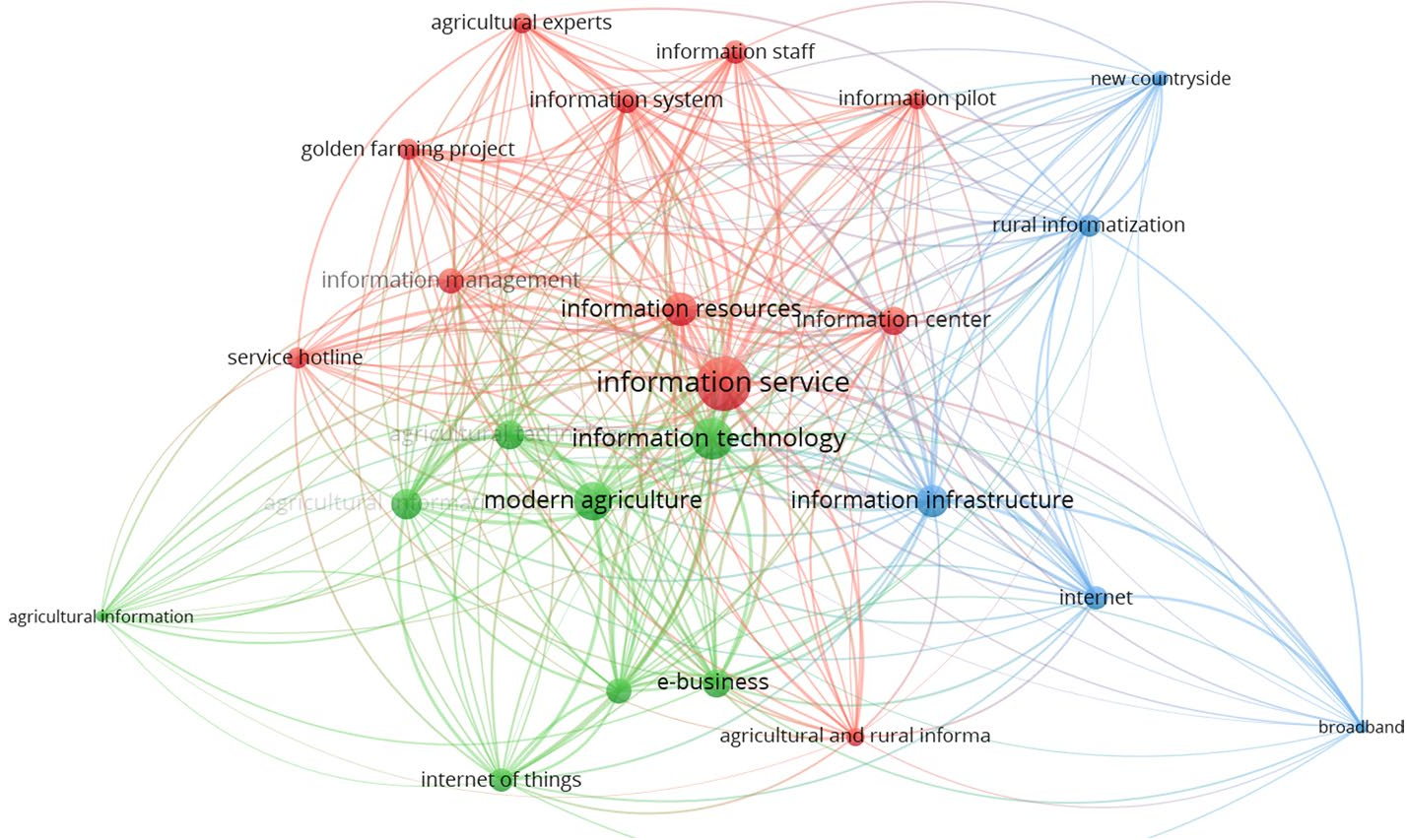 Figure: The semantic network of high-frequency keywords showing the interconnections between service and technology.
Experiments & Results: A Story of Two Eras
The study reveals a "Great Leap" in policy intensity around 2006.
The Growth Curve
Before 2006, rural informatization was a niche concern (avg. 4 policies/year). Post-2006, it became a national priority, peaking in 2016 with 37 major policies. This surge aligns with the "National Informatization Development Strategy (2006–2020)."
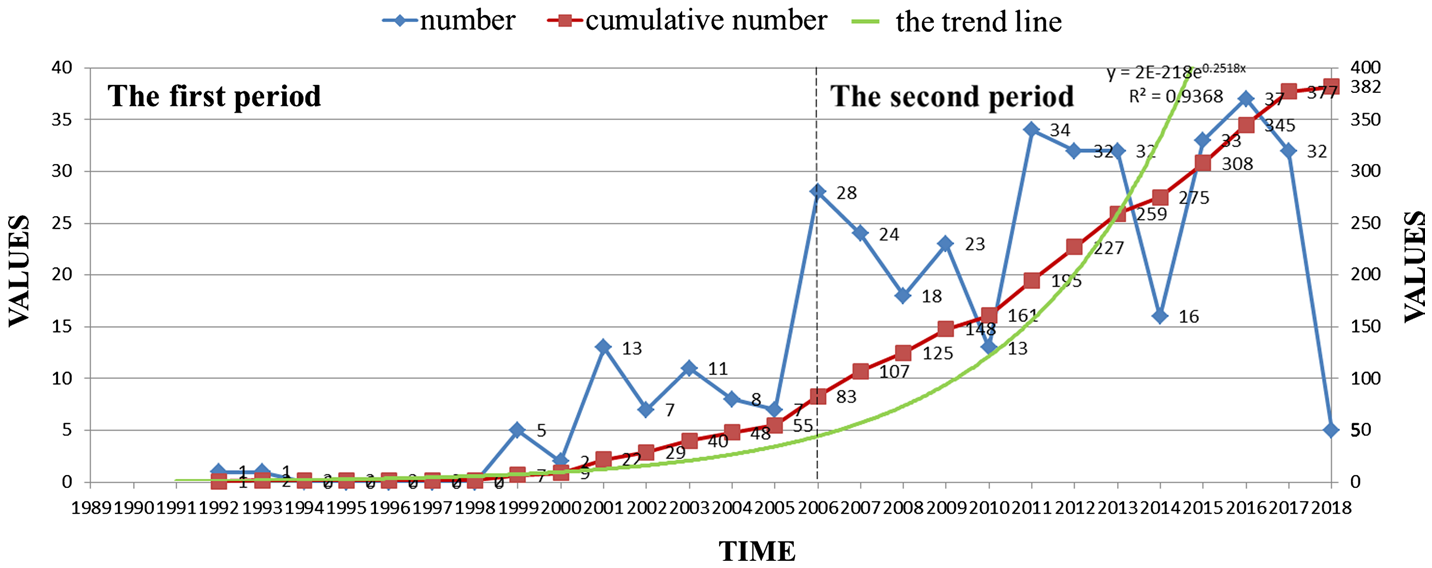 Figure: The fluctuating yet increasing trend of policy issuance, highlighting the 2006 inflection point.
The Administrative "Power Map"
The Ministry of Agriculture (MOA) is the undisputed "Lead Author" of rural policy, involved in 47% of all documents. However, the study find a growing trend of Joint Issuance. Complex tasks like "Agricultural Product Price Information" now require signatures from 7+ agencies, including finance (MOF) and commerce (MOFCOM).
High Impact vs. Zero Impact
The "Policy Polarization" result is striking:
- Top 1%: Policies like the Medium and Long-term Plan for S&T Development have 900+ citations, acting as "Constitutional" guides for the sector.
- The Long Tail: Over 50% of policies receive zero citations, suggesting that many departmental notices fail to gain traction or are too specific to have a cascading effect.
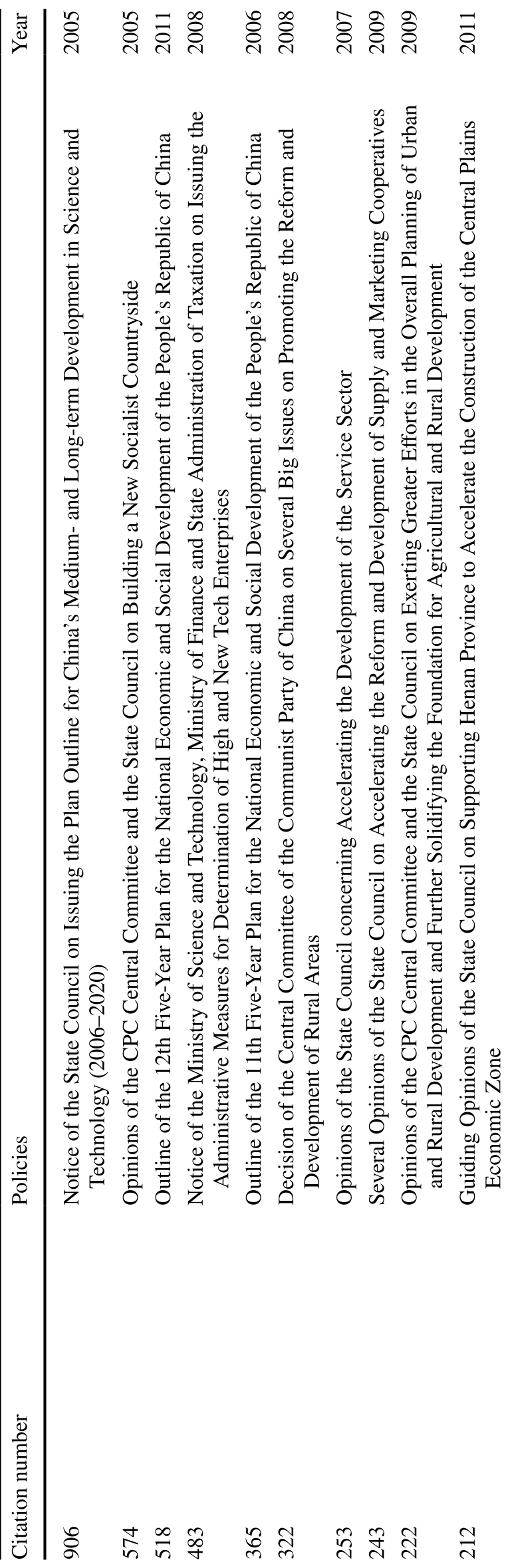 Table: The "Elite" policies that dominate the administrative landscape.
Critical Analysis & Conclusion
Takeaway
The paper proves that China’s rural informatization is no longer just about "laying cables" (Infrastructure). It has shifted toward service-oriented ecosystems where e-commerce and IoT are the new frontiers.
Limitations & Future Outlook
While the bibliometric approach is rigorous, "citations" in a policy context don't always equal "success/implementation" on the ground. A policy can be cited frequently but implemented poorly.
The authors correctly identify that the "Western Region Gap" remains. Future research must look at Policy implementation efficiency—moving from what is written in Beijing to how it changes a farmer's smartphone usage in Xinjiang. This work sets the baseline for the next era of "Digital Village" research under the Rural Revitalization umbrella.