
Mining the Lewis Turning Point: A Data-Driven Analysis of Rural Labor Transfer
Analysis of Rural Labor Transfer Based on Network Data Mining and Financial Time Series Statistics
This research develops a quantitative framework using Dynamic Time Warping (DTW) and K-means clustering to analyze rural labor transfer in China. By combining network data mining with the Lewis Dual Economy model, it identifies critical transitions in agricultural labor productivity and employment structure.
TL;DR
This study leverages advanced Network Data Mining and Financial Time Series Statistics to decode the complexities of China's rural labor migration. By utilizing Dynamic Time Warping (DTW) and clustering algorithms, the authors analyze the shift from traditional agriculture to modern industry, providing empirical evidence that China has surpassed the "First Lewis Turning Point" and must now prioritize agricultural labor productivity over simple relocation.
Background & Motivation: The Dual Economy Challenge
The "Dual Economic Structure" theory, pioneered by W.A. Lewis, posits a divide between traditional agriculture (low marginal return) and modern industry (high productivity). In China, the transition is hindered by low education levels, lack of non-agricultural skills, and an underdeveloped social security system.
The authors argue that existing qualitative research cannot capture the nuanced "push-pull" forces of the market. To solve this, they treat labor migration data as a Financial Time Series, applying data mining techniques to identify patterns that traditional linear models miss.
Methodology: Beyond Euclidean Distance
The core innovation lies in the application of Dynamic Time Warping (DTW) for labor data. While standard Euclidean distance measures point-to-point, DTW allows for "warping" the time axis to find the optimal alignment between two sequences.
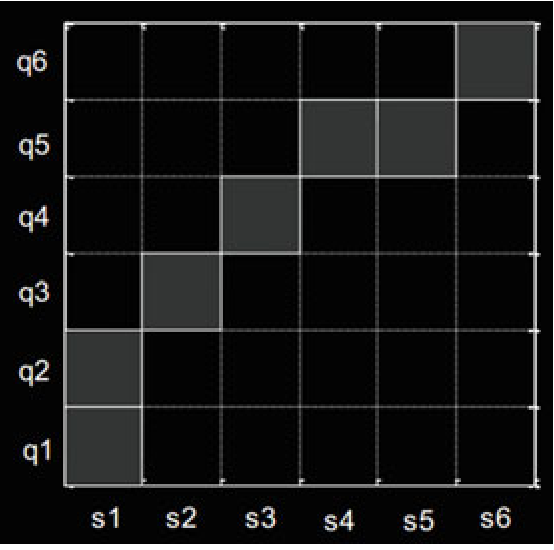
The Analytical Pipeline:
- Time Series Description: Defining migration data as .
- DTW Matching: Comparing unequal lengths of labor transfer data across different regions of Hebei Province.
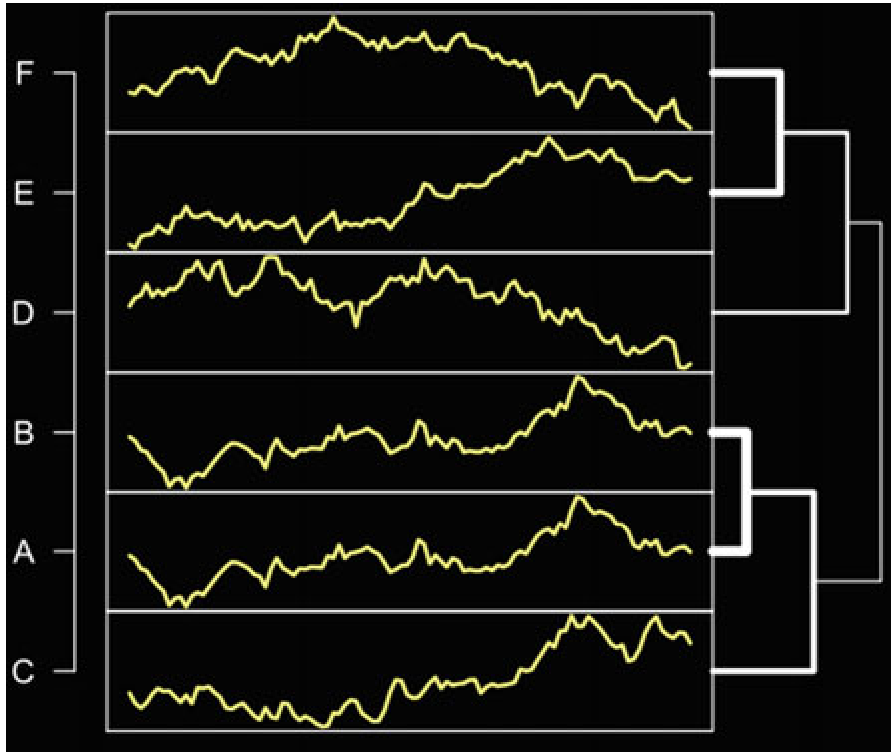
- K-means Clustering: Partitioning regions into clusters based on their labor transfer efficiency and industrial absorption capacity.
- Lewis Model Simulation: Mapping capital accumulation against marginal labor productivity.
The Lewis Model in the Data Age
The study visualizes the relationship between capital (K), wages (WS), and labor demand (D). As capitalists reinvest profits, the demand curve shifts from to , eventually hitting the Lewis Turning Point (S).
Key Insight: At point S, the "unlimited supply of labor" ends. To attract more workers, the industrial sector must raise wages, forcing a mandatory increase in agricultural technological adoption to maintain output.
Critical Findings & SOTA Comparison
- Productivity Gap: The marginal productivity of labor in the secondary industry is being squeezed by capital densification (mechanization), making the tertiary industry the primary engine for future rural labor absorption.
- Economic Impact: Reference data suggests a per capita GDP contribution rate of 0.85% during the farmer transfer process, validating the macroeconomic redistribution of resources.
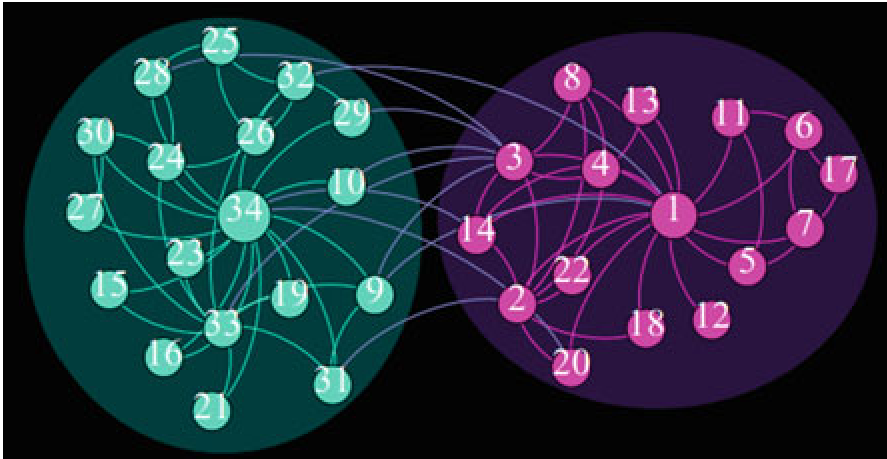
- Labor Division: Using the Label Propagation Method (LPC) on network datasets (e.g., Karate dataset simulations), the study proves that integrated labor markets lead to more stable "community" structures in urban environments.
Conclusion and Future Outlook
The paper concludes that China's primary challenge is no longer just "moving" people, but "upgrading" them. As the country moves past the first Lewis Turning Point, the focus must shift toward:
- Labor Technology: Improving the skill sets of transferred workers to match high-tech industrial needs.
- Market Integration: Removing institutional barriers (Hukou, social security) that prevent land circulation.
Limitations: While DTW is robust, the model relies heavily on the quality of regional financial reporting. Future work should integrate multi-modal data, such as satellite imagery of land use, to further validate labor transfer trends.