
Breaking the Data Barrier in Rural Healthcare: Advanced Information Extraction for Patient Descriptions
Research and Implementation for Rural Medical Information Extraction Method
The paper proposes a specialized medical information extraction (IE) framework tailored for the colloquial and irregular nature of rural Chinese patient descriptions. It utilizes a hybrid approach of Naïve Bayes classification and rule-based methods, achieving an 89% accuracy for disease extraction and 95% for time information.
TL;DR
Rural healthcare systems often fail to match symptoms with illnesses because patient descriptions are too "messy" and colloquial. This paper introduces a robust framework that uses Naïve Bayes classification, Dependency Analysis, and MapReduce parallelization to transform chaotic patient narratives into structured, clinical-grade data, achieving up to 95% accuracy in key metric extraction.
Problem & Motivation: The "Noise" in Rural Medicine
In rural Chinese clinics, the first point of data entry is often a patient’s verbal description. Unlike formal medical journals, these descriptions are:
- Highly Colloquial: Using local dialects or non-standard terms.
- Short & Sparse: Lacking the context found in long-form medical records.
- Noisy: Containing irrelevant personal stories or redundant information.
Existing tools designed for Electronic Health Records (EHR) often fail in this environment. The authors identified a critical need for a system that can not only identify the disease but also its temporal context (time) and severity (degree).
Methodology: A Hybrid Intelligence Pipeline
The system architecture is divided into four critical stages to ensure both accuracy and scalability.
1. Pretreatment and Classification
The system uses the NLPIR tool for initial Chinese segmentation. For disease identification, the authors don't rely on simple keyword matching. Instead, they use a Naïve Bayes classifier with a specific probability threshold.
- The Threshold Logic: If the maximum probability of a word belonging to a disease class is below 0.05, it is discarded as noise, significantly reducing false positives.
2. Dependency Analysis (Linking the Context)
Finding a "headache" and "fever" is not enough. The system must know if the patient had a "mild headache today" vs. a "severe fever yesterday." The authors utilize LTP-Cloud to perform syntax analysis, identifying ADV (Adverbial) relationships between degree words and symptoms, and verb-object relationships to anchor time modifiers.
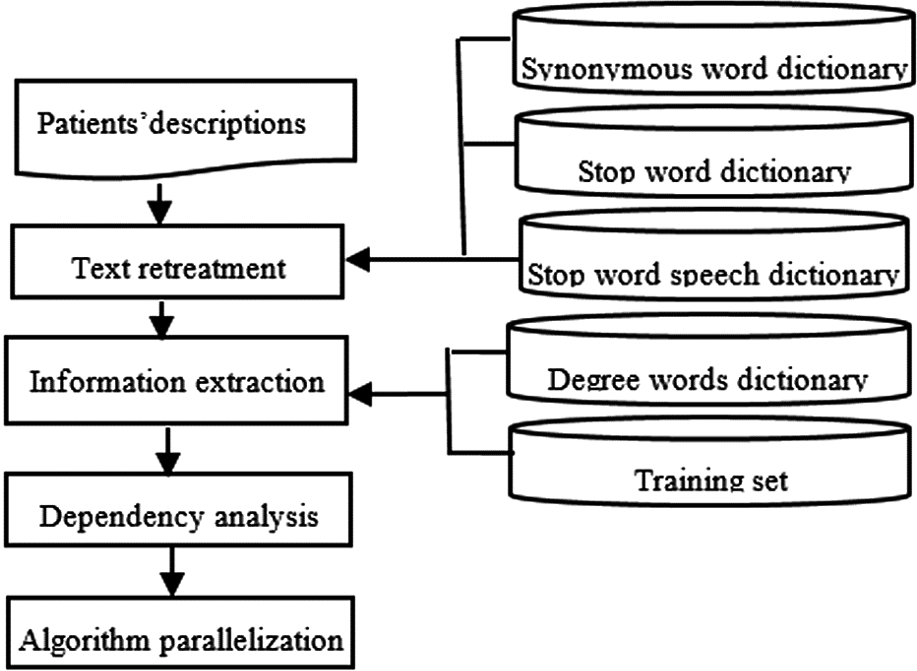 Figure 1: The proposed functional framework including pretreatment, extraction, and parallelization.
3. Distributed Processing via MapReduce
To prepare for the big data demands of regional health networks, the authors parallelized the Naïve Bayes algorithm. By using Hadoop and MapReduce, the calculation of category probabilities is split into three phases:
- Map Phase: Organizes text count and keyword occurrences into
<Key, Value>pairs. - Reduce Phase: Aggregates these counts to calculate global probabilities across the cluster.
Experiments & Results: Precision Where it Matters
The researchers tested the system on hypertension datasets labeled according to ICD-10 standards (530 training texts, 65 categories).
Key Performance Metrics:
- Time Extraction: 0.95 Accuracy / 0.88 Recall (The strongest performer).
- Disease Extraction: 0.89 Accuracy / 0.86 Recall.
- Relationship Mapping: 0.88 Accuracy / 0.74 Recall.
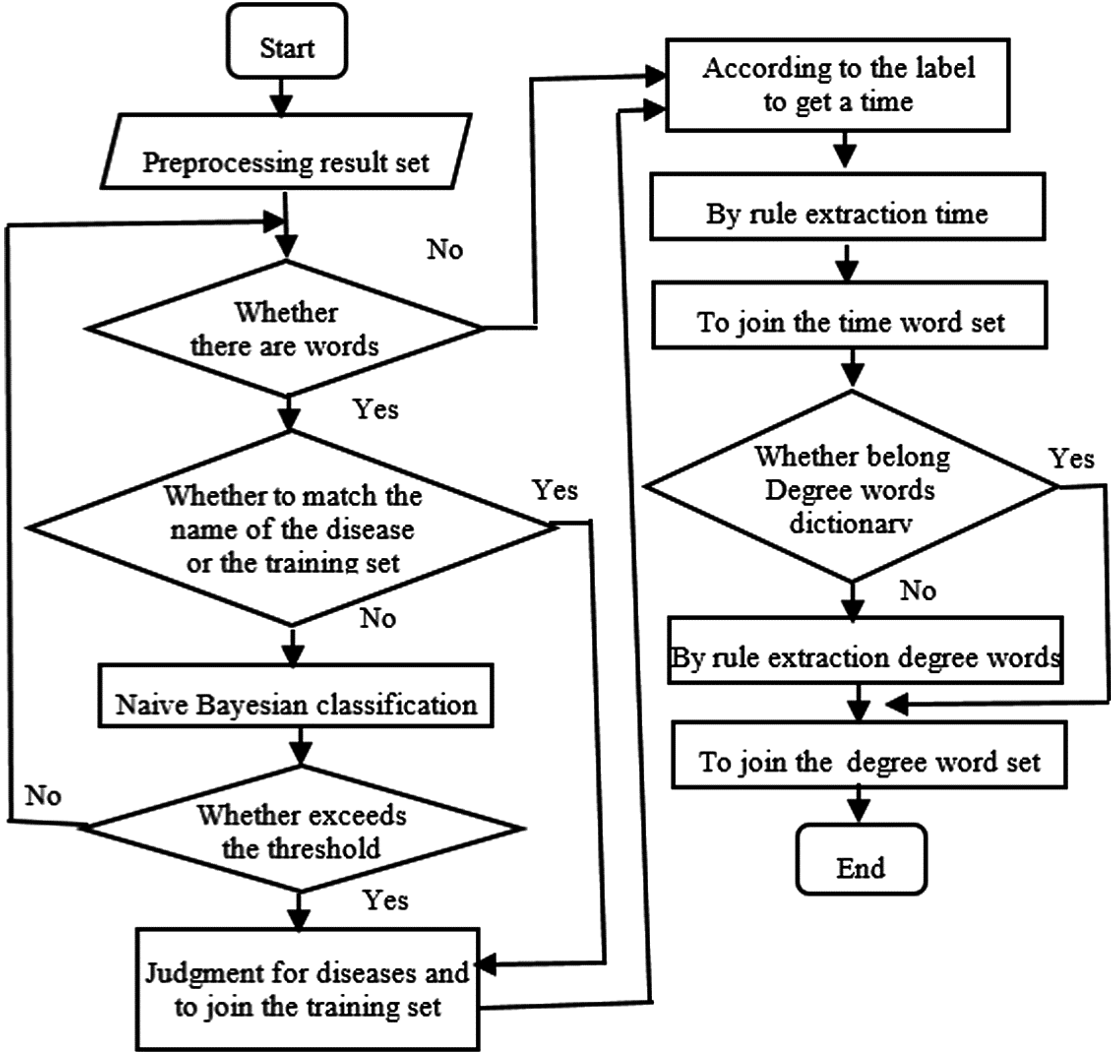 Figure 2: The logic flow for obtaining dependencies between symptoms and modifiers.
The experiments confirmed that a probability threshold of 0.05 provided the optimal balance between filtering noise and capturing relevant medical terms.
Critical Analysis & Conclusion
Takeaway
By combining statistical machine learning (Naïve Bayes) with linguistic structure (Dependency Parsing), this method successfully parses irregular human speech into a "Disease-Time-Degree" triple that a clinical decision support system can actually use.
Limitations & Future Work
- Ambiguity: While Rule-plus-Dictionary works for time/degree, it may struggle with highly creative or rare metaphors used by older rural populations.
- Dependency on LTP-Cloud: The system relies on external cloud services for parsing, which might be a bottleneck in areas with poor internet connectivity—a common issue in rural settings.
- Future Path: The authors suggest enriching dictionaries and refining rules to further improve the recall rate of complex "corresponding relations."
This work lays a solid foundation for the "Smart Rural Clinic," ensuring that even the most colloquial patient description can lead to a precise, data-driven diagnosis.