
EDUSAFE: Revolutionizing Radiation Safety via Real-Time Sensor Fusion and Augmented Reality
A Safety System for Human Radiation Protection and Guidance in Extreme Environmental Conditions
This paper presents a comprehensive safety system architecture designed for human radiation protection in extreme environments like the CERN ATLAS cavern. The system integrates a Data Acquisition (DAQ) system, a Control System (CS), and a Remote Monitoring System (MS) to provide real-time guidance and physiological monitoring for personnel.
TL;DR
Researchers have developed a state-of-the-art safety system for extreme environments, specifically tested in the ATLAS cavern at CERN. By combining wireless DAQ, real-time control algorithms, and Augmented Reality (AR), the system provides personnel with localized radiation hotspots and physiological monitoring, reducing intervention time and radiation dose accumulation.
Academic Positioning: This work represents a significant leap from passive dosimetry to active, personalized safety intervention. It is a cornerstone project (EDUSAFE, FP7 Marie Curie ITN) that bridges the gap between high-energy physics infrastructure and advanced wearable technology.
Problem & Motivation: The "Blind" Maintenance Challenge
Maintenance in hazardous environments like the ATLAS underground cavern is fraught with "invisible" dangers. While radiation is the primary concern, other risks include oxygen deficiency (ODH) from cryogenic leaks and high-pressure gases.
The fundamental problem with existing safety measures is their reactivity. Dosimeters tell you how much radiation you already received, but they don't guide you on how to avoid it in real-time. This lack of situational awareness increases worker stress, which leads to longer intervention times and, paradoxically, more radiation exposure. The authors' insight was to create a "digital twin" of the safety environment that talks back to the user instantly.
Methodology: The Three Pillars of Protection
The system's architecture is divided into three functional layers: DAQ, Control, and Monitoring.
1. The Wearable Edge (DAQ & MPSS)
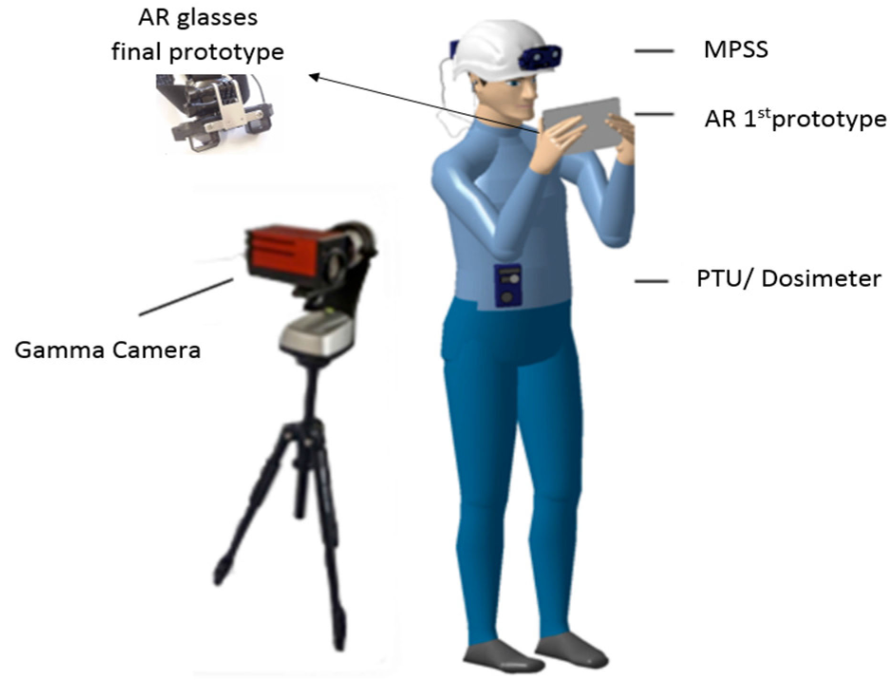
The worker is equipped with an integrated helmet system containing:
- MPSS (Mobile Personal Supervision System): A Raspberry Pi-based unit capturing MJPEG video and bidirectional audio.
- PTU (Personal Transmitting Unit): Custom PCBs that acquire data from biological (body temperature) and environmental (O2, CO2, Barometric pressure) sensors.
- DMC Dosimeter: For operational dose equivalents.
2. The Intelligent Core (Control System)
The Control System (CS) acts as the logic layer. Built on the Google Web Toolkit (GWT), it monitors high-frequency JSON data streams against predefined thresholds. If a worker’s O2 levels drop or the radiation dose rate exceeds 0.0075 mSv/h, the CS triggers multi-platform alarms (AR glasses, supervisor dashboard, and tablets).
3. Visual Guidance (AR & Remote MS)
Perhaps the most "Future-Tech" aspect is the AR integration. Using Vuzix STAR 1200XL-D glasses, technicians see their current dose rate superimposed on their actual environment. Meanwhile, a remote supervisor uses the EDUSS GUI to watch live video from the worker's perspective and provide voice guidance.
Experiments & Results: Performance in the Cavern
The system was validated in the CERN USA15 cavern. Key metrics included:
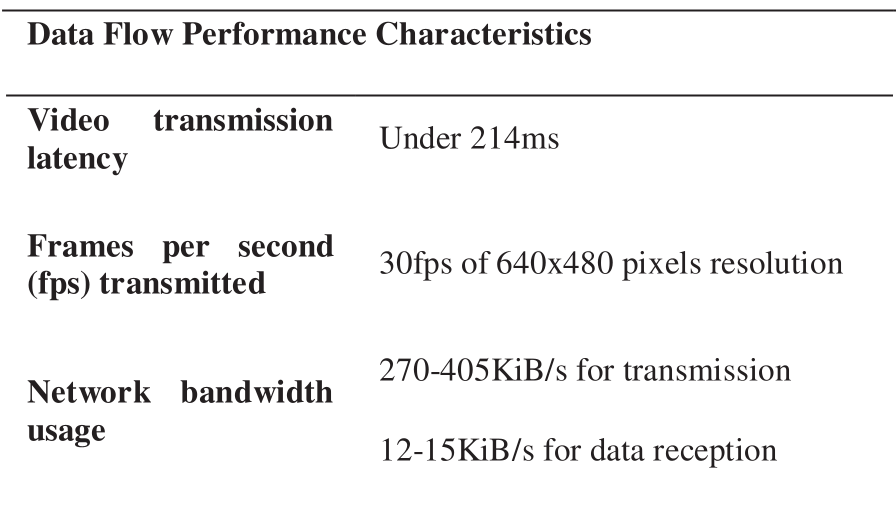
- Latency: Video transmission was tuned to <214ms, ensuring that the supervisor and worker were seeing the same thing at the same time—critical for "left-a-bit, right-a-bit" guidance.
- Data Filtration: A custom value-filter algorithm was implemented to prevent database bloating by only recording significant changes in sensor values, moving the timestamp forward for stable readings.
- Power Efficiency: Despite the complexity, the PTU board runs for 5-6 hours on a 6800 mAH battery, covering a full maintenance shift.
Critical Insight & Conclusion
The true value of this system lies in the Reduction of Intervention Time. In radiation safety, time is directly proportional to dose (Total Dose = Dose Rate × Time). By providing AR guidance and real-time remote supervision, workers finish tasks faster and with less stress.
Limitations: The system currently relies on the CERN Wi-Fi network (IEEE 802.11n), which might be a bottleneck in environments with high electromagnetic interference or thicker shielding walls.
Future Outlook: Beyond CERN, this architecture is a blueprint for "Safety 4.0." Its modularity allows for the swapping of sensors, making it equally applicable to nuclear power plant decommissioning, deep-sea exploration, or extra-vehicular activities in space.