
SAKURA-Viewer: Solving the Information Overload in Chronic Patient Care
SAKURA-Viewer: Intelligent Order History Viewer Based on Two-Viewpoint Architecture
The paper introduces SAKURA-viewer, an intelligent medical order history interface that utilizes a two-viewpoint architecture (semantic and temporal) to consolidate fragmented patient records. It achieves significant data compression and improves clinical workflow by integrating "output-as-input" data entry mechanisms.
TL;DR
SAKURA-viewer is an intelligent medical record interface that uses a dual-view architecture to separate what happened (semantic variety) from when it happened (temporal progression). By consolidating repetitive medical orders, it reduces visual clutter by up to 80%, allowing doctors to spot rare medical events and enter new data with higher accuracy through an "output-as-input" design.
Background: The "Burying" Effect in Medical Records
In the treatment of chronic diseases, such as lifestyle-related illnesses, patient records grow massive over time. The fundamental problem is that high-frequency data (the same blood pressure medication prescribed every month) often "buries" low-frequency data (a specific allergic reaction or a rare lab test).
Traditional systems rely on linear, text-based scrolling. For a clinician, finding a specific change in dosage from three years ago is like finding a needle in a haystack of repetitive entries.
Methodology: The Two-Viewpoint Architecture
The core innovation of SAKURA-viewer lies in its use of Concept Hierarchy to filter and reorganize data into two distinct but synchronized views:
1. The Diversity View (Semantic Perspective)
This view uses a Content-Oriented Data Filter. It strips away time and focuses on the unique items. If a patient has been on the same drug for 10 years, it appears only once. This highlights the diversity of the treatment history and ensures that rare variations in dosage or drug types are immediately visible.
2. The Progress View (Temporal Perspective)
This view uses an Outline-Oriented Data Filter. It focuses on the chronology, showing the intervals between medical episodes. Instead of showing full details, it uses "linkage data" (ID pointers) to refer back to the Diversity View.
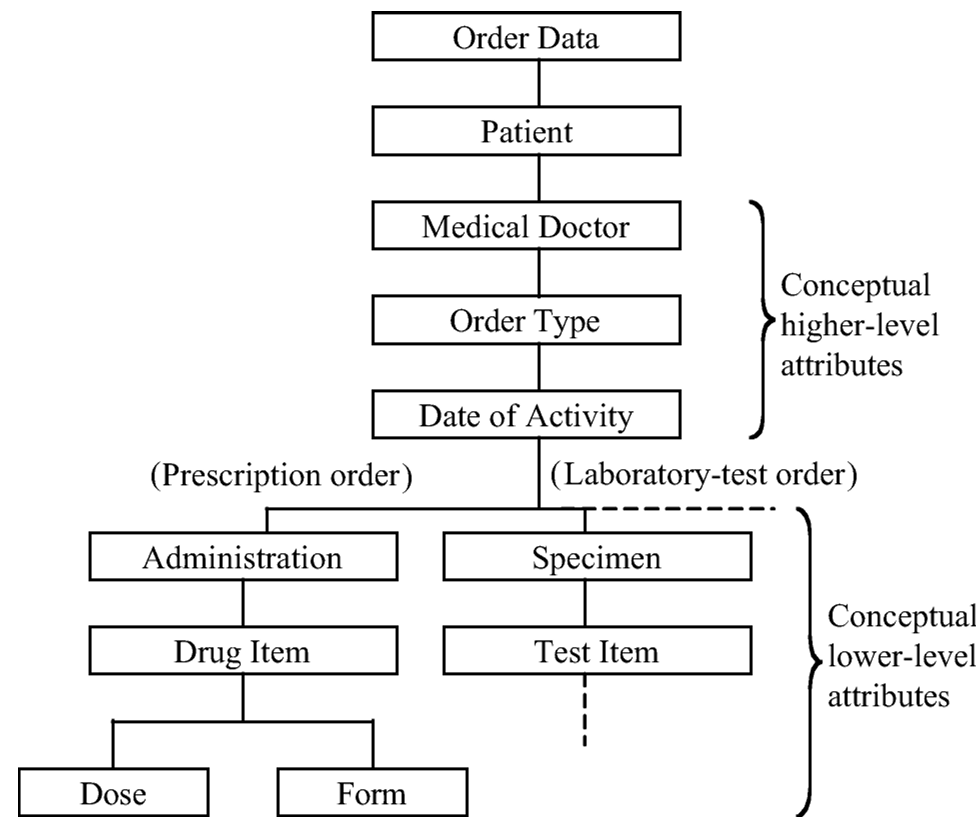 Fig 1: The reorganization of order data into temporal and semantic viewpoints.
The "Output-as-Input" Philosophy
One of the paper's most practical contributions is the data entry method. Every "button" in the viewer acts as a reference. If a doctor sees a prescription from two years ago that worked well, they can simply click it to re-order it. This "patient-centric" entry reduces the need for manual typing (crucial for multicharacter languages like Japanese) and prevents "wrong-item" errors.
Experimental Results: Compressing 9 Months into 1 Screen
The authors conducted a rigorous analysis of 3,319 chronic patients. The results regarding Data Consolidation were striking:
- Prescription Orders: Over 6 months, a traditional viewer would display 34.18 drug items. SAKURA-viewer consolidated this into just 7.06 items.
- Consolidation Coefficient: As shown in the study, the longer the medical history, the more effective SAKURA-viewer becomes. The consolidation coefficient decreases steadily over time, proving that the system scales better than linear lists.
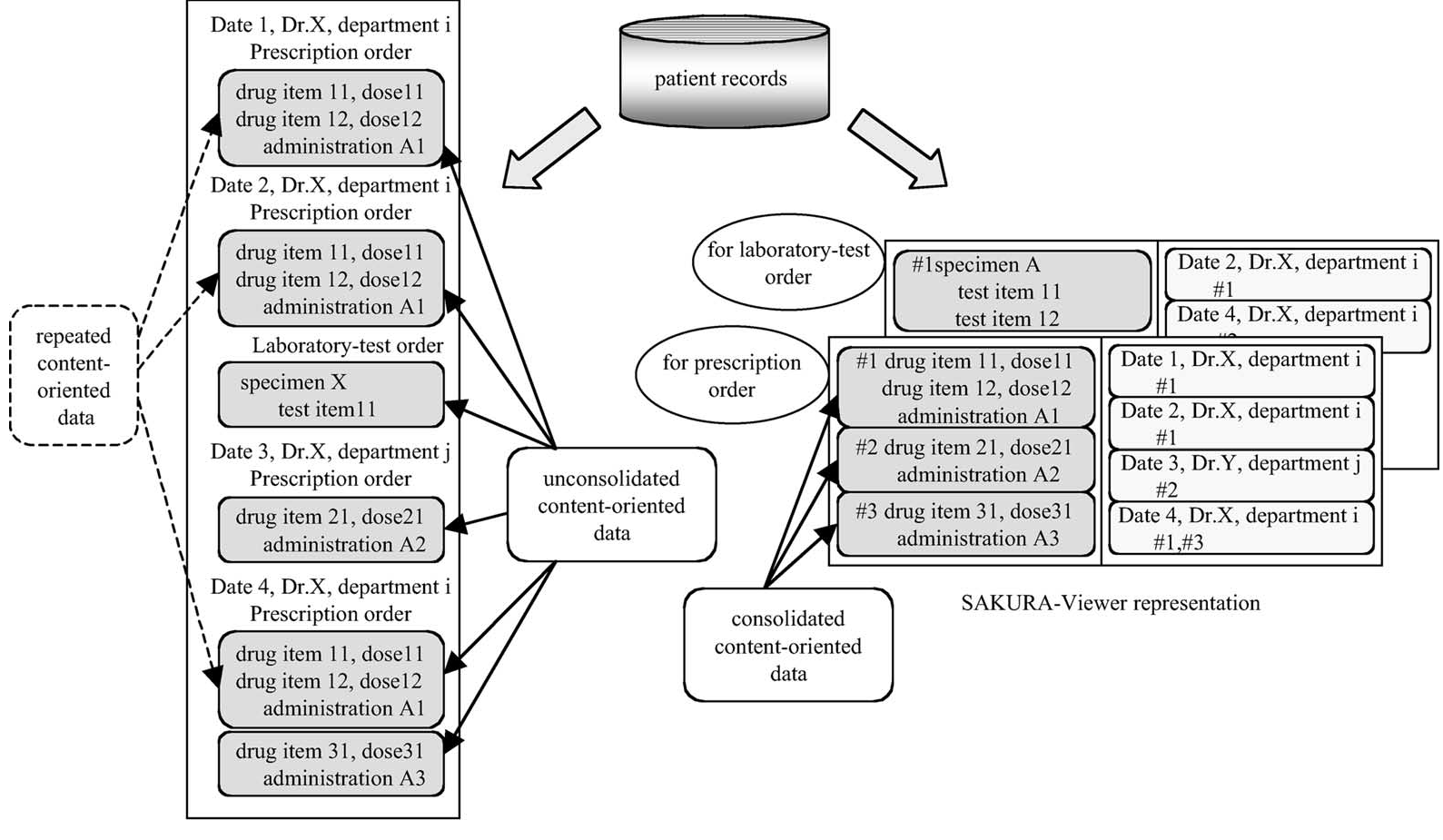 Fig 2: Comparison between SAKURA-viewer (top) and traditional text-based viewer (bottom).
User Feedback and Safety
A satisfaction survey of 15 clinicians revealed an average satisfaction score of 4.20/5.0 for space efficiency. More importantly, the system proved effective in avoiding:
- Omission Errors: Doctors didn't forget tests because the Progress View showed the "gaps" in care.
- Wrong-item Errors: Clicking existing history is safer than searching a database of thousands of drugs.
Final Insight: The Future of Semantic EHRs
SAKURA-viewer moves away from "data recording" toward "knowledge representation." Its success suggests that future medical interfaces should stop treating patient history as a simple log file and start treat it as a structured knowledge base.
Limitations: The system performed slightly less effectively for lab tests than for prescriptions, as lab tests often involve large batches of disparate items that are harder to consolidate semantically. Future work involves integrating more advanced data mining to automate the discovery of clinical patterns.