
Bridging the Satellite Data Gap: A Crowd-Powered Portal for Remote Sensing Analysis
A satellite data portal developed for crowdsourcing data analysis and interpretation
The paper presents a novel satellite data portal that integrates crowdsourcing into the remote sensing data lifecycle. Developed specifically for the Beihang Satellite Ground Station, the system leverages "teaching and learning" workflows to enable students to perform complex data analysis and interpretation tasks, effectively addressing the "data deluge" challenge.
TL;DR
To combat the overwhelming "data deluge" from modern satellites, researchers at Beihang University have developed a unique data portal that blends professional data publishing with a crowdsourcing engine. By transforming complex analysis tasks into educational assignments, the system harnesses student intelligence to turn raw HDF data into interpretable maps and models.
Background Positioning: The Data Deluge Problem
We are currently living in an era of "Satellite Deluge." With high-resolution sensors from EOS, NOAA, and FY series satellites capturing near-real-time snapshots of Earth, the global download volume exceeds several terabytes per day.
The bottleneck is no longer acquisition, but interpretation. While machine intelligence has made strides, complex tasks like geometric rectification, supervised classification, and trend surface analysis still require the "Human Touch"—specific background knowledge that algorithms often lack.
Problem & Motivation: Why Current Portals Fail
Traditional satellite data portals (like NOAA’s or MODIS) act as simple digital warehouses: you search, you download, and you're on your own. Conversely, general crowdsourcing platforms (like Amazon Mechanical Turk) aren't designed for "Big Data" or the "Big Expertise" required for remote sensing. Moving gigabytes of HDF files to a third-party platform is inefficient, and the general public lacks the training to use specialized software like ENVI or IDL.
The authors recognized a "win-win" opportunity: university students need real-world data to learn, and scientists need manpower to process data.
Methodology: The "Teaching and Learning" Crowdsourcing Model
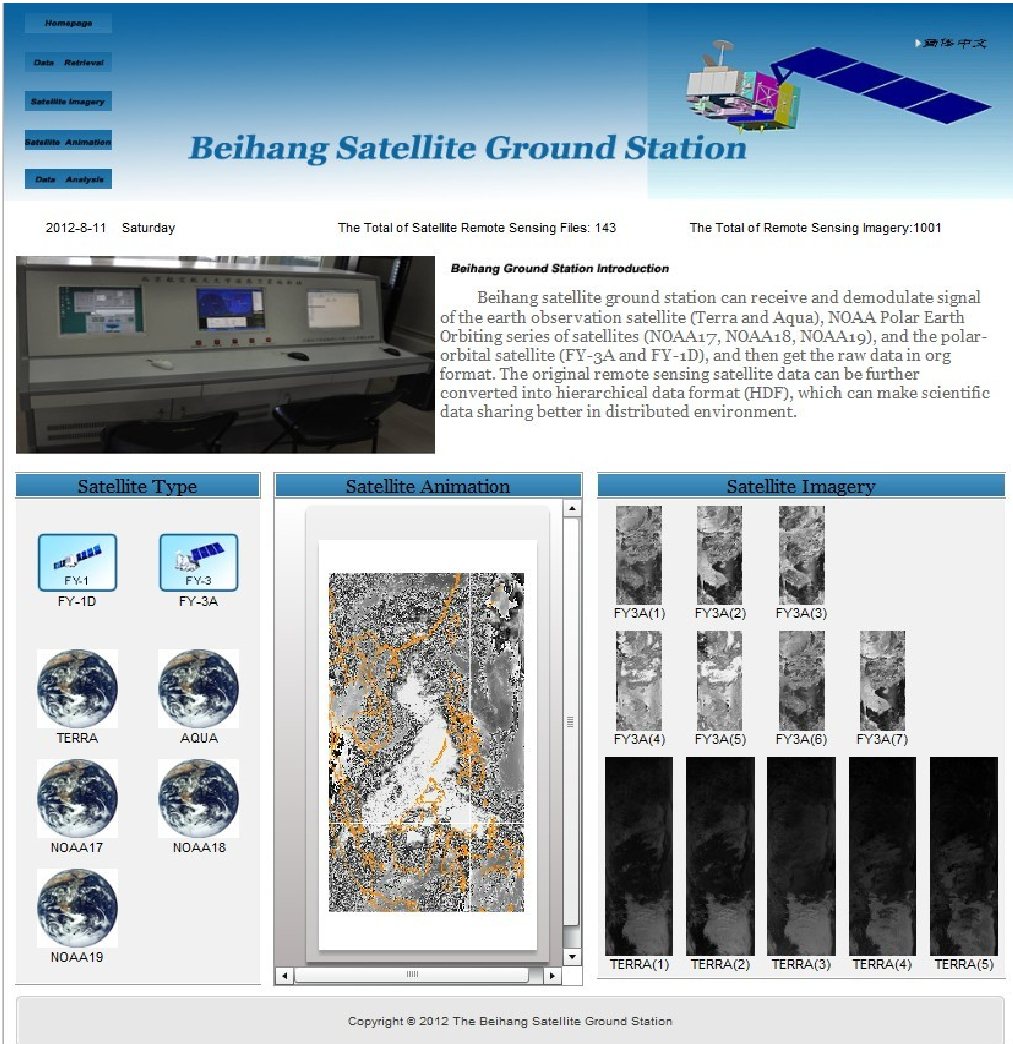
The proposed portal integrates two previously separate systems: a Web-based data publishing system and a modified version of Pipeline (a multimedia collaboration platform).
1. The Triple-Role Architecture
The system defines three core stakeholders:
- Requesters (Lecturers): Design projects, set difficulty levels, and decompose massive datasets into manageable tasks.
- Workers (Students): Access the portal, download raw HDF files or pre-processed images, and perform analysis using provided toolsets.
- Reviewers (Lecturers/Experts): Audit the submissions, assign scores, and aggregate the best results for public release.
2. The PopRank Algorithm
To evaluate performance without purely financial incentives, the authors introduced the Popularity Ranking (PopRank) system: This formula factors in the difficulty of the project () and the specific task (), linking a student's standing to the complexity of the science they tackle.
Experiments & Results: Putting Students to Work
The portal was applied to the Beihang Satellite Ground Station, processing data from AQUA (18GB/day), TERRA (14GB/day), and others.
Key Findings:
- Efficiency: The student community fulfilled data interpretation tasks with significantly higher speed and efficiency than the small pool of professional staff.
- Quality: While results were occasionally "a bit short of accuracy" compared to 20-year veterans, they were deemed "acceptably good" for research purposes.
- Unforeseen Value: Interestingly, students occasionally identified patterns (e.g., specific weather anomalies or land-use changes) that experts hadn't prioritized, providing a "fresh set of eyes" on old data.
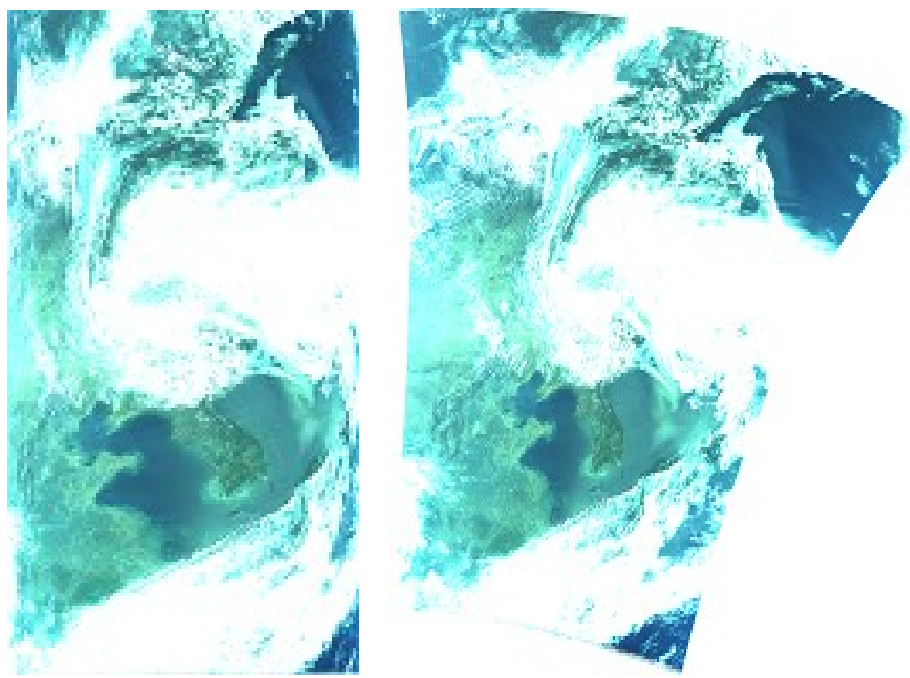 Above: Example of a task result—raw data (left) vs. student-corrected geometry (right).
Critical Analysis & Conclusion
Takeaways
The brilliance of this work lies in its institutional integration. By viewing the classroom as a "crowd," the authors solved the two hardest problems in crowdsourcing:
- Retention: Students must participate to earn their course grades.
- Training: The "teaching" aspect of the portal ensures the crowd actually knows how to use the complex software required.
Limitations
However, the system is currently a "closed loop." Its success depends on the student enrollment at Beihang University. To scale to a global "Open Science" level, the incentive model would need to transition from "Grades" to "Professional Certification" or "Micro-funding."
Future Outlook
As we move toward 2026, the transition will likely involve AI-Assisted Crowdsourcing. Humans will no longer do the "grunt work" of clicking pixels but will instead focus on "Human-in-the-Loop" verification of AI-generated interpretations. This portal provides the foundational infrastructure for that collaborative future.