
Scaling the Ripple Effect: Parallel Influence Maximization in Large-Scale Social Networks
Scalable and Parallel Processing of Influence Maximization for Large-Scale Social Networks
The paper proposes two parallel algorithms, Community-based Max Degree (CMD) and Max Degree Cost Ratio (MDCR), designed for scalable Influence Maximization (IM) on large-scale social networks. These methods leverage the Hadoop and Giraph frameworks to achieve high-performance seed selection for both general and budgeted scenarios.
TL;DR
Finding the most influential users in a social network—a problem known as Influence Maximization (IM)—is crucial for viral marketing but computationally "heavy" (NP-hard). This paper introduces CMD and MDCR, two parallel algorithms built on Hadoop and Giraph. By leveraging community structures and cost-efficiency ratios, these methods provide a scalable solution that outpaces traditional heuristics in both speed and influence reach.
Problem & Motivation: The Scalability Wall
Social networks today are massive, often comprising millions of users and billions of connections. The goal of IM is to find the "top-k" seed nodes that trigger the largest possible information cascade.
While early "Greedy" algorithms provided theoretical guarantees, they were notoriously slow (sequential execution). Even optimized versions like CELF struggled with scalability. Furthermore, real-world marketing has two constraints often ignored by theory:
- Community Overlap: Influential people in the same clique often influence the same people, wasting "seed" potential.
- Budget Constraints: High-influence users (like celebrities) cost more to engage than average users.
Methodology: Divide, Conquer, and Optimize
1. Community-based Max Degree (CMD)
CMD operates on the intuition that seeds should be spread across different communities to maximize coverage. The process follows three stages:
- Phase 1: Community Detection: Uses a parallelized Label Propagation Algorithm (LPA) on Giraph. Nodes adopt the " बहुमत" (majority) label of their neighbors iteratively.
- Phase 2: Candidate Selection: Identifies "Significant Communities" where the total degree exceeds the network average.
- Phase 3: Quota Allocation: Seeds are distributed among communities based on their total degree, ensuring larger, more active communities get more seeds.
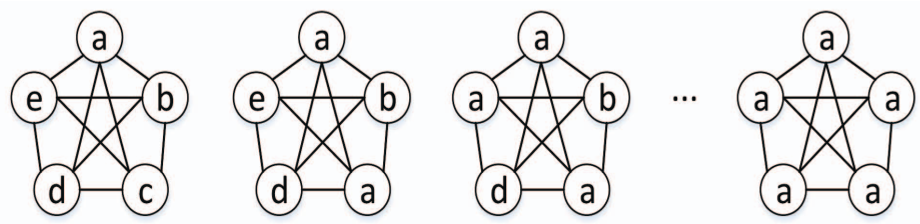 Figure 1: The Iterative Superstep process in Giraph used for parallel computation.
2. Max Degree Cost Ratio (MDCR)
In a budgeted scenario, simply picking the highest-degree node is inefficient if that node is too expensive. MDCR adopts a Greedy Cost-Benefit heuristic: The algorithm parallelizes this by having the Master node track the remaining budget and selecting the best "bang-for-buck" node globally in each iteration.
Experiments & Results: Speed Meets Strategy
The researchers tested their algorithms on four datasets, including the LiveJournal network with nearly 40 million edges.
Performance Gains
- Influence Coverage: As the number of seeds increases, CMD identifies better spread than
DegreeDiscountbecause it avoids the "redundancy" of placing multiple seeds in a single dense community. - Latency: CMD was remarkably faster than traditional heuristics. While methods like
SingleDiscountsee time increases as the seed set grows, CMD's parallel nature keeps the running time relatively flat.
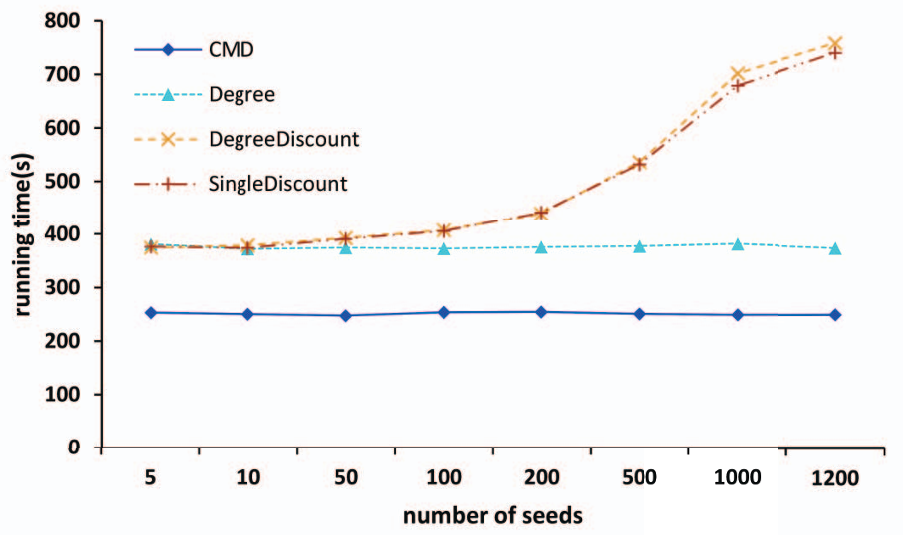 Figure 2: CMD maintains efficient, stable execution times even as seed requirements scale.
Scalability Analysis
The authors demonstrated that their Hadoop-based approach scales effectively with hardware. Increasing the cluster from 3 to 4 nodes reduced execution time by approximately 40-50%. However, they noted a diminishing return when moving to 5 nodes due to increased synchronization overhead—a classic trade-off in distributed computing.
Critical Analysis & Conclusion
The Takeaway
The shift from sequential greedy selection to parallel community-aware selection is essential for modern social graph analysis. By using the natural topology of the network, CMD achieves better diversity in its seed set, leading to a broader influence cascade.
Limitations
- Model Simplicity: The study uses the Independent Cascade (IC) model with a uniform probability (0.01). In reality, influence probabilities are highly heterogeneous and dynamic.
- Platform Overhead: For smaller graphs (like NetHEPT), the overhead of spinning up a Hadoop cluster actually makes the parallel version slower than simple sequential scripts. This solution is purely for Big Data contexts.
Future Outlook
Future research could integrate more complex influence models (like Linear Threshold) or explore real-time seed selection as social graphs evolve dynamically. Moving the implementation to Apache Spark or GraphX might also reduce the latency bottlenecks found in the MapReduce/Giraph framework.