
Beyond Co-authorship: Scalable Semantic Analytics for Detecting Conflicts of Interest
Scalable semantic analytics on social networks for addressing the problem of conflict of interest detection
The paper presents a scalable Semantic Web application for detecting Conflicts of Interest (COI) in the peer-review process by integrating FOAF social networks with DBLP bibliographic data. It utilizes a custom name-reconciliation algorithm for entity disambiguation and employs semantic analytics to discover complex "connecting-the-dots" relationships between authors and reviewers.
TL;DR
This research tackles the "fair play" problem in scientific peer review by building a massive semantic engine that detects Conflicts of Interest (COI). By merging the DBLP bibliography with FOAF social network files, the authors created a graph of over 1.1 million researchers. The system doesn't just look for shared papers; it analyzes collaboration strength and indirect social ties to flag potential bias with surgical precision.
The "Connecting-the-Dots" Challenge
In a world of interdisciplinary research, a Program Committee (PC) Chair cannot possibly know who is friends with whom or who shared a lab five years ago. Existing conference management tools are often "semantic-blind"—they might flag a direct co-author but miss a reviewer who co-edited a book with the author or shares a strong common collaborator.
The core difficulty lies in Entity Disambiguation. Is "Ed H. Chi" the same person as "Ed Huai-hsin Chi"? If you can't solve this, your social graph breaks, and your COI detection fails.
Methodology: Building the Global Research Graph
1. The Multi-Step Integration Process
The authors followed a rigorous workflow: Data Acquisition Data Preparation Entity Disambiguation Querying/Inference.
2. Entity Disambiguation (The Secret Sauce)
To merge FOAF and DBLP, the team adapted a name-reconciliation algorithm that uses both atomic attributes (labels, MBOX hashes, homepages) and association attributes (who do they know?).
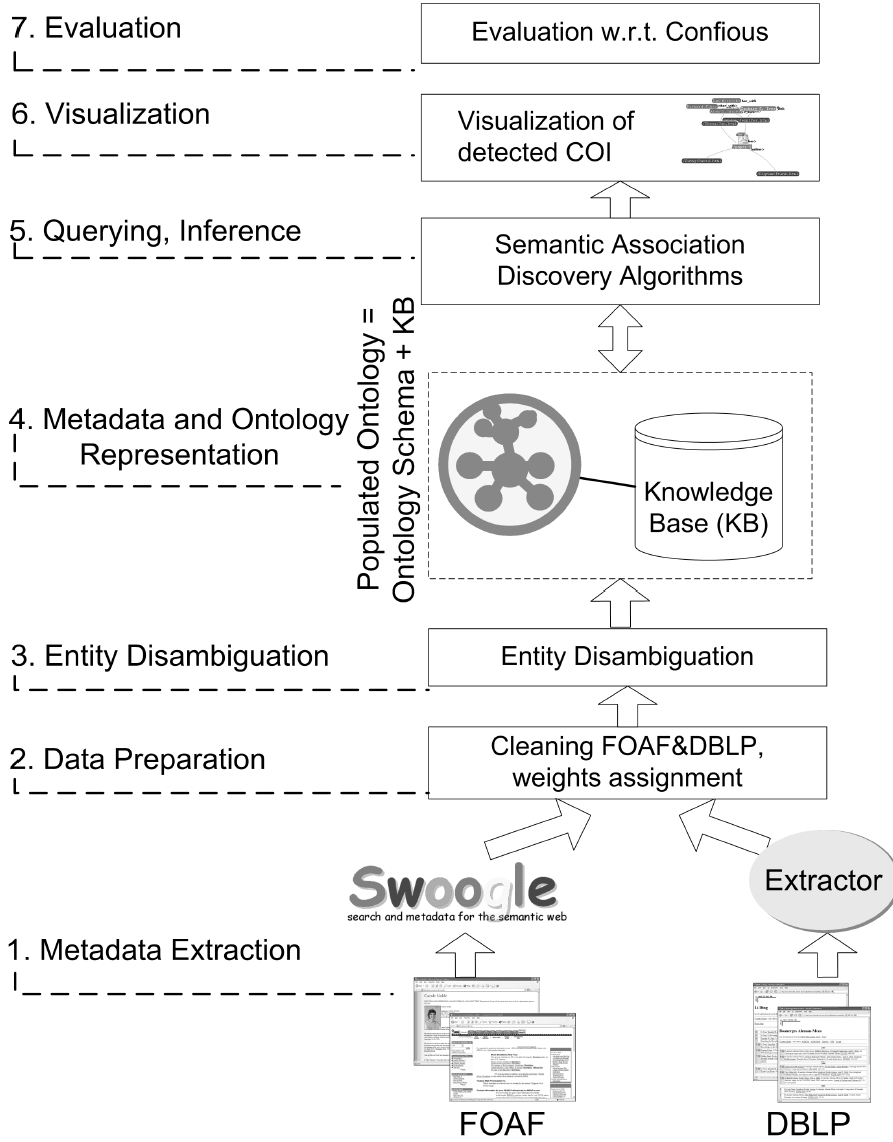 Figure 1: The architecture of the semantic web application development process.
3. Measuring the Strength of a Relationship
Not all collaborations are equal. The paper uses a sophisticated weighting formula where the strength of a connection between two authors increases by for every paper they share (where is the number of authors). This ensures that a local 2-author collaboration is weighted more heavily than a 50-author "mega-paper."
Experiments: Real-World Audit of WWW 2006
The researchers put their system to the test using the tracks of the 2006 World Wide Web Conference. They found numerous cases of High and Medium potential COIs.
| Track | Reviewer | Author | Level | Reason |
|---|---|---|---|---|
| Semantic Web | Steffen Staab | Ian Horrocks | High | Co-authorship |
| Search | Andrew Tomkins | Ravi Kumar | High | Co-authorship |
| Performance | Maarten van Steen | B. Krishnamurthy | Medium | Co-editorship |
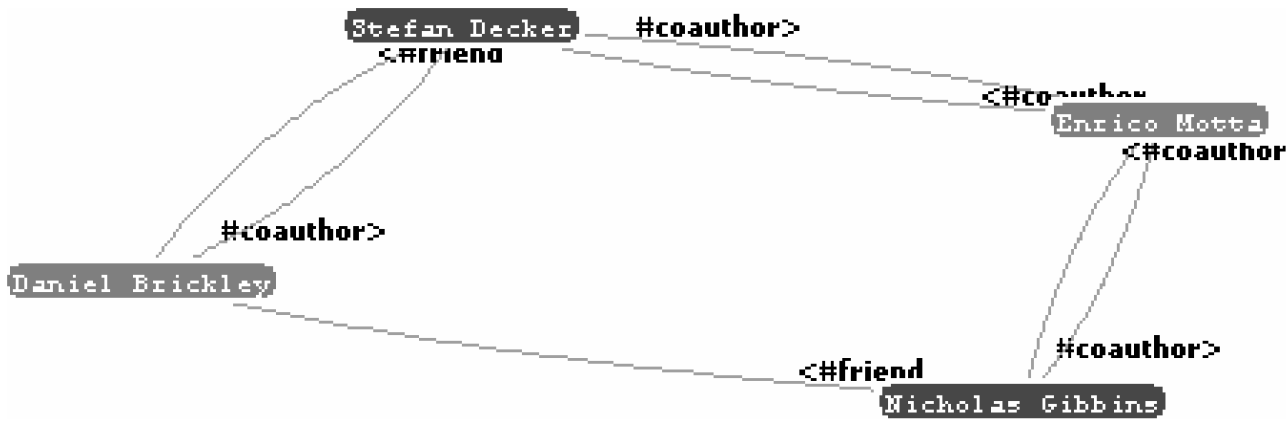 Figure 2: A visualization of discovered semantic associations between researchers.
Critical Insight & Practical Value
The study reveals that "super-stars" (researchers with 150+ publications) naturally trigger high COI flags across the board, which highlights a bottleneck in the peer-review system: finding truly "independent" experts for top-tier researchers is mathematically difficult.
Limitations
- Data Quality: The system is only as good as the FOAF/DBLP data. If an author doesn't update their homepage, the system might miss an affiliation change.
- Incomplete FOAF: While FOAF provides social "friendship" ties, its adoption is still lower than the automated indexing of DBLP.
Final Takeaway
This work demonstrates that Scalability and Semantics are not mutually exclusive. By leveraging RDF and graph-based pathfinding, we can automate the detection of ethical conflicts in global scientific decision-making, ensuring that "fair play" is maintained through data-driven transparency.