
Identifying Events in the Wild: A Scalable Solution for Noisy Twitter Streams
Exploring a Scalable Solution to Identifying Events in Noisy Twitter Streams
This paper presents a scalable real-time event detection framework for noisy Twitter streams using single-pass clustering and compression distance. By modeling event dynamics as a Poisson process and utilizing user diversity to filter noise, the system achieves near real-time processing speeds, outperforming traditional threading baselines in both efficiency and accuracy.
TL;DR
In the fast-paced world of social media, "news" happens on Twitter long before it hits traditional outlets. However, the sheer volume (~400M tweets/day) and the "noisy" nature of the text (slang, abbreviations) make real-time event detection a nightmare. This paper introduces a single-pass clustering framework that uses compression distance and a Poisson-based temporal model to identify significant events in near real-time, effectively filtering out interpersonal chatter from actual breaking news.
Problem & Motivation: The Twitter Chaos
Detecting events in traditional media is known as Topic Detection and Tracking (TDT). While TDT works for curated news articles, Twitter presents three unique hurdles:
- Informal Language: Tweets are filled with typos, hashtags, and slang that break standard TF-IDF and stemming pipelines.
- Noise: Unlike news feeds, most tweets are "banal chatter" (e.g., "I just had a sandwich"), not events.
- Velocity: The data is a firehose. Multi-pass algorithms that need to look at the whole dataset twice are doomed to fail in a streaming environment.
The authors' insight was to move away from traditional word-vector models toward a parameter-free distance measure that can scale and adapt as language evolves.
Methodology: Compression and Diversity
The core of the proposed framework relies on three innovative components:
1. The Compression Distance
To avoid building a vocabulary, the researchers use the compression distance. It measures the similarity between two tweets by calculating the "compression gain" achieved when merging them. If two tweets are about the same event, they share patterns that a compressor (like DEFLATE) can exploit efficiently.
2. Temporal Modeling (The Poisson Process)
How do we know when an event is "over" so we can stop tracking it in memory? The authors model tweet arrivals as a Poisson process. If a new tweet doesn't arrive within a calculated time unit (based on the mean inter-arrival time), the cluster is marked as inactive and cleared from memory, keeping the system lean.
3. User Diversity (Filtering the Noise)
To distinguish a "Justin Bieber fan club" from a "Natural Disaster," the system calculates a User Diversity Score using Entropy: A high score means many different users are talking about the topic, lending it "crowdsourced credibility."
 Figure 1: Conceptual overview of the streaming event detection process.
Experiments & Results: Speed vs. Quality
The authors tested their system on a massive "Earthquake" dataset (over 1M tweets) and a 1% random sample of the global Twitter stream.
Scalability
The proposed method crushed the baseline "Threading" approach in speed. While the collection rate was ~14 tweets/min during high-activity periods, the framework processed them at a rate of 3,204 tweets/min.
| Day | Collection Rate | Processing Rate (Proposed) | Processing Rate (Threading) |
|---|---|---|---|
| 5/20/2012 | 14.33 | 3,204.44 | 97.51 |
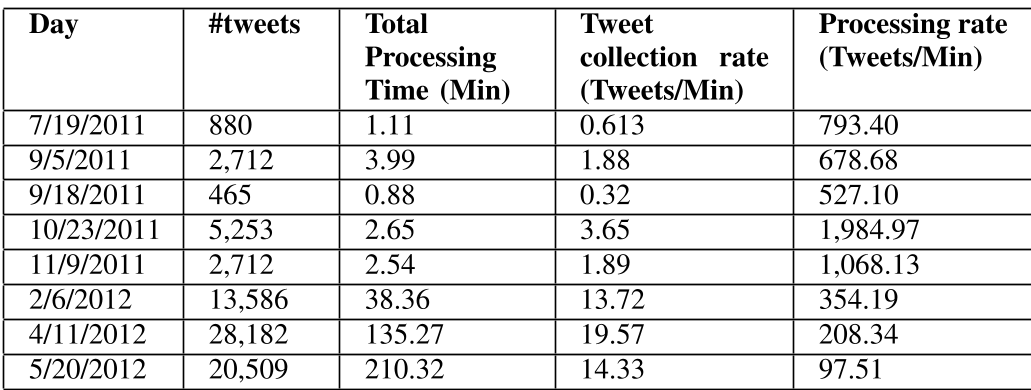 Figure 2: Performance comparison showing the scalability gap between the proposed solution and the Threading baseline.
Quality
In terms of identifying actual earthquakes, the framework achieved an F1 score of 0.77, significantly higher than the 0.64 F1 score of the state-of-the-art competitor. It successfully identified major events like the Indonesia and Turkey earthquakes by isolating clusters with high user diversity.
Critical Analysis & Conclusion
Takeaway
The genius of this work lies in its simplicity. By treating event detection as a real-time clustering problem using compression distance, the authors bypassed the expensive "feature engineering" phase that bogs down most NLP systems.
Limitations
- Hyper-parameters: The system still relies on a
Diversity Threshold (Ht)andDistance Threshold (Dt)which might need manual tuning for different types of topics (e.g., sports vs. politics). - Algorithm Heuristics: To maintain speed, the authors use a "Cluster Limit" (). While efficient, this could theoretically exclude a correct cluster if the top-100 candidates aren't deep enough.
Future Outlook
This approach paves the way for "social sensors" that can alert governments or news agencies to local crises the moment they happen, providing a scalable, low-cost alternative to traditional monitoring systems.