
SEBAR: Reimagining Social Routing in DTNs via the Laws of Particle Physics
SEBAR: Social-Energy-Based Routing for Mobile Social Delay-Tolerant Networks
SEBAR (Social-Energy-Based Routing) is a novel social-based routing protocol for Mobile Social Delay-Tolerant Networks (DTNs) that introduces "Social Energy" as a metric to quantify a node's message-forwarding potential. Inspired by particle physics, it models encounter-based energy generation and temporal decay, outperforming established baselines like Bubble Rap and Spray and Wait.
TL;DR
Mobile Social Delay-Tolerant Networks (DTNs) are inherently chaotic, characterized by intermittent connectivity and unpredictable node movements. SEBAR (Social-Energy-Based Routing) brings order to this chaos by treating node encounters as "particle collisions" that generate "Social Energy." By utilizing this energy as a dynamic routing metric—complete with physics-inspired temporal decay—SEBAR achieves superior delivery ratios with significantly optimized overhead.
The Motivation: Moving Beyond Static Social Graphs
Effective routing in DTNs requires predicting which node is most likely to "hand off" a packet to the destination. While prior works like Bubble Rap or SimBet utilized social centrality and community structures, they often treated these as static or slowly evolving attributes.
The authors of SEBAR identified a critical gap: social influence is not just about who you know, but how active you are in those circles right now. They hypothesized that social capability should act like energy—it should be generated through interaction, shared within a group, and naturally dissipate if not "recharged" by new contacts.
Methodology: The Particle Physics of Networking
1. Social Energy Generation & Sharing
When two nodes encounter each other, SEBAR views this as a collision that generates a unit of Social Energy (). This energy is not just kept by the individual; a portion of it () is "radiated" to the node's social communities.
- Internal Energy: A node keeps of the energy for its own "reputation."
- Community Energy: The portion is distributed to community members according to their Community Centrality. This ensures that even if a node doesn't meet a specific destination, it becomes a better relay by being part of an active community.
2. The Decay Mechanism (Temporal Aging)
One of the most biologically and physically intuitive parts of SEBAR is the Energy Decay (). Just as a hot object loses heat to its surroundings, a node's social energy decays over time . This forces the routing logic to prefer nodes that are currently socially active over those that were active weeks ago.
3. Forwarding Logic: A Two-Tiered Approach
SEBAR uses a greedy forwarding strategy:
- Global Phase: If the packet is outside the destination's community, it seeks nodes with higher total social energy.
- Local Phase: Once the packet enters the target community, it focuses on nodes with higher community-specific energy.
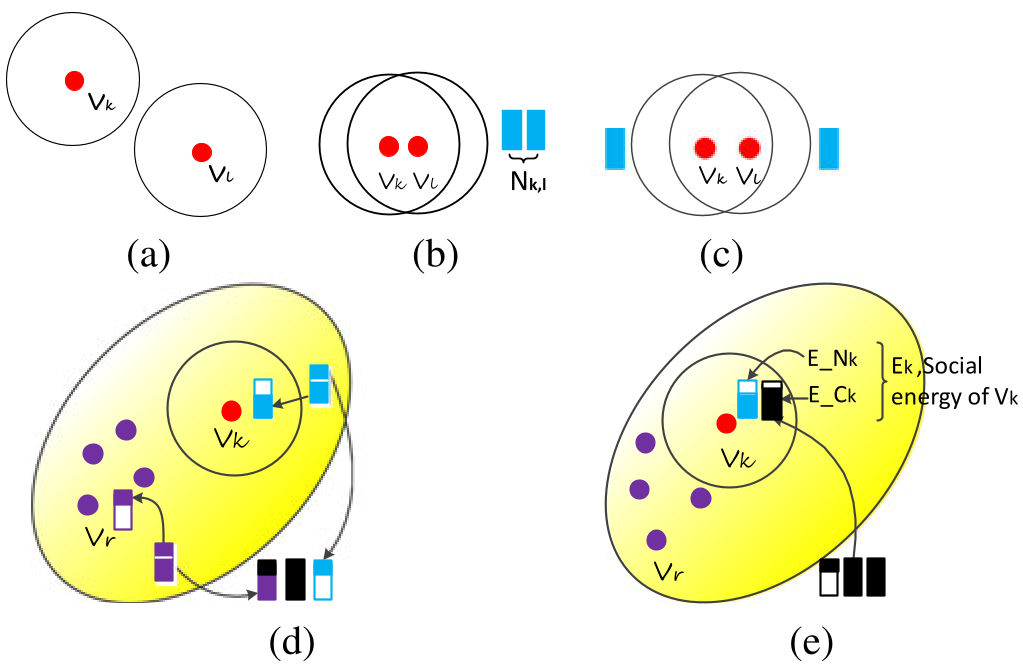 Figure 1: Illustration of energy generation and community distribution.
Experiments & SOTA Comparison
The researchers validated SEBAR using the MIT Reality Mining and InfoCom 2006 datasets—real-world traces of human movement and Bluetooth proximity.
Performance Highlights:
- Delivery Ratio: SEBAR consistently outperformed Bubble Rap and Spray and Wait. In the InfoCom trace, SEBAR's delivery ratio approached that of Epidemic Routing (the theoretical upper bound) but with a fraction of the traffic.
- Efficiency: Unlike Epidemic routing, which floods the network, SEBAR controls the number of replicas, keeping the "Number of Forwardings" low.
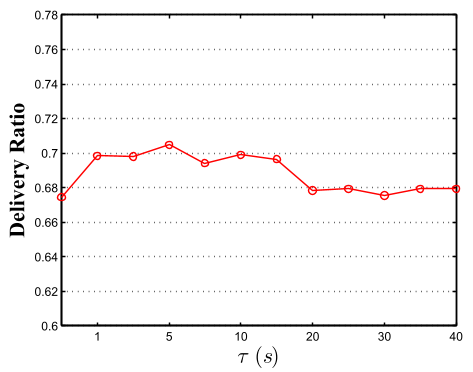 Figure 2: Performance comparison on the MIT Reality Mining dataset showing SEBAR's superior delivery ratio vs routing overhead.
Variations for Real-World Deployment
Recognizing that constant global updates to community energy might be expensive, the authors proposed two optimized variants:
- SEBAR-AU (Accumulated Updates): Nodes only update their communities when their energy change reaches a certain threshold (), reducing control message frequency.
- SEBAR-LN (Local Neighborhood): A fully distributed version where nodes only share energy with "neighbors" found via probe messages, eliminating the need for a global community map.
Critical Analysis & Conclusion
Takeaway: SEBAR is a sophisticated bridge between social networking and physical modeling. Its primary value lies in its dynamic nature—recognizing that social "hotspots" in DTNs are temporal.
Limitations:
- Parameter Sensitivity: The decay factor () and energy percentage () require careful tuning based on the specific mobility environment.
- Selfishness: The current model assumes nodes are cooperative in sharing and updating energy; in real-world scenarios, incentive mechanisms would be needed to prevent nodes from "hoarding" energy.
In conclusion, SEBAR proves that the laws governing particles can effectively govern data packets, providing a high-performance, socially-aware backbone for the next generation of mobile opportunistic networks.