
Secure Disaster Backup in Fog Computing: Balancing Privacy and Efficiency via Auction Games
16431_A Secure Content Caching Scheme for Disaster Backup in Fog Computing Enabled Mobile Social Networks.
This paper proposes a secure content caching scheme for disaster backup in Fog-enabled Mobile Social Networks (MSNs). It introduces a novel partitioning and scrambling encryption method combined with an auction game-based model to select optimal cloud servers for data redundancy, ensuring high security and data integrity.
TL;DR
With the rise of Mobile Social Networks (MSNs), edge caching has become essential for reducing backbone latency. However, edge nodes are "sitting ducks" for both cyber-attacks and physical disasters. This paper introduces a sophisticated disaster backup framework that uses chaos-based encryption to fragment data and an auction game to select the most cost-effective remote cloud servers for storing redundant copies.
Background & Motivation: The Vulnerable Edge
Fog computing brings data closer to users, improving Quality of Experience (QoE). But unlike centralized data centers, edge nodes often lack robust physical and digital security. If a node fails due to a virus or a natural disaster (like an earthquake), the cached content—and user privacy—is at risk.
The authors identify three missing links in current research:
- Privacy Leakage: Standard backups often expose raw data to third-party cloud providers.
- Cloud Vulnerability: Even if data is moved to the cloud, the cloud servers themselves can be compromised.
- Economic Inefficiency: How does an edge node choose which cloud server to trust without overpaying?
Methodology: The Two-Pronged Defense
1. Chaos-Based Content Scrambling
To ensure privacy without the overhead of heavy cryptographic algorithms (like RSA or AES), the authors propose a partitioning and scrambling method.
- Fragmentation: Content is split into matrices of bytes.
- Chaos Mapping: Using a modified Logistic Map (dynamic parameters), the system generates pseudorandom sequences to scramble the positions of rows and columns.
- Redundancy: The scrambled data is replicated into multiple copies stored across different sites to ensure integrity.
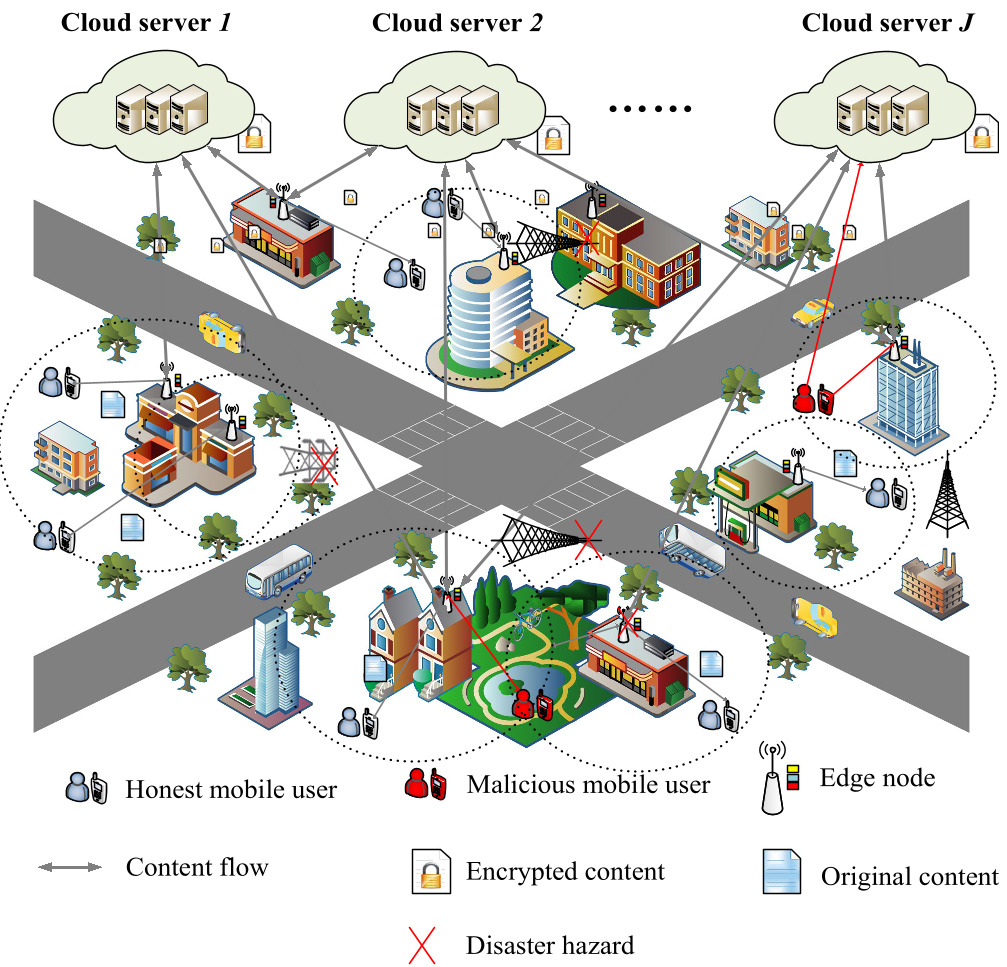 Fig 1. The system model showing the interaction between Mobile Users, Edge Nodes, and Cloud Servers.
2. Auction Game for Server Selection
The core innovation lies in treating cloud server selection as a market. Edge nodes want high reliability and low latency (low RTO); cloud servers want to maximize profit.
The authors derive an Optimal Bidding Strategy where servers calculate their bids () based on their internal costs and the probability of winning the auction. The edge node then selects the "winning" servers that provide the highest utility, defined as: Where is a function of the server's recovery speed and social popularity of the content.
Experimental Insights
The researchers evaluated the Security to Price Ratio (SPR). A key takeaway is that more replicas do not always mean better results.
- SPR Optimization: As shown in Fig 2, the SPR initially rises as security increases with more copies but eventually drops as the marginal cost of additional storage outweighs the security gains.
- Performance vs. Baselines: The proposed scheme consistently outperformed "Random Selection" and "Non-Price-Aware" schemes, proving that considering the "price of security" is vital for sustainable MSNs.
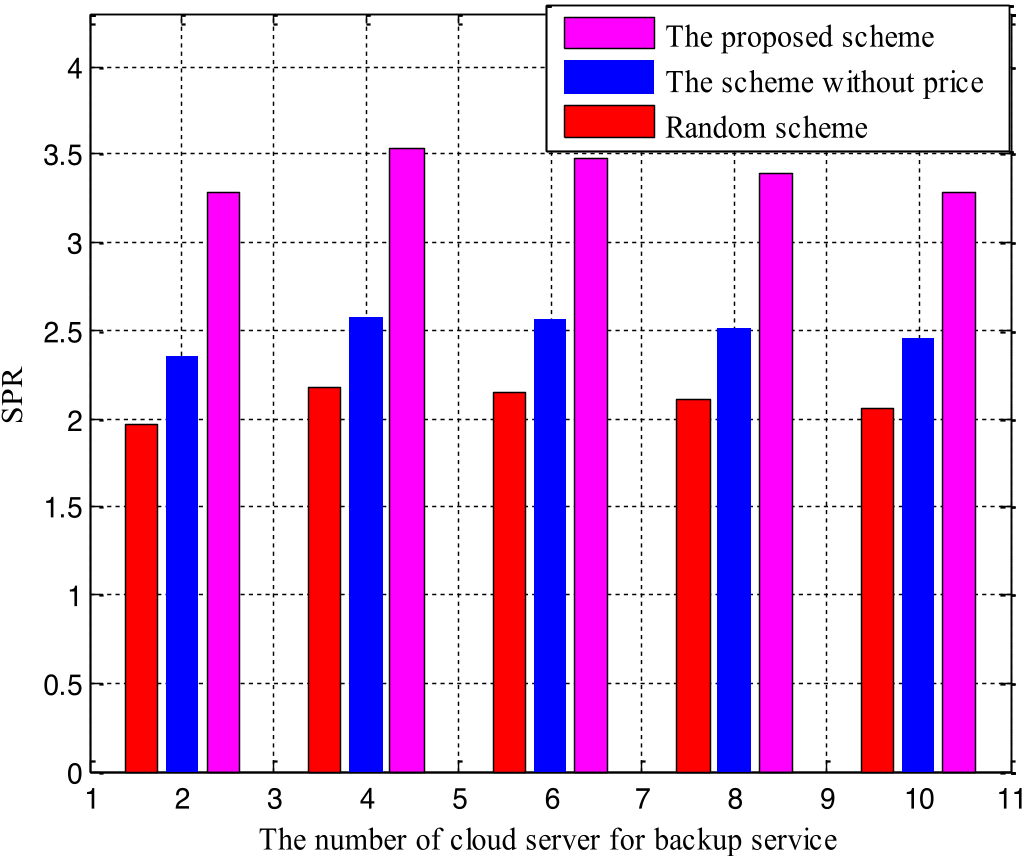 Fig 5. Comparison of the proposed scheme against conventional methods regarding edge node utility.
Critical Analysis & Conclusion
This work provides a robust mathematical foundation for secure edge caching. By combining computational geometry (chaos maps) with microeconomics (auction games), it addresses both the technical and financial hurdles of disaster recovery.
Limitations:
- The chaos mapping approach assumes the initial conditions () are shared securely between the edge and the cloud, which suggests a need for a separate Key Management System.
- The model assumes a uniform distribution for cloud costs, which might be more complex in real-world heterogeneous cloud markets.
Future Work: Integrating this with Blockchain for immutable auditing of the backup process could be the next frontier in verifiable disaster recovery for Mobile Social Networks.