
Beyond Keywords: Redefining Surveillance through Social Network Analysis and SVD
13447_Design and implementation of a secure social network system.
The paper presents a secure social network system combining Social Network Analysis (SNA) with context-based anomaly detection. It introduces a "token-passing" mechanism and Singular Value Decomposition (SVD) to track suspicious communication patterns and semantic leaks across a network in real-time.
TL;DR
This paper shifts the paradigm of message surveillance from simple keyword "red-flagging" to a context-aware social network approach. By combining Graph Theory (to map relationships) with Singular Value Decomposition (SVD) (to uncover latent semantic patterns), the authors built a system capable of tracking how "suspicious ideas"—represented as tokens—propagate through a network, even when participants try to hide their tracks.
The Motivation: Why Keyword Filtering Fails
Standard security systems are often "blind" to context. A keyword like "nuclear" might be suspicious in a casual chat but mundane in a physics department. More importantly, intelligent adversaries use word swapping (e.g., "corn" instead of "bomb").
The authors identify two fatal flaws in prior work:
- Static Analysis: Ignoring the communication history between individuals.
- Lack of Personalization: Failing to recognize that the same message means different things depending on who sent it and to whom.
Methodology: The Architecture of Tracking
The system architecture (Figure 2) is bifurcated into an Organizational Analysis System and a Real-Time Results Viewer.
1. The Token-Passing Mechanism
The core innovation is the "Token." When a message exhibits unusual characteristics (detected via SVD or keywords), a token is created.
- If a user receives a suspicious message, their node "stores" that token.
- If they later send a message to someone else that correlates with that theme, a "child token" is passed.
- This creates a semantic trail, allowing investigators to visualize the spread of a leak or a conspiracy across the social graph.
2. SVD: The Mathematical "Noise Filter"
To handle word-swapping and "noise" (typos, irrelevant chatter), the authors employ SVD. They represent messages and words as a matrix , which is decomposed: By zeroing out smaller singular values in (thresholding at 0.25), they capture the underlying "topics" of the communication while discarding the noise of specific word choices.
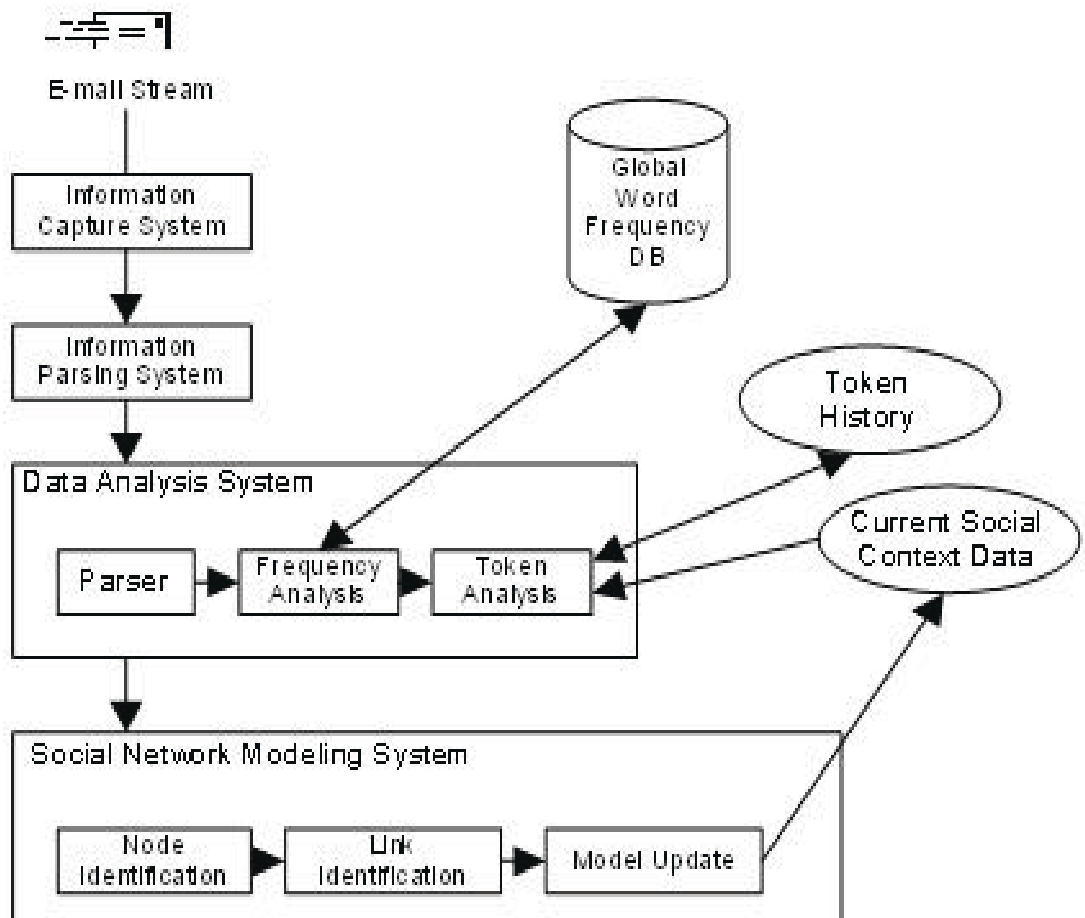 Figure 1: The original system architecture showing the flow from the delivery agent to the viewer.
Experiments: Mining the Enron Dataset
The researchers applied this to the Enron e-mail dataset (250,000 emails). This wasn't just a toy experiment; the Enron corpus contains real-world evidence of corporate demise and deception.
Key Results & Visualization
The system uses a spring-layout algorithm for its viewer. Nodes (users) repulse each other like magnets, while links (communications) act as springs pulling frequent collaborators closer.
- Strong Links: High-frequency communication.
- Visual Clues: Clusters of nodes highlight "social fields" or sub-groups (e.g., the legal department vs. the trading floor).
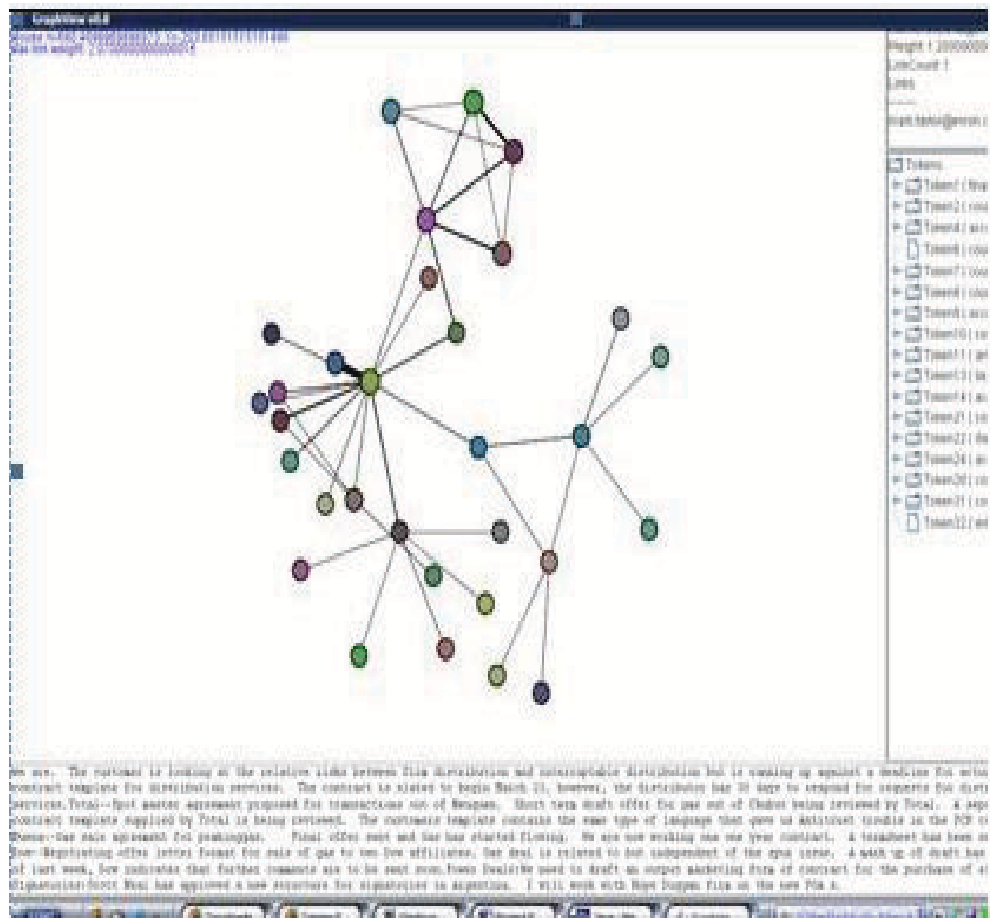 Figure 2: The viewer interface illustrating the spring-layout graph and the token storage tree for tracking suspicious activity.
Critical Analysis & Insights
The approach is a significant step toward Inductive Bias in security—assuming that malicious activity follows a social path, not just a linguistic one.
Strengths:
- Real-time Processing: Analysis happens as the data streams in.
- Evidence Ready: The system automatically generates a "chain of conversation" which can serve as a legal exhibit.
Limitations:
- Omniscience Requirement: The system assumes it can see all forms of communication (the "semantic gap" problem—people can still talk in person).
- Privacy Paradox: While designed for security, the tool is a double-edged sword that creates highly accurate (and potentially invasive) models of human relationships and private habits.
Conclusion and Future Work
This paper lays the groundwork for using latent space analysis in social security. The authors suggest that future iterations will include Machine Learning for positive/negative reinforcement (reducing false positives) and Role Identification (who is the "hub" and who is the "broker" in a criminal network?).
The work reminds us that in the age of big data, the most valuable intelligence isn't found in what people say, but in the hidden geometry of how they interact.