
OSN Privacy 2.0: Tackling Data Security in the Era of Big Data
Security and Privacy Data Protection Methods for Online Social Networks in the Era of Big Data
This paper introduces a comprehensive security and privacy framework for Online Social Netowrks (OSNs) in the big data era, combining a persistent backup architecture, fine-grained attribute anonymity, and fully homomorphic encryption. The core contribution is a multi-layered protection method that integrates node/edge randomization with encryption to reduce data protection latency while enhancing security.
TL;DR
In the face of massive data breaches (e.g., Facebook and Twitter), traditional encryption is no longer enough. This paper presents a holistic protection framework for Online Social Networks (OSNs) that utilizes a Master-Auxiliary ID system, fine-grained anonymity, and Fully Homomorphic Encryption (FHE). The result is a system that not only masks identity but also ensures data can be processed securely with significantly lower latency than traditional methods.
Problem & Motivation: The "Centralization" Trap
As we move into an era where third-party logins (like using Weibo to log into Toutiao) are ubiquitous, social data—names, friend circles, and locations—becomes increasingly vulnerable. The authors identify two critical failures in current systems:
- The Server Paralyzation Risk: Centralized storage increases the immeasurable loss of data if a main server is compromised.
- The "One-Size-Fits-All" Anonymization: Traditional algorithms apply the same level of protection to all data, ignoring that some users want "Class A" (totally private) vs "Class C" (shared with specific secondary IDs) protection.
Methodology: A Multi-Layered Defense
1. The ID Architecture and Backup Scheme
The system assigns each user a Primary ID (for the owner) and multiple Secondary IDs (for authorized users). To solve the risk of loss, a third-party agent manages real-time backups.
- Consistency Control: The Master ID tracks copy sequences; if a serial number matches, it deletes redundant updates, ensuring version consistency without taxing the server.
2. Fine-Grained Attribute Anonymity
Instead of simple masking, the paper uses a mix of K-anonymity and L-diversity.
- Insight: It uses "Concealment" (removing values) and "Generalization" (replacing specific info with a range).
- Flexibility: By introducing a personal privacy constraint value (), users can decide exactly how generalized their metadata should be.
3. Structural Graph Randomization
By dividing social graph nodes into Free points and Conservative points based on spectral space coordinates, the system reduces algorithm complexity. It only perturbs parts of the graph that are most vulnerable to bypass attacks.
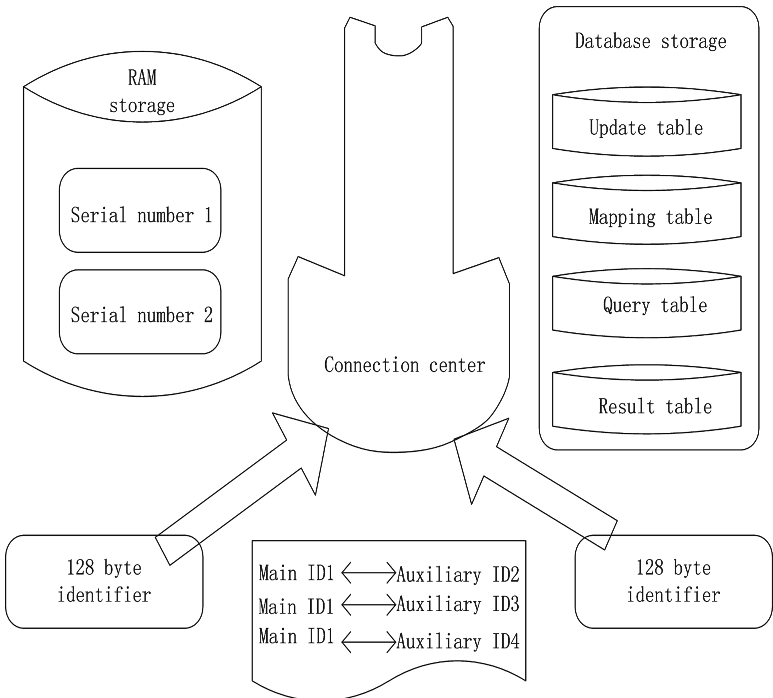 Figure 1: The proposed network security and privacy data architecture.
4. Fully Homomorphic Encryption (FHE)
The "Holy Grail" of crypto—FHE—is used here. It allows the server to perform operations on the encrypted data () and return a result () that, when decrypted by the user, yields the correct answer () as if the operation were done on raw text. This ensures data remains encrypted even during "Evaluation."
Experiments & Results: Efficiency Gains
The authors tested their framework using PHP on a Windows 10 environment with real-world sensor data from CASAS.
- The ACA Metric: They used Average Clustering Accuracy (ACA). An ACA between 0.1 and 0.4 means an attacker monitoring radio signals cannot distinguish between real sensors and noise.
- Latency Reduction: The proposed method showed a marked decrease in protection delay compared to traditional noise-addition methods.
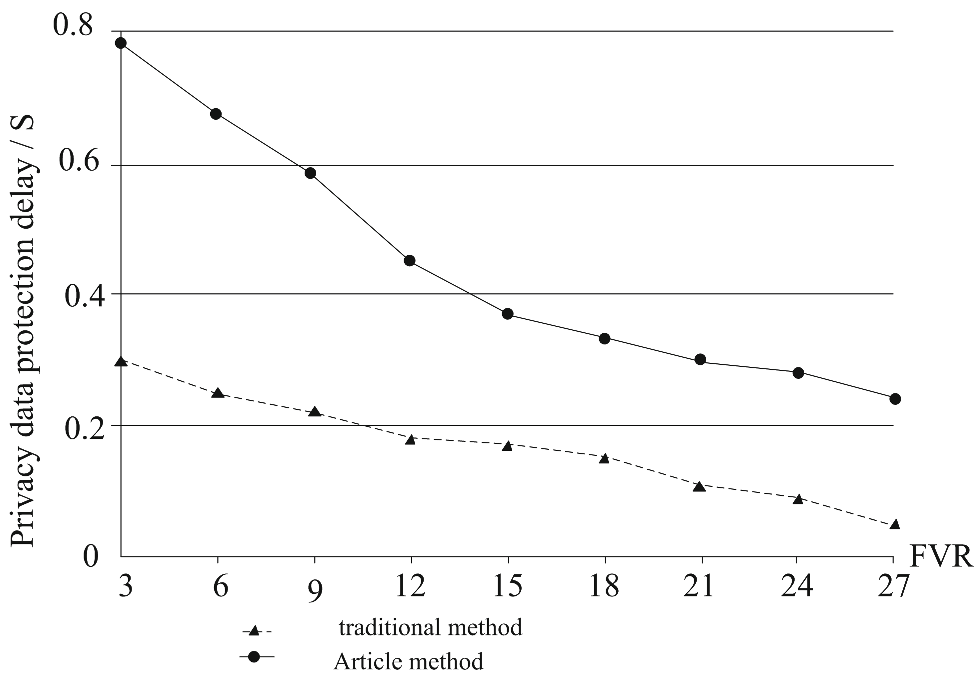 Figure 2: Statistical comparison of protection delay between the proposed and traditional methods.
Critical Analysis & Conclusion
Takeaway: This work successfully bridges the gap between high-level encryption (FHE) and structural graph randomization. By allowing for fine-grained user control, it respects the nuance of social privacy.
Limitations: The paper relies on a "fully trusted" third-party agent for backups. In a post-trust world, this "trusted third party" remains a single point of failure. Future work might explore Blockchain or Decentralized Storage (IPFS) to replace the centralized agent, potentially making the system truly immutable and trustless.
Final Verdict: A solid step toward privacy-preserving social computing that prioritizes both user autonomy and computational efficiency.