
Quantifying Gossip: A Framework for Estimating Privacy Leakage Risk in Social Networks
Security Risk Estimation of Social Network Privacy Issue
The paper proposes a novel security risk estimation framework for social network privacy, designed to quantify the probability of privacy leakage as information propagates through a user's social graph. The core methodology integrates Individual Privacy Leakage Probability (IPLP) and Relationship Privacy Leakage Probability (RPLP) to identify vulnerable information spreading paths and suggest risk mitigation strategies.
TL;DR
Privacy in the age of social media is rarely under your own control. This paper introduces a framework that quantifies the risk of your personal data leaking to strangers via your "loose-lipped" friends. By calculating individual trust scores and relationship strengths, the authors can pinpoint the most dangerous paths for data dissemination and offer a mathematical rationale for who you should "unfriend" first.
Problem & Motivation: The Architecture of Vulnerability
In an Online Social Network (OSN), your privacy isn't just a function of your own settings; it is a shared vulnerability. The authors identify a critical gap in prior work: while many models look at static privacy settings, they ignore human behavior. A friend with low privacy awareness or a "gossiping" tendency acts as a bridge for your data to reach unintended audiences.
The core challenge lies in quantifying this "human factor." How do you measure the likelihood of a friend resharing your private life? This paper argues it is a combination of how much they care about privacy (Awareness), how much others trust them (Trust), and the intimacy of your bond (Relationship Strength).
Methodology: The Dual-Probability Model
The framework relies on two primary pillars to calculate the probability of leakage across any given path (e.g., from Alice to a stranger via her friend Bob).
1. Individual Privacy Leakage Probability (IPLP)
This represents the "Gossip Factor." It is derived from:
- Privacy Protection Awareness (PPA): Calculated by comparing a user's privacy settings against the average of the entire network.
- Privacy Protection Trust (PPT): A reputation-based score determined by how trustworthy a user's high-awareness friends perceive them to be.
2. Relationship Privacy Leakage Probability (RPLP)
This quantifies the "Intimacy Factor." The intuition is simple: you share more with people you are closer to. The authors use a Gaussian-based probabilistic model to estimate relationship strength through:
- Homophily: Similarity in user profiles (age, education, etc.).
- Interaction Frequency: Not just the count of likes/comments, but the consistency (standard deviation) of those interactions over time.
- Shared Interests: Overlap in information domains like travel, sports, or work.
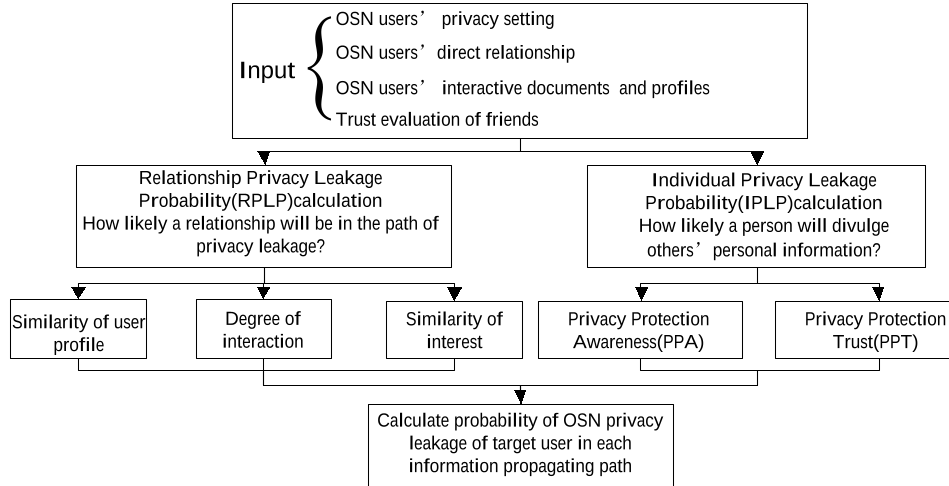 Figure 1: The proposed risk estimation framework, mapping the journey from User Profile to Path Risk.
Experiments & SOTA Results
Using a real-world dataset gathered from Facebook users, the authors validated their model using Normalized Discounted Cumulative Gain (nDCG), achieving a score above 0.9, indicating that the model's predicted relationship strengths align closely with users' self-reported feelings.
Identifying Vulnerable Paths
The framework can calculate the "Average Probability" and "Maximum Probability" of leakage for any user. For instance, in a path like [User A -> User B -> Stranger C], the leakage probability is calculated as:
The "Unfriending" Strategy
Perhaps the most practical finding is the evaluation of risk-reduction strategies. The authors compared three ways to lower risk:
- Unfriend the person with the most friends (Maximum Degree).
- Unfriend the person with the highest gossip potential (Maximum IPLP).
- Unfriend the person you are closest to (Maximum RPLP).
 Table 1: Comparison of risk reduction strategies. Unfriending the "High-Degree" friend is the most effective.
Critical Analysis & Conclusion
The study concludes that unfriending the "maximum degree" friend is the optimal way to secure one's privacy. Intuitively, this makes sense: a friend with thousands of connections serves as a massive junction for data leakage, regardless of how much you trust them individually.
Limitations: While the model is mathematically sound, the sample size (46 users) is small for modern social network standards. Furthermore, the model assumes "leaks" are unintentional gossiping; it does not yet account for adversarial attacks or malicious data scraping bots.
Takeaway for the Future: As we move toward Web3 and decentralized social spaces, models like this could be integrated into automated "Privacy Dashboards," warning users in real-time when a specific post or a new friendship significantly spikes their global privacy risk.