
Selective Node Labeling: Why a Few Good Predictions Outshine a Million Noisy Ones
A Few Good Predictions: Selective Node Labeling in a Social Network
This paper introduces a selective node labeling framework for social networks that prioritizes high-precision predictions over total coverage. By combining a Node Conditional Likelihood (NCL) training objective with a decoupled confidence model, the authors achieve SOTA performance in high-confidence regimes, such as Twitter location prediction.
TL;DR
In social network analysis, we often force models to predict attributes for every user, resulting in lukewarm accuracy that renders the data useless for high-stakes applications like targeted ads or recommendations. This paper shifts the paradigm: instead of maximized coverage, it focuses on Selective Node Labeling. By optimizing for calibration rather than just raw likelihood, the authors demonstrate that we can extract predictions with 95% accuracy from graphs where the baseline performance is a mere 40%.
The "Absurd Prediction" Problem: Why Coverage is the Enemy of Utility
Most social network labeling tasks (e.g., predicting a Twitter user's city or a Facebook user's age) operate on sparse data—often only 1-2% of labels are known. Existing SOTA methods like Markov Random Fields (MRFs) or Iterative Classification (ICA) try to fill the entire graph. The result? Since many nodes are poorly connected or lack homophilic signals, the models guess blindly, achieving 50-60% accuracy.
For a recommendation engine, a 50% accurate location is "downright absurd." The research intuition here is simple: abstain from guessing. We only want to label nodes where the signal-to-noise ratio is high enough to guarantee correctness.
Methodology: Fixing Calibration and Training
The authors identified that standard MRFs are poorly calibrated. To fix this, they introduced two major technical shifts:
1. Node Conditional Likelihood (NCL)
Instead of the standard Joint Likelihood (JL) objective—which maximizes the probability of all observed labels simultaneously—NCL maximizes the probability of each observed node conditioned on the others. This directly aligns the training objective with the inference task (predicting one node given the graph).
2. Decoupled Confidence Model
Even with NCL, graphical models tend to produce "over-confident" marginals for immediate neighbors of known nodes. The authors decoupling the prediction from the confidence estimation. They train a secondary Logistic Regression model () to predict if the primary model's label is correct.
The Challenge: How do you train this second model without wasting your precious 2% of labeled data? The Solution: A novel Leave-one-out strategy. They use "mini-graphs" to perform inference on already-labeled nodes as if they were unknown, creating a synthetic, unbiased training set for the confidence estimator.
 Figure 1: The overarching framework for selective prediction and labeling.
Optimization via Systematic Pruning
Training NCL is computationally expensive because it requires separate inferences (one for each observed node). The authors solved this with a theoretically sound pruning algorithm. They proved that in chains and trees, one can ignore nodes beyond a certain "influence distance" (-approximation) without significantly affecting the marginal probability.
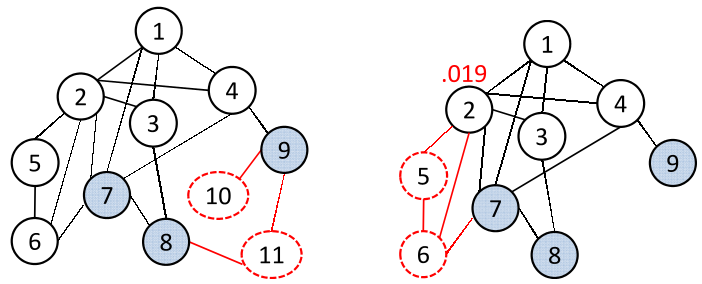 Figure 2: Visualizing the pruning process. Gray nodes are observed; dotted nodes are pruned based on the Markov condition or the distance-based influence bound.
Experimental Battleground: Twitter and Pokec
The authors tested their approach on two massive datasets:
- Twitter: 1.07M nodes, predicting user location (2,113 possible cities).
- Pokec: 1.13M nodes, predicting user age groups.
Key Results
- Superior Calibration: In the top-1% of predictions, NCL+Conf achieved near 95% precision.
- Efficiency at Scale: Their pruning method reduced inference time by several orders of magnitude while maintaining an error bound of .
- Utility: In a Twitter scenario with 5% observed nodes, their method provided 4x more high-accuracy (85%+) predictions than standard Joint Likelihood models.
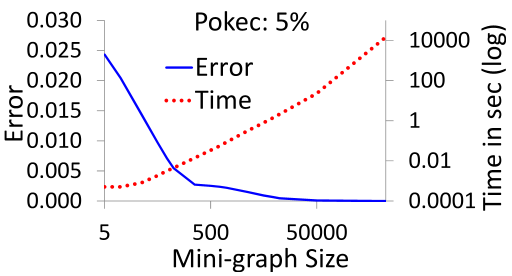 Figure 3: Precision-Recall curves showing NCL+Conf (Red) vastly outperforming baselines in the high-confidence (left side) region.
Critical Insight & Conclusion
The paper’s philosophy—Pauca sed Matura—is a vital lesson for modern AI practitioners. In the race for "SOTA accuracy" on benchmarks, we often forget that in production, the cost of a wrong prediction is frequently higher than the value of no prediction at all.
Limitations: The method relies on the homophily assumption (neighbors are similar). In "disassortative" networks where opposites attract, the edge features and Potts potentials used here would require significant re-engineering.
Overall, this work provides a robust mathematical and algorithmic foundation for building trustworthy social graph AI.