
Beyond Binary: Enhancing Ad Hoc Network Cooperation with Fuzzy Logic
Selfish node detection in ad hoc networks based on fuzzy logic
This paper introduces a novel fuzzy-based approach for selfish node detection in Ad Hoc networks, integrating social network principles to differentiate between intentional selfishness and resource-constrained non-cooperation. By utilizing a Fuzzy Interface Process (FIP) with three key variables—Hop Count, Residual Energy, and Cooperation History—the method achieves superior performance in hit rate and latency compared to the SOTA IRONMAN and SENSE protocols.
TL;DR
Ad Hoc networks rely on the goodwill of mobile nodes to forward packets. However, "selfishness"—nodes refusing to relay data to save battery or memory—can cripple the system. This paper moves away from binary "blacklisting" and introduces a fuzzy logic-based detection system that analyzes node history, energy, and distance to make nuanced cooperation decisions. The result? Higher packet delivery rates and a more resilient network.
The Problem: The Cost of Harsh Judgments
In the decentralized world of Ad Hoc networks, every node is both a user and a router. Existing protection mechanisms like IRONMAN or SENSE typically treat nodes as either "Cooperative" or "Selfish." If a node shows a hint of misbehavior, it is isolated.
The Insight: Is a node selfish, or just low on battery? Isolation is a double-edged sword; by removing "suspicious" nodes, you often destroy the very routes needed for data reached. The authors argue that we need to stop splitting nodes into absolute groups and instead use Social Network Principles to maintain as many active nodes as possible.
Methodology: The Fuzzy Interface Process (FIP)
The core of the proposed system is a three-input fuzzy logic engine. Instead of a hard threshold, it calculates a Cooperation Rate (Co-R) using these variables:
- Hop Count (H.C.): How far is the node from the destination? Smaller is better.
- Residual Energy (Re-En.): Does the node have enough battery to help?
- Cooperation History (Co-h.): Was the node an "active citizen" in the past?
System Architecture
The workflow involves four distinct steps: Fuzzification (converting crisp values to linguistic terms like "Low" or "High"), Rule Evaluation (using 60 IF-THEN rules), Interface Engine, and Defuzzification (calculating the final Co-R).
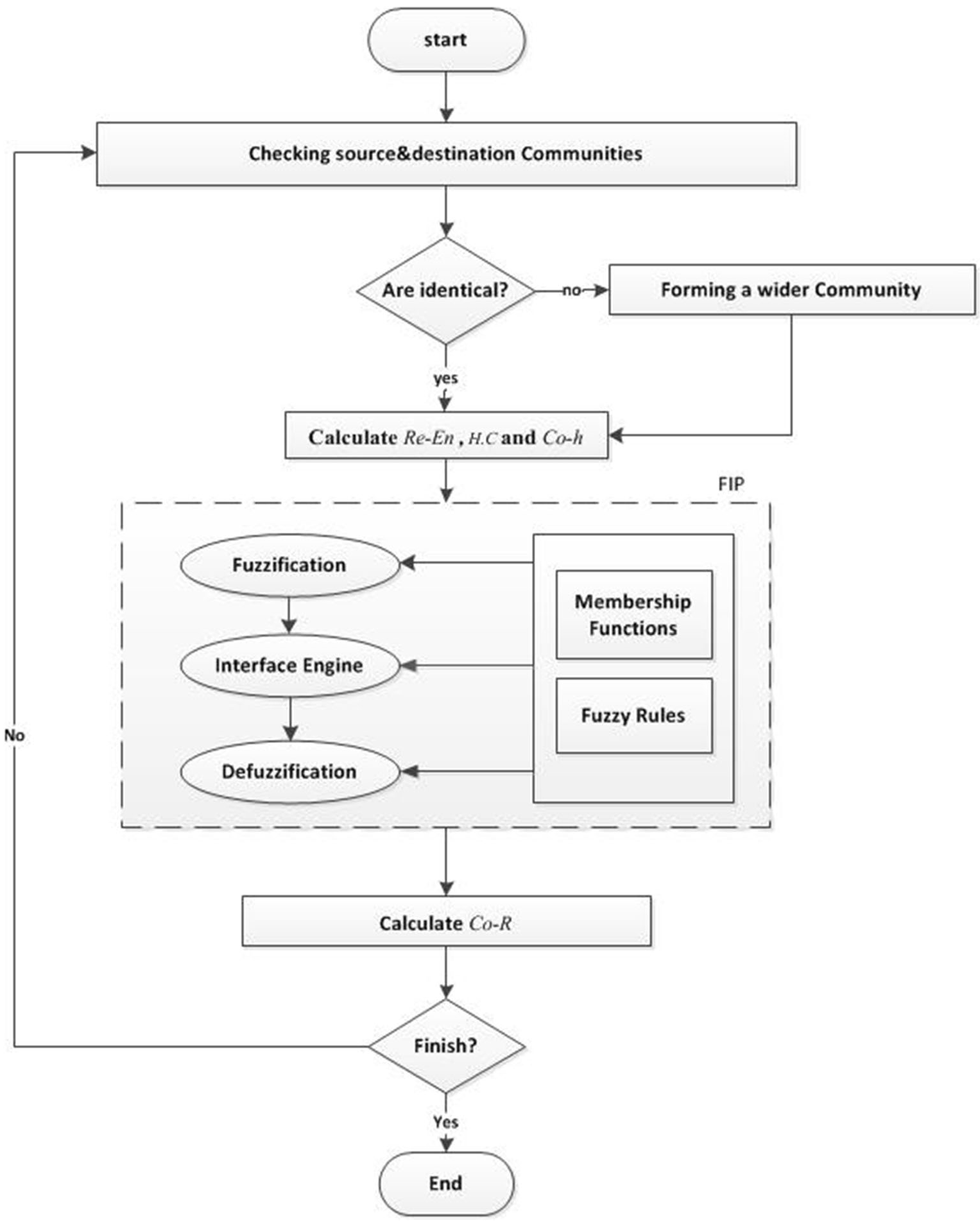 Figure 1: The proposed system flow, from parameter collection to fuzzy decision making.
The routing logic then prioritize paths with the highest cumulative Co-R. If two routes have similar cooperation rates, the one with the lower hop count wins. This ensures that even "temporarily selfish" nodes are given a chance to reintegrate if their status improves (e.g., they receive an energy boost or the path becomes shorter).
Experiments & Results: Real-World Evidence
The authors validated the method using the MobEmu tool and two realistic datasets: UPB 2011 and UPB 2012. The comparison included the vanilla IRONMAN protocol and its weighted (IRONMAN-WEI) and averaged (IRONMAN-AVE) variants.
Key Breakthroughs:
- Hit Rate: The fuzzy approach achieved a significantly higher hit rate (delivered packets) across all levels of node memory capacity.
- Latency & Cost: By avoiding the "isolation trap," the network found shorter, more reliable paths, reducing the time packets spent in the buffer.
 Figure 2: Hit rate comparison across UPB 2011 and 2012 traces, showing the proposed method consistently outperforming SOTA baselines.
Critical Insight & Conclusion
The genius of this work lies in its Inductive Bias: the assumption that a node’s willingness to cooperate is a dynamic state influenced by its physical health (Energy) and social utility (Distance).
Takeaway: In complex, decentralized systems, deterministic "Black-or-White" security policies are often too rigid. Fuzzy logic provides the mathematical "greyscale" needed to build more tolerant and resilient infrastructures.
Future Outlook: While effective, the current model assumes unique IDs (IMEI/MAC), leaving it vulnerable to Sybil attacks where one selfish node creates multiple identities. Integrating this fuzzy logic with cryptographic identity verification could be the next frontier in Ad Hoc security.