
Beyond the Database: Semantic Engines and Visual Ontologies in Modern Crime Analysis
A Semantic Engine and an Ontology Visualization Tool for Advanced Crime Analysis
This paper presents a semantic analysis framework designed for Law Enforcement Agencies (LEAs) to enhance crime investigation and prediction. The core contribution involves a Semantic Engine for automated person fusion and a link-node ontology visualization tool integrated within the MAGNETO project architecture.
TL;DR
To combat the rise of high-tech and cyber-enhanced crime, Law Enforcement Agencies (LEAs) are moving beyond traditional databases. This paper introduces a sophisticated Semantic Engine and an Ontology Visualization Tool that transform raw, heterogeneous data into actionable intelligence. By using advanced string-matching and logical reasoning, the system identifies hidden connections between suspects that human analysts might miss.
Background: The Limits of Traditional Intelligence
For decades, LEAs have relied on Relational Database Management Systems (RDBMS) or even manual card files. These systems are "knowledge-blind"—they can store data, but they cannot reason. If a criminal uses an alias or a slightly different spelling of a name across different social media platforms, traditional systems treat them as separate entities. The researchers behind the MAGNETO project argue that we need Semantic Analysis to bridge these gaps.
Methodology: The "Brain" and "Eyes" of the System
1. The Semantic Engine (The Brain)
The Semantic Engine is built on the Apache Jena Fuseki database and uses the Web Ontology Language (OWL) to define concepts and relationships. It features two critical components:
- Person Fusion Tool: This tool solves the "Identity Problem." It compares pairs of person instances using a weighted similarity score.
- Numeric Data: Compared via Jaro-Winkler.
- Alphanumeric Data: A hybrid approach combining character-based similarity with phonetic algorithms like Double Metaphone and NYSIIS.
- Reasoning Tool: Using SWRL (Semantic Web Rule Language), the engine applies "if-then" logic to discover hidden truths. For example, if Person A is married to Person B, and Person A is the parent of Person C, the system automatically infers the relationship and updates the knowledge graph.
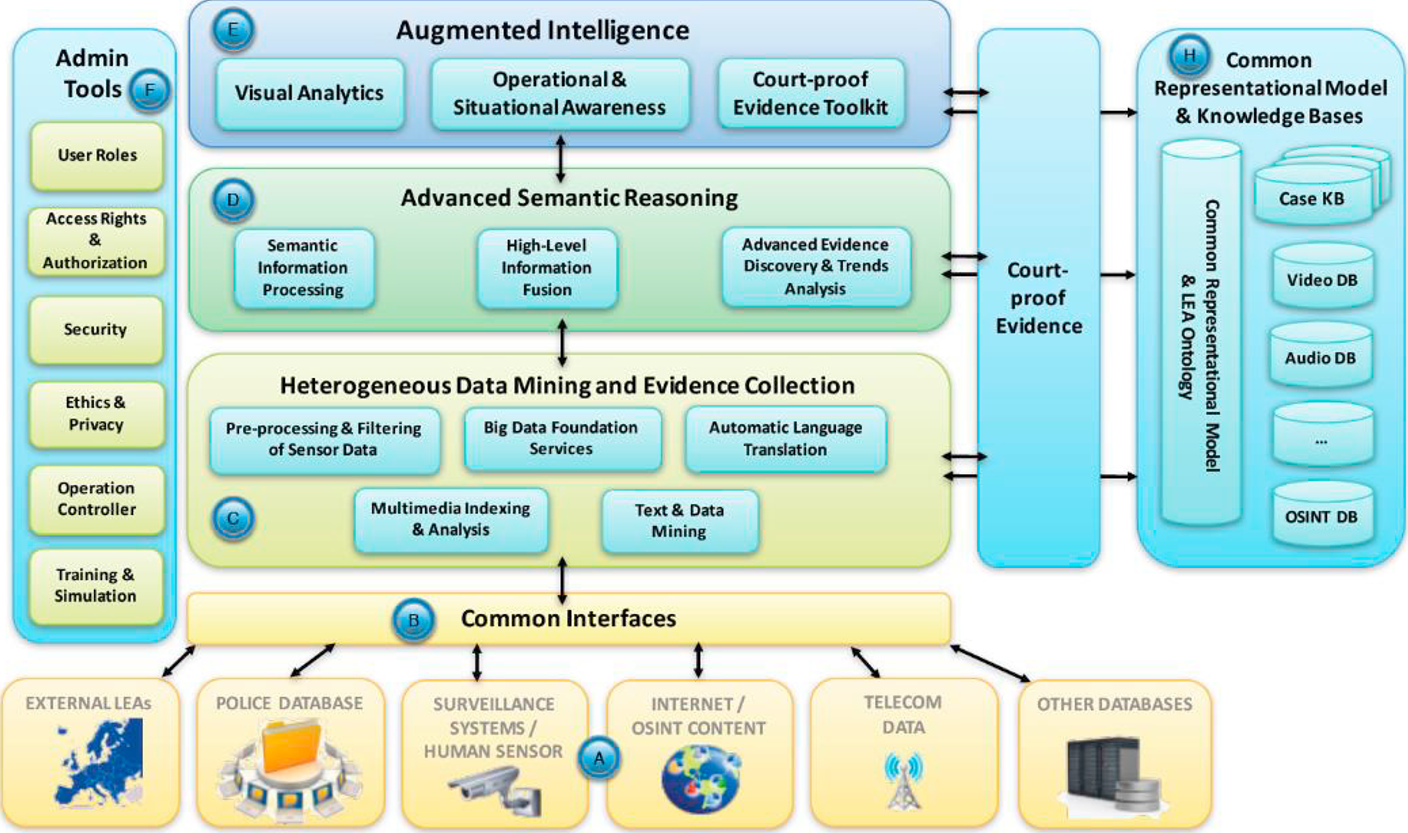 The high-level architecture showing the flow from Big Data mining to Augmented Intelligence.
2. Ontology Visualization (The Eyes)
Data is useless if an investigator cannot understand it. Developed using the D3.js library, the visualization tool maps the ontology into a dynamic graph.
- Nodes: Represent entities (Persons, Locations, Crimes).
- Links: Represent the relationships discovered by the Semantic Engine.
- Interactivity: Investigators can zoom, filter by "degree of collapsing," and drill down into specific case details.
Deep Dive into Logical Reasoning
The paper highlights the power of the triplet syntax (subject, predicate, object). Through logical flows, the engine can uncover complex criminal structures.
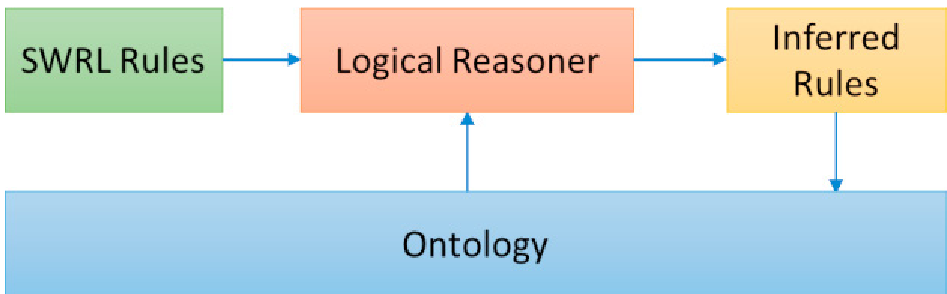 Figure: The reasoning process translating raw triplestores into inferred knowledge.
For instance, a rule might look like this:
isSpouseOf(?x, ?y) ^ isParentOf(?x, ?z) -> isChildOfMarriedParents(?z, true)
While simple, when scaled to thousands of entities and specialized criminal indicators, it becomes a powerful tool for mapping organized crime syndicates.
Experimental Potential and Results
The tools are currently being evaluated by LEAs within the framework of the EU-funded MAGNETO project. Early results show that the "Fusion Candidates" tab allows officers to significantly reduce the manual labor involved in deduplicating suspect profiles, while the reasoning tab brings "hidden" patterns to the surface in a human-readable format.
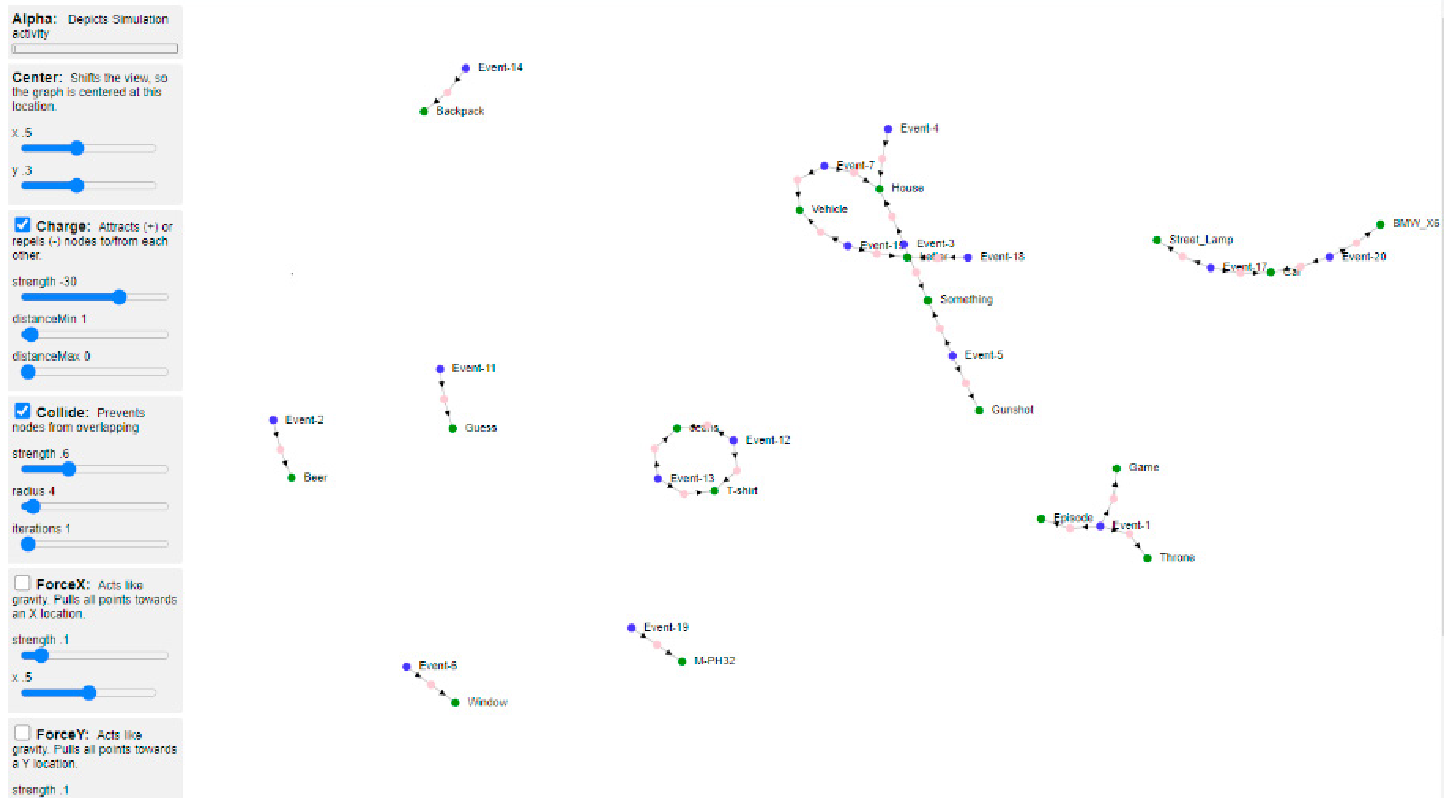 The visual exploration tool demonstrating nodes and complex interrelations.
Critical Analysis & Conclusion
Takeaway
The integration of semantic reasoning into crime fighting marks a shift from reactive policing to predictive policing. By creating a system that "learns" and autonomously updates its knowledge graph, LEAs can stay one step ahead of evolving cyber-criminal tactics.
Limitations & Future Work
While the semantic engine is robust, it relies heavily on the quality of predefined rules. Future iterations could benefit from Machine Learning to automatically generate or suggest new rules based on emerging crime trends. Additionally, the ethical implications of "autonomous reasoning" in a legal context remain a field for further inquiry, ensuring that human-in-the-loop verification (as seen in the Person Fusion tool) remains a priority.