
Beyond Nodes and Edges: Enriching E-Learning through Semantic Social Analysis
Towards a Semantic Social Approach to enrich the Learner's Profile in Human Learning Environments
The paper proposes a fully automatic E-learning framework that integrates Semantic Web technologies with Social Network Analysis (SNA) to enrich learner profiles. By combining domain-specific and emotional ontologies, the system detects semantic communities and provides personalized recommendations for learning resources and collaborators.
TL;DR
The paper introduces a framework that bridges the gap between the Social Web (Web 2.0) and the Semantic Web (Web 3.0) within educational environments. By leveraging ontologies to interpret the meaning and emotion behind social interactions, the system transforms raw social data into an enriched learner profile capable of providing high-precision recommendations for resources and collaborators.
The "Semantic Gap" in Social Learning
Traditional Social Network Analysis (SNA) has historically been a numbers game. Researchers calculated Centrality of Degree, Betweenness, and Closeness to find influential students. However, these metrics are "semantic-blind"—they tell you who is talking to whom, but not why they are talking or if the interaction yielded any actual learning value.
The authors argue that existing learning environments fail because they don't understand the context of the learner's needs. If a student is interacting with a resource, is it because they are interested, or because they are struggling? The "Semantic Social" approach aims to solve this by adding a layer of intelligence over the social graph.
Methodology: The Three-Pillar Architecture
The proposed system shifts the focus from structural metrics to semantic understanding through three core components:
1. The Semantic Social Network Analyzer
This is the "brain" of the operation. It processes user traces and interactions to generate behavioral models. Unlike standard clustering, it uses semantic data to detect communities based on shared interests and knowledge levels rather than just linkage density.
2. Dual-Ontology System
The framework utilizes two specialized ontologies to categorize the world:
- Learning Ontology: Provides a formal structure for pedagogical resources (videos, documents, courses), allowing the system to understand the relationship between different topics (e.g., that "Calculus" is a prerequisite for "Physics").
- Emotional Ontology: A novel addition that formalizes user feelings and needs, helping the system detect frustration or high engagement.
3. Automated Recommendation Engine
By combining the enriched learner profile with community data, the system suggests:
- Best Learning Paths: Sequential resources tailored to the learner's progress.
- Desirable Collaborators: Connecting students with peers or tutors who share similar interests or complementary expertise.
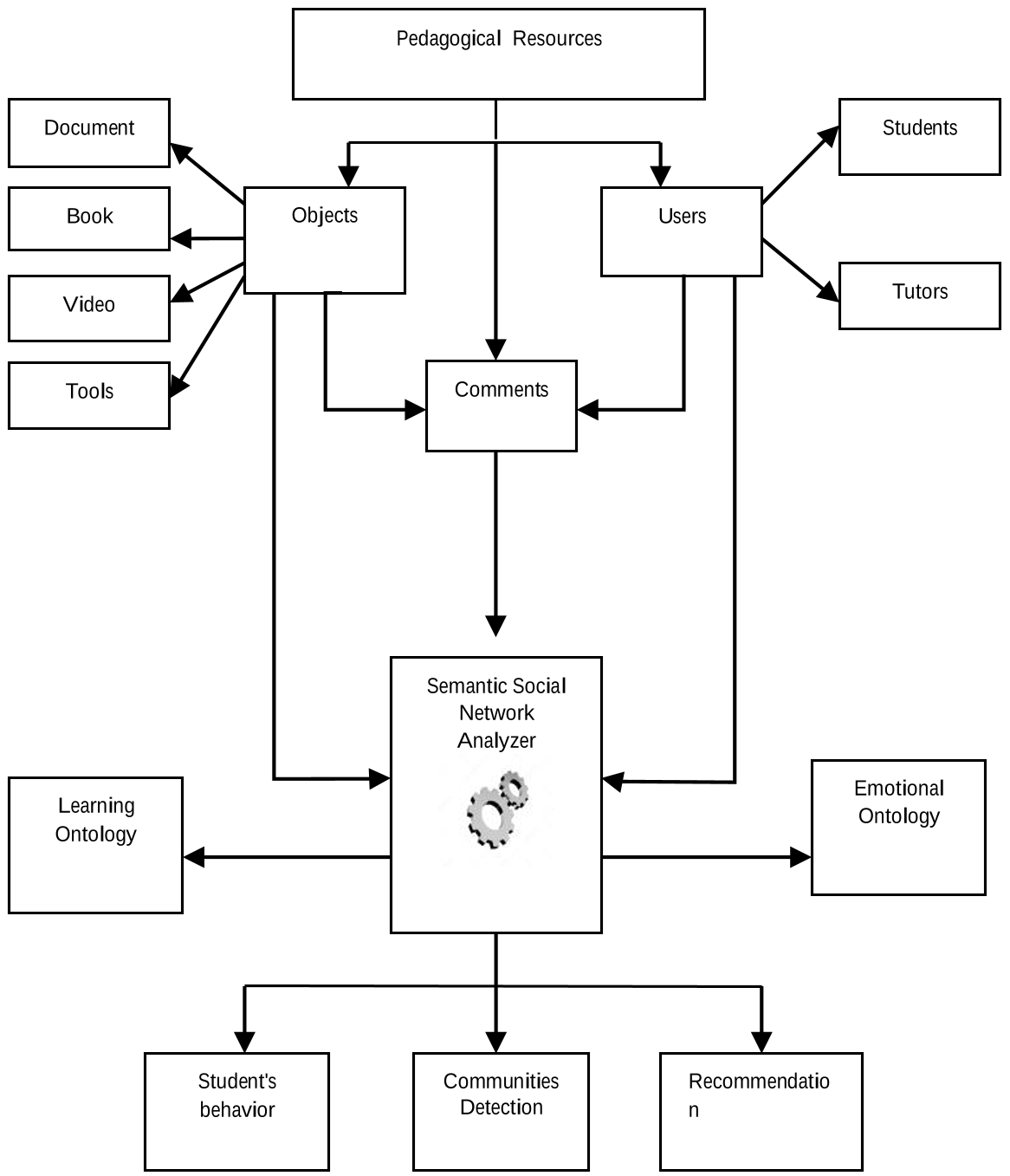 Figure 1: The proposed framework integrating Ontologies and Social Network Analysis.
Evaluating the Landscape (SOTA Comparison)
The authors conducted an extensive literature review, summarized in the table below. Most existing works (e.g., [4], [5], [6]) focus purely on SNA Metrics, while only a handful ([12], [16], [17]) attempt to integrate Ontologies and Recommendations. The proposed approach is one of the few to synthesize all these dimensions—ASN, Community Detection, Ontology, and Recommendation—into a singular automated pipeline.
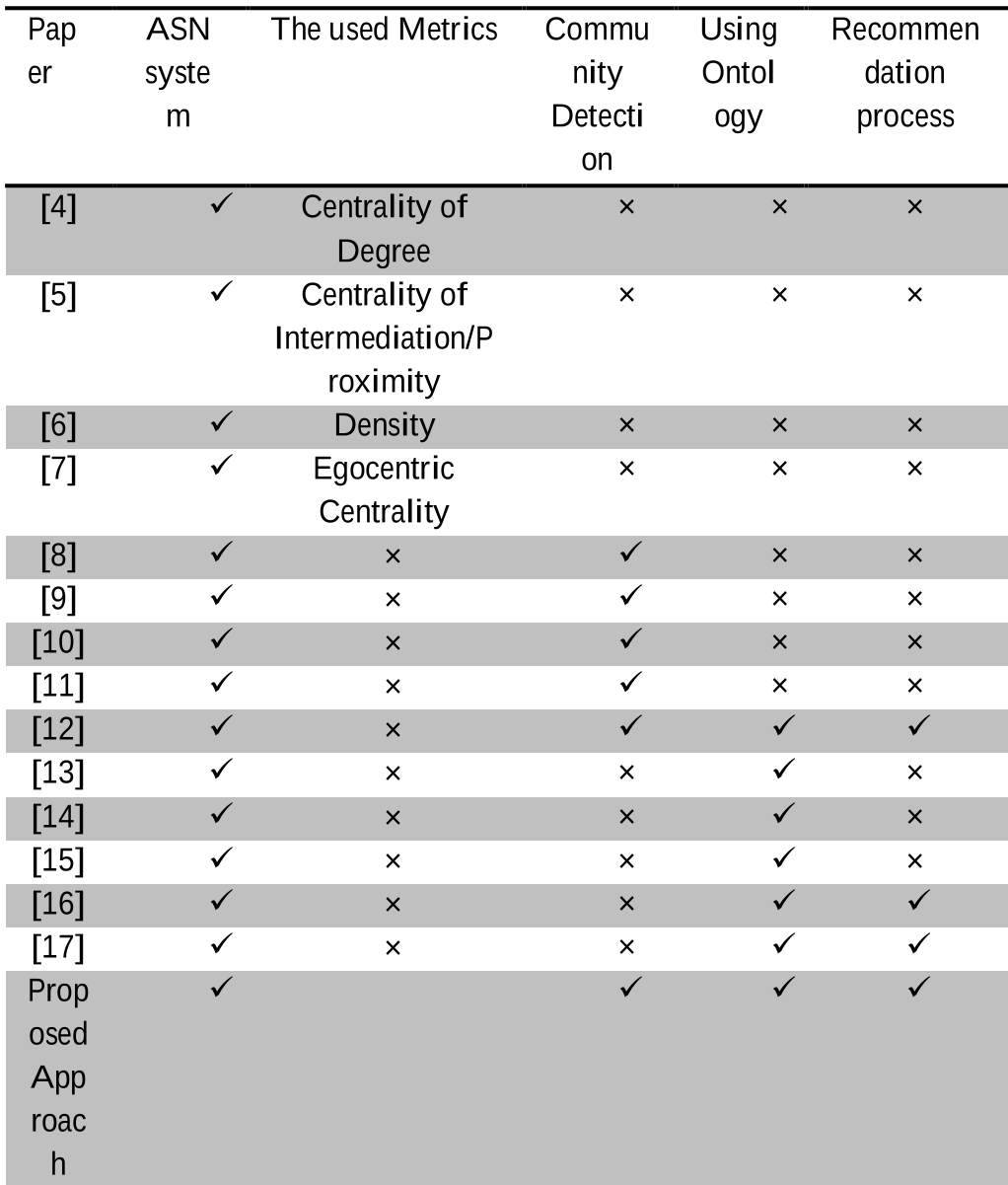 Table 1: Comparison of the proposed approach against existing literature.
Critical Insight: Why Emotions Matter
A standout feature of this research is the Emotional Ontology. In a typical E-learning environment, a student who stops interacting might be ignored. By semantically analyzing "trances" and comments, this system can interpret silence or negative sentiment as a signal to intervene with specific resource recommendations or tutor alerts. This moves E-learning from a passive repository of files to a proactive "Human Learning Environment."
Conclusion and Future Outlook
While the paper presents a robust framework, the primary limitation noted is that the system was "under development" at the time of publication, meaning large-scale longitudinal data on learning outcomes is yet to be fully realized.
Future Directions:
- Integration of Real-time Machine Learning to refine the ontologies dynamically.
- Expansion into "Cross-Platform" profiles where a learner's activity on external social media could inform their academic profile (with privacy considerations).
This work serves as a blueprint for the next generation of "Intelligent Social Learning," where the machine doesn't just see a network—it understands the community within it.