
The Transfer Learning Shortcut: Semi-Automatic Labeling for Affective Computing
Approach to semi-automatic labeling of video sequences for affective computing-enabling the comprehensive assessment of emotion detection software from mimics
The paper introduces a semi-automatic methodological framework for labeling video sequences in Affective Computing, primarily using a multi-stage Transfer Learning approach. By leveraging existing pre-trained Emotion Recognition Systems (ERSs) and the Data Programming paradigm, the method achieves fine-grained emotional labeling with minimal human expert intervention.
TL;DR
Recognizing human emotions in video is critical for personalized medicine, yet the "data bottleneck"—the high cost of expert manual labeling—stalls progress. This paper proposes a clever architectural shortcut: use existing, high-performance emotion recognition APIs as "intelligent feature extractors" and apply Transfer Learning to map their outputs to complex, domain-specific labels with minimal human effort.
The Granularity Gap in Affective Computing
In fields like psychiatry or personalized medicine, "Happy" or "Sad" isn't enough. Clinicians need to monitor subtle, rapid transitions in mimics that existing "Gold Standard" datasets (like those from the EmotiW conference) often ignore.
The problem is two-fold:
- Complexity: Affective states change in milliseconds; intermediate states are often lost.
- Specialization: A psychiatrist might interpret a "smirk" differently than a general-purpose AI trained on social media photos.
Manually labeling every frame of a clinical video sequence is an economic and logistical nightmare.
Methodology: Let Models Label for You
The core insight of this work is that we don't need humans to do the "heavy lifting" of feature engineering. Existing Emotion Recognition Systems (ERSs), such as Microsoft's Project Oxford or Noldus FaceReader, are already trained on millions of images.
The Three-Stage Pipeline
- Feature Extraction (The "Union" Stage): Instead of raw pixels, the system inputs video frames into multiple ERSs. These systems provide probability distributions (labels) and geometric landmarks (e.g., nose tip, pupil position).
- Transfer Learning (The "Mapping" Stage): A secondary model is trained to learn the relationship . It takes the outputs of the general models and maps them to the specific medical taxonomy (e.g., FACS).
- Expert-in-the-Loop: A domain expert provides a very small set of ground truth results. Using the Data Programming paradigm, the system resolves conflicts between different labeling functions and refines its accuracy.
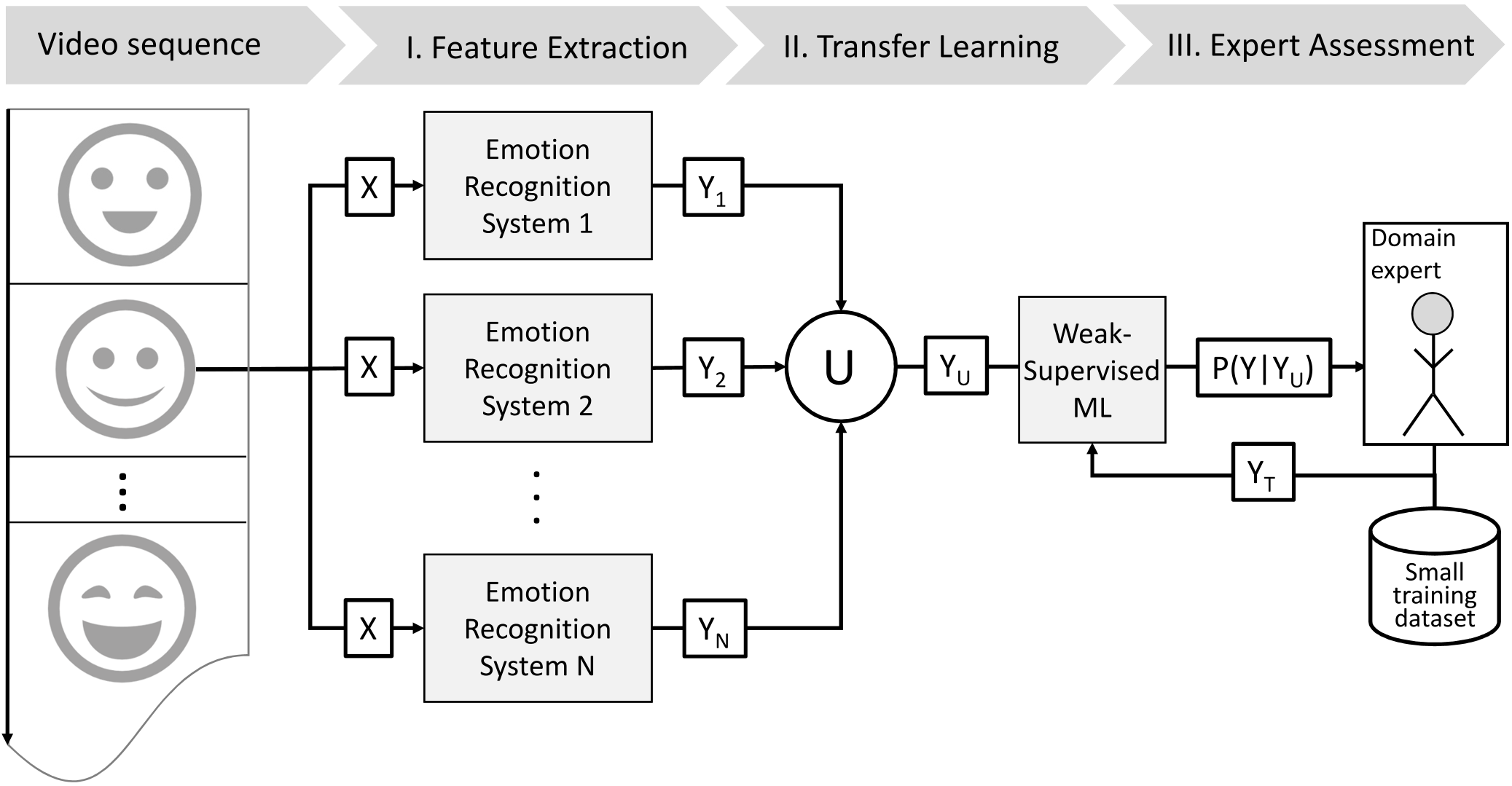 Figure 1: The proposed multi-stage framework showing the transition from general ERS outputs to domain-specific labels.
Why It Works: The Power of Inductive Bias
By utilizing pre-trained models from companies like Microsoft or Noldus, the researchers are effectively "stealing" the massive inductive bias these models have learned from millions of data points.
Even if a general model's label ("Happiness: 0.82") isn't exactly what a psychiatrist is looking for, the consistency of that model's output provides a structured feature space that a smaller, specialized model can easily navigate. This allows for what the authors call Weakly Supervised Training, which requires significantly less data than training from scratch.
Critical Insight & Future Outlook
The most compelling aspect of this framework is its Scalability. In the era of "Foundation Models," the bottleneck is no longer compute, but the "Human Expert" hours. By shifting the expert's role from "Labeler" to "Validator/Programmer," we can generate datasets of unprecedented size.
Limitations:
- Proprietary Risk: Relying on commercial APIs (like Microsoft's) can introduce "black box" biases that are hard to audit in a medical context.
- Temporal Smoothing: While the paper mentions sequences, future work must more aggressively use RNNs or Transformers at Stage II to ensure emotional transitions across frames are physiologically plausible.
Conclusion
This paper serves as a blueprint for specialized AI fields. Instead of lamenting the lack of data, we should be building "Targeted Translators"—models that stand on the shoulders of general-purpose AI giants to peek into the nuances of human emotion.