
Bridging Linguistics and Logic: Semi-Automatic Engineering of Modelling Techniques
Semi-automatic Development of Modelling Techniques with Computational Linguistics Methods – A Procedure Model and Its Application
This paper introduces a semi-automatic procedure model for developing domain-specific modelling techniques using Computational Linguistics (CL) methods. Tested in the Carsharing business model domain, the approach systematically derives modelling constructs from small-scale text corpora.
TL;DR
Developing domain-specific modelling techniques has traditionally been a "craft" process—manual, subjective, and difficult to reproduce. This paper proposes a breakthrough procedure model that utilizes Computational Linguistics (CL) to semi-automatically transform raw text into structured modelling building blocks. By focusing on symbolic language processing, the authors prove that you don't need "Big Data" to build high-quality domain models.
The "Manual Burden" in Method Engineering
In the world of Information Systems, we often need specific languages to model niche domains (like the Sharing Economy). However, the status quo for building these languages is flawed:
- Traceability: It is often unclear why a specific construct was included.
- Reproducibility: Two experts might create two completely different models from the same data.
- Data Scarcity: Most automated tools require millions of words, which simply don't exist for emerging industries.
The authors' research intuition is simple: Use Computational Linguistics as a lens to filter out human bias and automate the "heavy lifting" of concept extraction.
Methodology: The 8-Phase Procedure Model
The core contribution is a refined procedure model (PMIII) developed over four iterations. Unlike standard text mining, this model is specifically tuned for building modelling tools.
The Pipeline Workflow
- Domain Specification: Defining boundaries (e.g., Carsharing).
- Source Selection: Identifying relevant texts (Websites, manuals).
- Extraction & Cleaning: Converting HTML to clean plain text.
- Corpus Building: Tokenization and linguistic annotation (POS-tagging).
- Term Extraction: Identifying "Candidate Terms" using statistical and pattern-based methods.
- Relationship Extraction: Using Dependency Parsing and Compound Analysis to find how words connect (e.g., "Vehicle" leads to "Booking").
- Consolidation: Moving from words to a structured taxonomy or "Zwicky-box."
- Representation: Assigning icons and graphical syntax to the blocks.
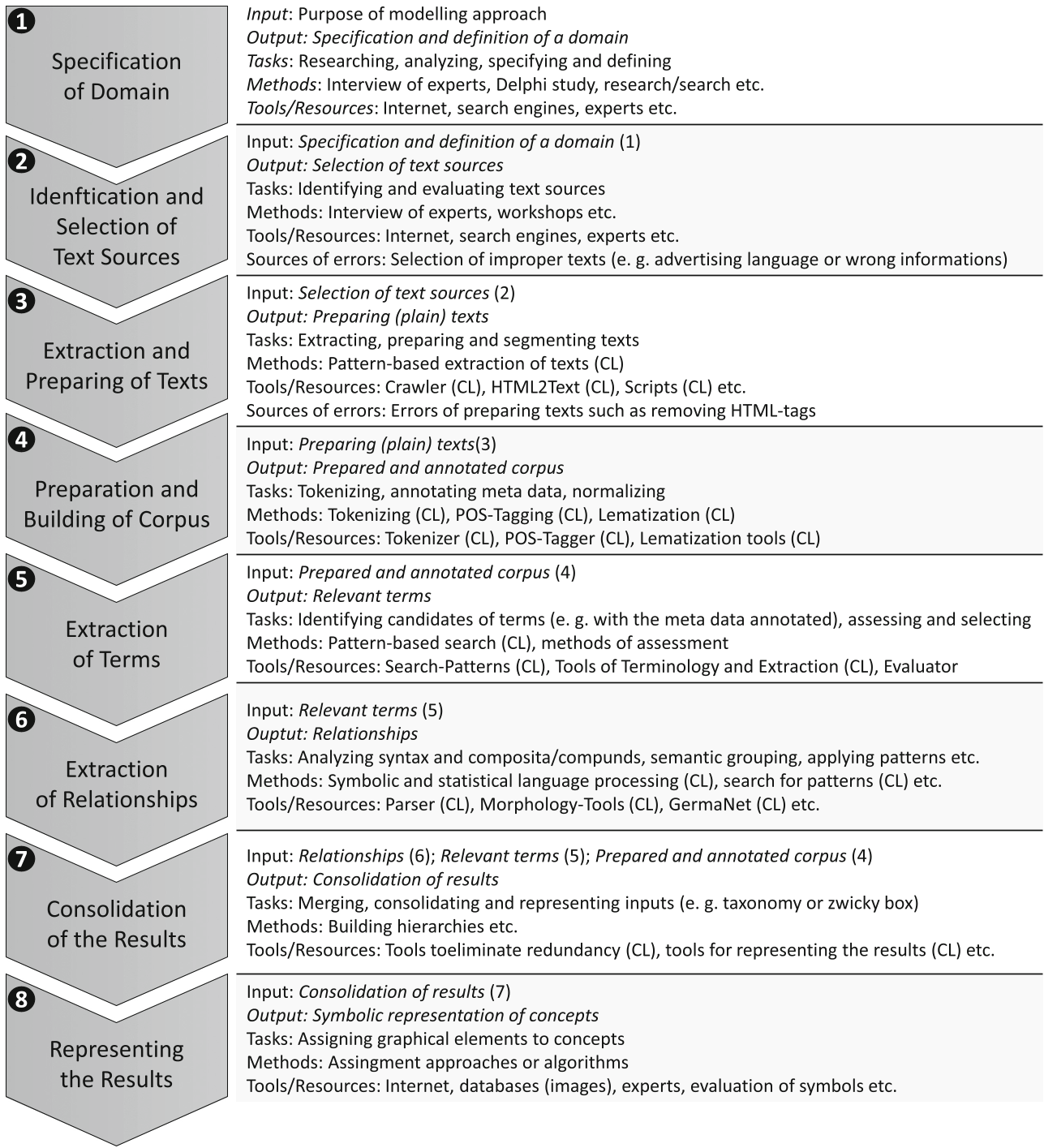 Figure 1: The iterative procedure model for semi-automatic method engineering.
Why Symbolic CL Works for Small Data
The authors highlight several "low-data" linguistic tricks:
- Compound Analysis: Splitting "Customer-contract" automatically suggests that a "Contract" is a hypernym (parent) of a "Customer-contract."
- Pattern Matching: Searching for "X such as Y" to automatically capture "is-a" relations.
- Verb-Object Pairs: Identifying that "Vehicle" is associated with "Locate," "Book," and "Rent" defines the functional scope of the model.
Evidence of Success: Manual vs. Semi-Auto
The researchers compared their CL-driven model against a manual baseline. The results were compelling:
- 69% Precision: The tool independently found the majority of concepts human experts identified.
- Discovery Power: The tool found 13 new instances (e.g., specific car brands and service conditions) that the human experts overlooked.
- Efficiency: Standardized tags like "Adjective-Noun" pairs proved to be highly effective for sub-typing (e.g., "Commercial" vs. "Private" providers).
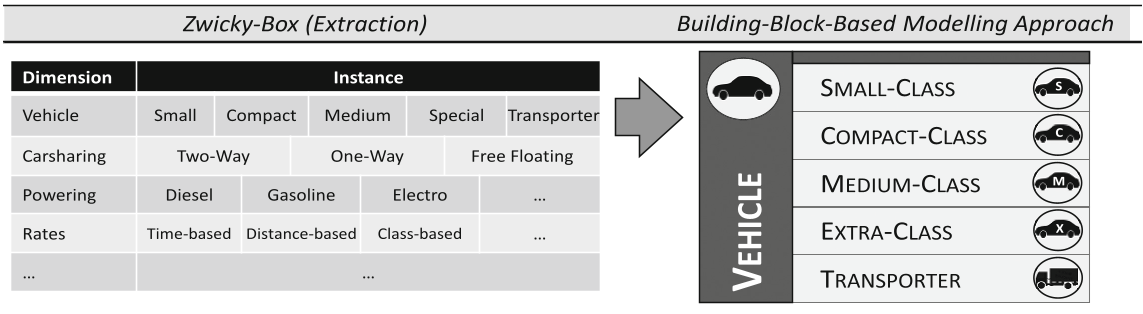 Figure 2: The final building-block-based approach for Carsharing business models.
Critical Insight: The "Cold Start" Problem
The biggest limitation identified was source quality. If the input text is "advertising language," the resulting model will be biased toward marketing terms rather than operational logic. This underscores that while CL can automate processing, the curation of the corpus remains a vital human-in-the-loop task.
Conclusion
This paper serves as a roadmap for researchers looking to standardize how we build enterprise modelling languages. By shifting method engineering from an "art" to a "semi-automated science," we can ensure that our modelling tools are as rigorous as the systems they describe. Future work will likely integrate Large Language Models (LLMs) to further smooth the transition from the "Consolidation" phase to the "Representation" phase.