
Beyond Differential Equations: Modeling Smartphone Worms via Social Graphs and Semi-Markov Processes
Propagation model of smartphone worms based on semi-Markov process and social relationship graph
This paper introduces a novel propagation model for SMS/MMS-based smartphone worms by integrating a semi-Markov process (SMP) with a social relationship graph. The model characterizes complex node-state transitions (S-E-I-R) while accounting for individual differences in infection and resistance factors based on real-world communication patterns.
TL;DR
Researchers have developed a sophisticated propagation model for SMS/MMS worms that merges Stochastic Process Theory with Social Network Analysis. By moving away from "one-size-fits-all" epidemic models, this work uses Semi-Markov Processes and real-world messaging data to demonstrate how social trust and individual behavior dictate the speed and scale of mobile malware outbreaks.
Background: The Social Vector of Mobile Malware
Unlike PC viruses that often spread through network vulnerabilities, smartphone worms (like the classic Commwarrior) thrive on human trust. If you receive an MMS from a close friend, you are far more likely to open it than one from a stranger. This "social trust" is the engine of SMS/MMS worm propagation, yet early mathematical models (like standard SI or SIR) largely ignored it, treating the population as a "homogeneous soup."
The Core Problem: The Memoryless Limitation
Most prior works used Differential Equations or simple Markov Chains. These assume the "Memoryless Property"—that the probability of a node changing states (e.g., from Exposed to Infected) depends only on its current state, not how long it has been there.
In reality, a user's safety awareness might change over time, and system responses to attacks aren't instantaneous. This paper argues that sojourn times (the time spent in a state) are non-exponential, necessitating the use of a Semi-Markov Process (SMP).
Methodology: The Twin-Pillar Approach
1. The Semi-Markov Node-State Transition
The authors define four states: Susceptible (S), Exposed (E), Infectious (I), and Recovered (R). The SMP model allows for:
- Random Transition Times: The time to move from "Exposed" to "Infected" is a random variable, not a fixed rate.
- Limiting Probabilities: Using the Strong Law of Large Numbers, the authors derive the steady-state probabilities for nodes being in any given state.
2. The Social Relationship Graph
Using real-world data from a Chinese mobile service provider, the authors built a graph where:
- (Vertices): Mobile users.
- (Weights): The number of SMS/MMS messages exchanged.
- Infection Factor (): A function of user 's social ability and the interaction frequency with user .
- Resisted Factor (): Based on user 's safety awareness and communication habits.
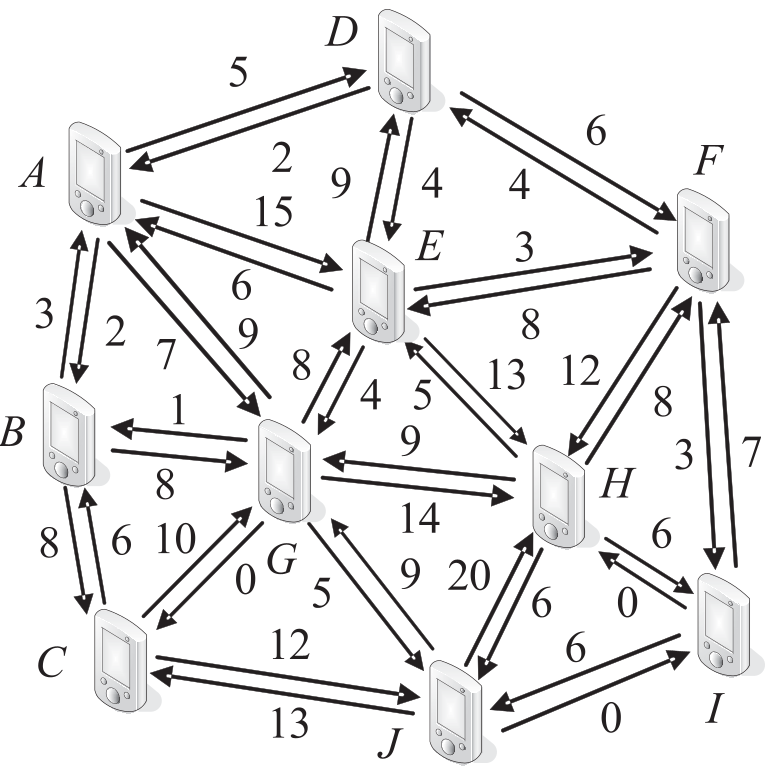 Figure 1: The state transition diagram illustrating the complex paths between S, E, I, and R states.
Experimental Insights
The research team implemented their algorithm on a dataset of 400,000 users and 20 million messages.
Key Findings:
- Individual Difference Matters: Nodes with high "In-degrees" (receiving many messages) are critical vulnerabilities. The higher the interaction frequency, the higher the Infection Degree (ID).
- The Outbreak Point: The proposed model shows that because of social clusters, the "outbreak point" (where the number of infected nodes spikes) occurs much earlier than predicted by traditional SEIR models.
- Containment: The most effective way to slow a worm is not just general "patching," but targeting the Initial Resource Nodes (IRN)—the social hubs.
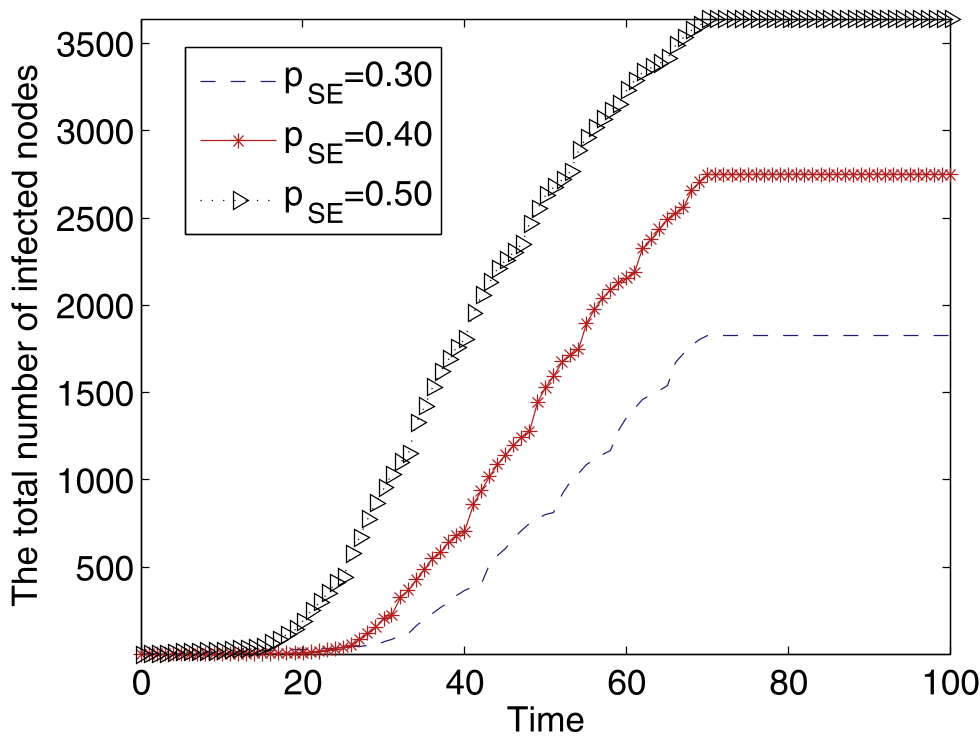 Figure 2: Comparison between the standard SEIR model and the proposed social-aware model, showing the shift in the outbreak point.
Critical Analysis & Conclusion
Takeaway
The integration of Social Network Theory into epidemic modeling provides a much more realistic "spatial-temporal" view of how malware spreads. By quantifying trust (via message counts), the model moves from abstract mathematics to actionable cybersecurity intelligence.
Limitations
- Historical Data: The model relies on historical SMS/MMS records, which may not account for sudden changes in user behavior.
- Privacy: Extracting social graphs requires access to sensitive metadata, which is increasingly restricted under modern privacy laws (GDPR/CCPA).
Future Outlook
As we move into an era of "Hybrid Worms" that spread via SMS, WhatsApp, and Bluetooth simultaneously, the next frontier will be Multi-layer Social Graphs that track interactions across multiple communication platforms to predict the next "digital pandemic."