
Beyond "Visible to Friends": A Circle-Based Metric for Real-World Privacy Risk
A Semi-supervised Approach to Measuring User Privacy in Online Social Networks
This paper introduces a circle-based privacy score for Online Social Networks (OSNs) and a semi-supervised framework to calculate it. By leveraging an active learning approach with a Naive Bayes classifier, the method quantifies individual privacy leakage risk while minimizing manual user labeling effort.
TL;DR
The traditional "Friend-of-Friend" or "Public" privacy settings in social media are blunt instruments that don't reflect actual human relationships. This paper presents a circle-based privacy score that calculates risk based on specific individuals allowed to see specific content. By using Active Learning, the system learns a user's privacy preferences with minimal effort, providing a more accurate "Privacy Score" than ever before.
Context: The Dunbar’s Number Problem
Modern social networks have broken the anthropological limit known as Dunbar's Number (~150 stable relationships). Users frequently have 400+ "friends," many of whom are weak ties or acquaintances. When a user clicks "Visible to Friends," they are likely over-sharing with people they don't fully trust.
The core insight of the authors is that privacy risk is not a global setting, but a summed relationship-specific risk. Therefore, a true privacy metric must look at the "Social Circle" level—individual by individual.
Methodology: High-Granularity Without the Fatigue
The authors redefine the privacy score by refactoring the response matrix. Instead of a simple 0-5 scale of social distance, they calculate the ratio of specific friends permitted to see an item:
The Active Learning Framework
To prevent users from having to manually label hundreds of friends for every post, the authors introduce a Naive Bayes classifier wrapped in an Active Learning loop:
- Seeds: The user labels 5 friends.
- Uncertainty Sampling: The system identifies the friend whose visibility status is the most mathematically "uncertain" (Maximum Entropy).
- Iteration: The user confirms the status for that specific friend, and the model retrains.
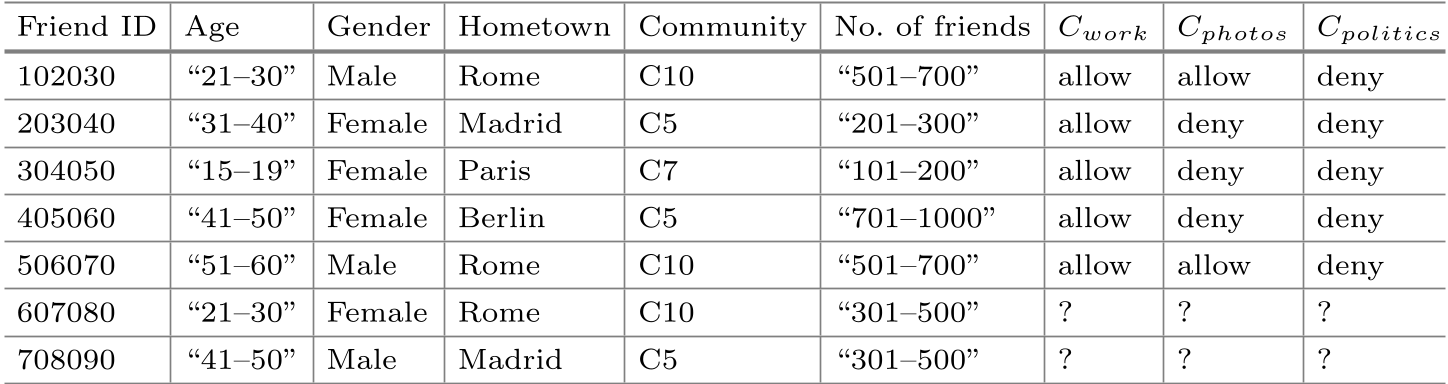 Table 1: Example of friend features (Age, Hometown, Community) used to predict privacy labels.
Experimental Insights: Reality vs. Perception
The researchers conducted a dual-phase experiment with real Facebook users. They compared the Separation-Based Score () against their new Circle-Based Score ().
1. Sensitivity Spike
When users were asked to evaluate visibility on a per-friend basis, their perception of item sensitivity increased. Users realized that certain items (like political views or personal photos) were much more sensitive than they originally thought when considering "weak tie" connections.
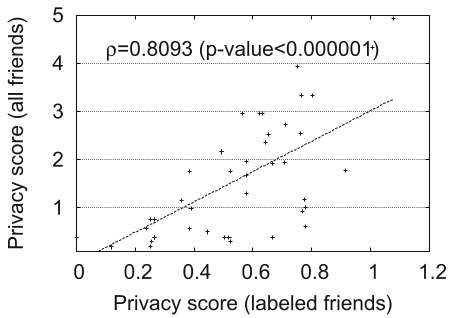 Figure 2(a): Sensitivity values (Beta) are consistently higher under circle-based policies, suggesting users are more cautious when looking at their actual friend list.
2. Classifier Efficiency
The Active Learning model proved highly effective. Accuracy climbed sharply and stabilized after labeling only about 15-20 friends, making it a practical tool for real-world applications.
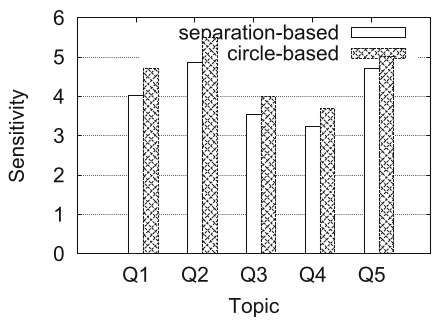 Figure 3: Prediction accuracy (a) and Privacy Score stability (c) as the number of labeled friends increases.
Critical Analysis: A Step Toward Privacy by Design
The strength of this work lies in its empirical validation. It proves that the "Trust all friends" assumption is a major source of error in privacy research.
Limitations:
- The attributes used for classification (Gender, Hometown, etc.) are themselves subject to missing data if the user's friends have strict privacy settings.
- The experiment used a relatively small sample (74 intensive survey participants).
Future Outlook: This framework provides a blueprint for a "Privacy Wizard" that could be embedded directly into social media platforms. Instead of a binary "Public/Private" toggle, AI-driven assistants could suggest specific "Circles" for every post, significantly reducing the "Indiscriminate Disclosure" that plagues digital life today.
Takeaway
True privacy isn't about hiding from everyone; it's about knowing exactly who can see what. By combining Psychometric Theory (Item Response Theory) with Active Learning, we can build tools that finally align digital visibility with human trust.