
The Digital Gray Gap: Why Seniors Aren't Modernizing Their Health Information Habits
Senior Citizens, Digital Information Seeking and Use of Social Media for Healthy Lifestyle
This study investigates the evolution of digital health information seeking among Icelanders aged 60 and older across a decade (2002–2012). Using longitudinal survey data and ANOVA analysis, it examines how senior citizens interact with websites and social media to manage their healthy lifestyles.
TL;DR
A decade-long study of Icelandic seniors reveals that while internet access is nearly universal, the actual use of digital tools for health information remains surprisingly low. Contrary to the belief that younger "pre-retirees" (60-67) would lead a digital revolution, their habits are becoming indistinguishable from those over 68—favoring passive reading over the interactive potential of social media.
Contextual Positioning
This paper serves as a critical longitudinal reality check. Positioned in the field of Information Science, it challenges the "generational replacement" theory—the idea that digital divides solve themselves as tech-literate generations grow old.
The Core Challenge: Physical and Attitudinal Barriers
As the global population of those aged 60+ is expected to double by 2050, the digitalization of health information is often touted as a solution for independence. However, the author identifies three primary friction points:
- Physical Limitations: Changes in motor skills and vision make traditional digital interfaces cumbersome.
- Attitudinal Distrust: A lingering skepticism regarding the reliability of online health "advice."
- Habitual Inertia: Life-long habits of seeking information through print or interpersonal channels are not easily displaced.
Methodology: Tracking a Decade of Change
The researcher analyzed random samples from 2002, 2007, and 2012, splitting the senior population into two distinct groups: the "Pre-retirement" group (60-67) and the "Elderly" group (68+).
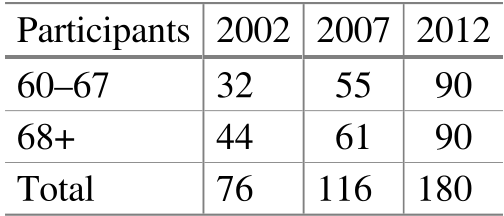
The study utilized ANOVA (One-way) to determine if age was a significant factor in how these individuals sought information.
Key Findings: The Passive Digital Citizen
1. The Convergence of Age Groups
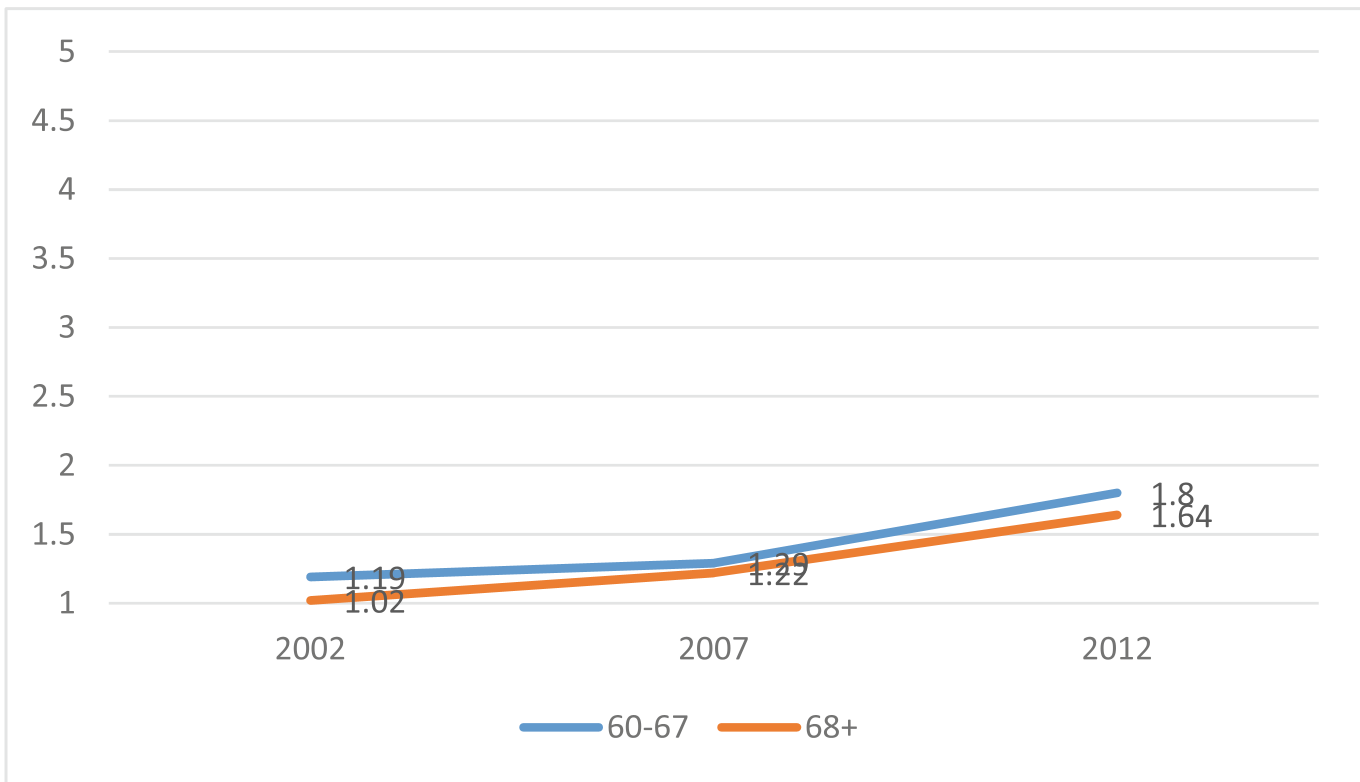
In 2002, there was a significant difference in how the two age groups used the internet. However, by 2012, this gap had effectively vanished. Both groups increased their usage, but they reached a similar "plateau" of infrequent use.
2. Social Media: Consumption over Communication
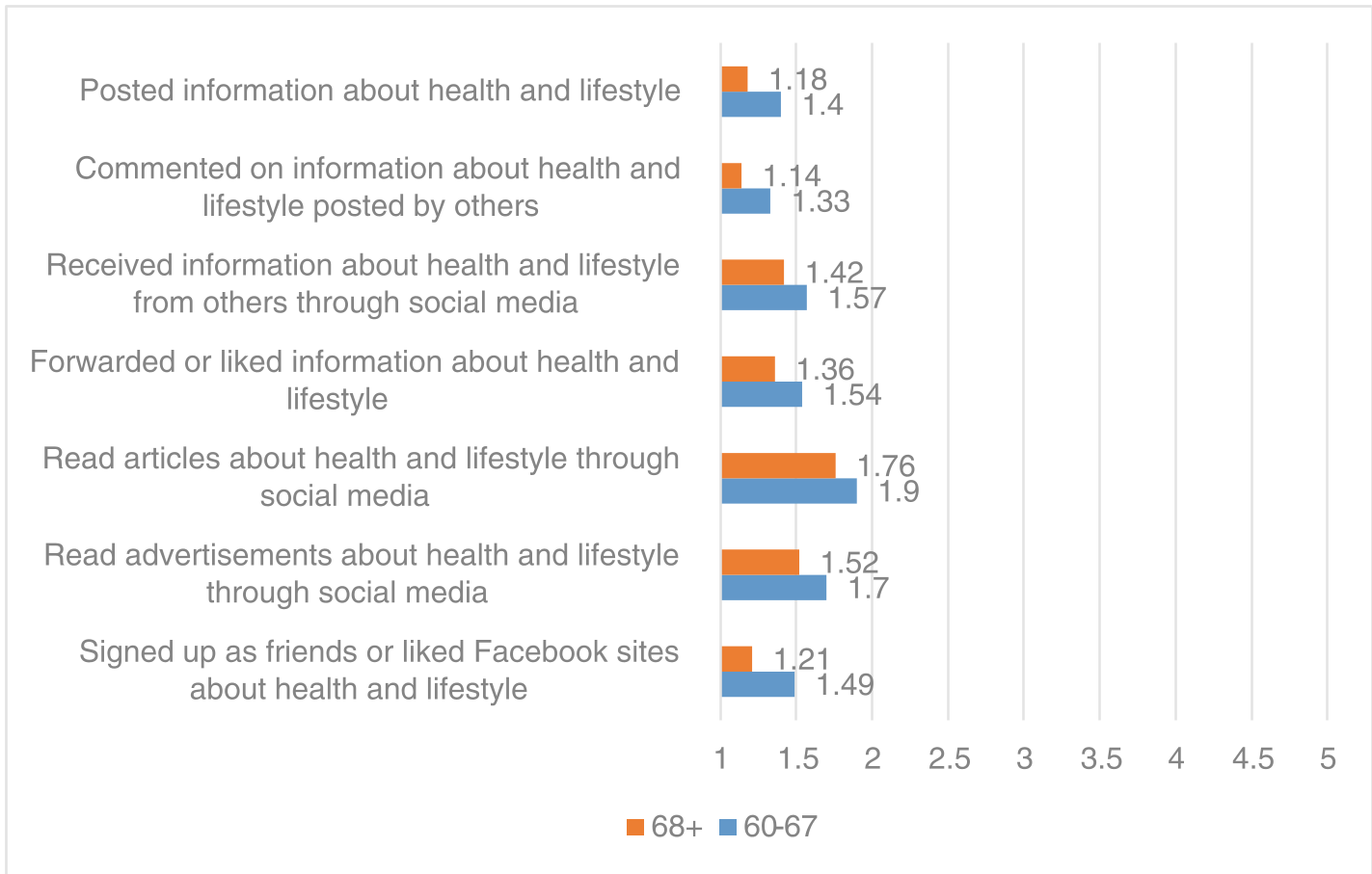
Even though social media offers a "dialogue" platform, seniors use it like a "monologue" medium.
- Favored Actions: Reading articles and viewing advertisements.
- Avoided Actions: Posting original content, commenting, or "liking" health pages.
- Engagement Stats: Roughly 50% of seniors have never used social media for health purposes.
Critical Insight: The Myth of the Future "Digital Senior"
The most profound takeaway is the failure of the "trickle-up" tech adoption theory. The study shows that the 60-67 cohort did not bring "heavy usage" habits into their senior years. Instead, their behavior moderated to match the existing senior population.
This suggests that the context of aging (retirement, changing health needs, social circle shifts) may be a stronger determinant of tech behavior than the age of first exposure to the technology.
Conclusion & Future Outlook
The study concludes that society cannot simply wait for the digital divide to close on its own.
- For Policy Makers: Information must remain available in non-digital formats to ensure equitable access.
- For Developers: There is a desperate need for "Age-Friendly" design—touch screens and simplified interfaces are no longer optional "extras"; they are requirements for inclusion.
- The Limitation: The study relies on self-reported survey data, which may suffer from recall bias, yet the longitudinal trend is undeniable.
In the future, we must ask: Is the goal to force seniors to adapt to technology, or to adapt technology to the enduring habits of senior citizens?