
Beyond the Hookup: Decoding the Psychological Drivers of MSM App Use
The Roles of Sensation Seeking and Gratifications Sought in Social Networking Apps Use and Attendant Sexual Behaviors
This study investigates the socio-psychological drivers of social networking app use (e.g., Jack’d, Grindr) among young MSM in Hong Kong. Using the Uses and Gratifications (U&G) framework, it identifies that non-sexual motives often outweigh sex-seeking and evaluates how these motives interact with "Sexual Sensation Seeking" to influence sexual behaviors.
TL;DR
Contrary to public health stigmas, sexual gratification is often not the primary driver for men who have sex with men (MSM) using social apps like Grindr or Jack’d. This research reveals that while frequent app use leads to more partners, it does not directly lead to riskier sexual behavior. Instead, "Sexual Sensation Seeking" (a psychological trait) acts as the critical gatekeeper that determines whether app use translates into high-risk encounters.
The "Digital Playground" Controversy
The rapid rise of location-aware apps has triggered a public health debate: Do these apps cause risky behavior by making sex too accessible (the Accentuation Hypothesis), or do risk-prone individuals simply prefer these efficient tools (the Self-Selection Hypothesis)?
Existing literature has been inconsistent. Some studies link apps to rising STI rates, while others show app users are more diligent about condom use. This study shifts the focus from what users are doing to why they are doing it, using the Uses and Gratifications (U&G) framework.
Methodology: The Five Motives of App Use
The researchers identified five core "Gratifications Sought" that drive young MSM in Hong Kong to log on:
- Surveillance: Checking out who is nearby (the most common motive).
- Relationship: Finding dates or new friends.
- Diversion: Killing time or escaping boredom.
- Sex: Specifically seeking a sexual encounter.
- Social: Seeking community belonging or popularity.
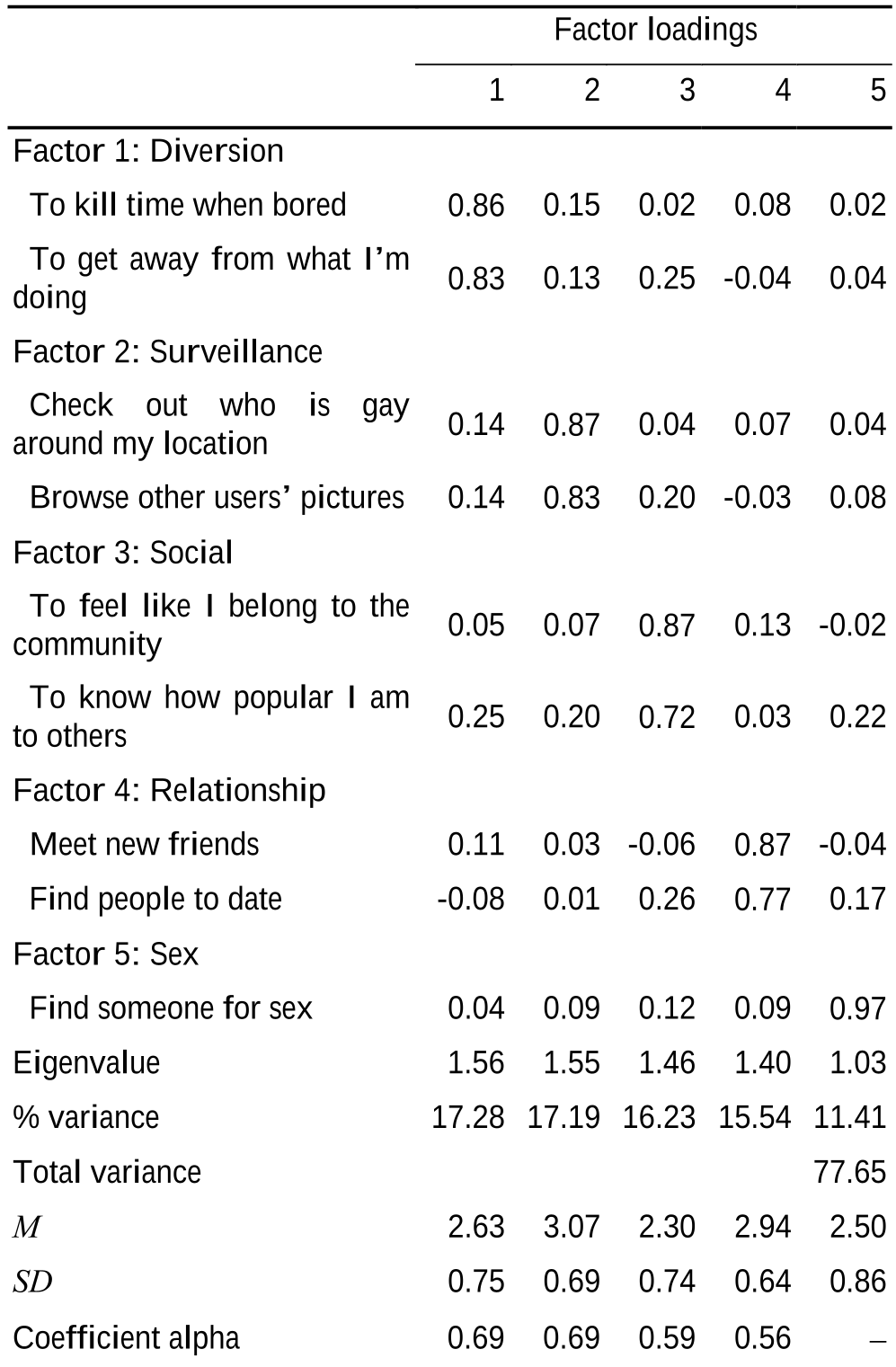 Table 1: Factor loadings for the five dimensions of app-use motives.
Key Insights: Frequency $
eq$ Risk The data reveals a counter-intuitive truth. App-use frequency was the strongest predictor of hitting a higher number of total partners (TSP), but it had zero correlation with condomless sex (CSP).
The real predictor of risk is the interaction between a user's Sexual Sensation Seeking (SSS)—a desire for novel and exciting sexual experiences—and their specific motives.
The Interaction Effect
- Sex Motive + High SSS: Leads to more total partners AND more condomless sex.
- Diversion Motive + High SSS: Also leads to more risk-taking, as the app serves as a "thrill-seeking" escape from routine.
- Surveillance Motive: Interestingly, users seeking surveillance actually reported fewer total partners, suggesting these users are more cautious and "watchful."
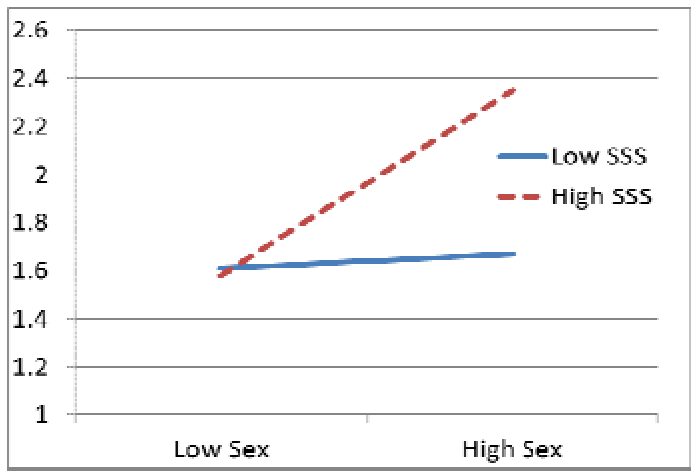 Figure 1: How Sexual Sensation Seeking amplifies the "Sex Motive" to increase partner counts.
Results & Data Comparison
The hierarchical regression models provided a clear distinction between volume and risk:
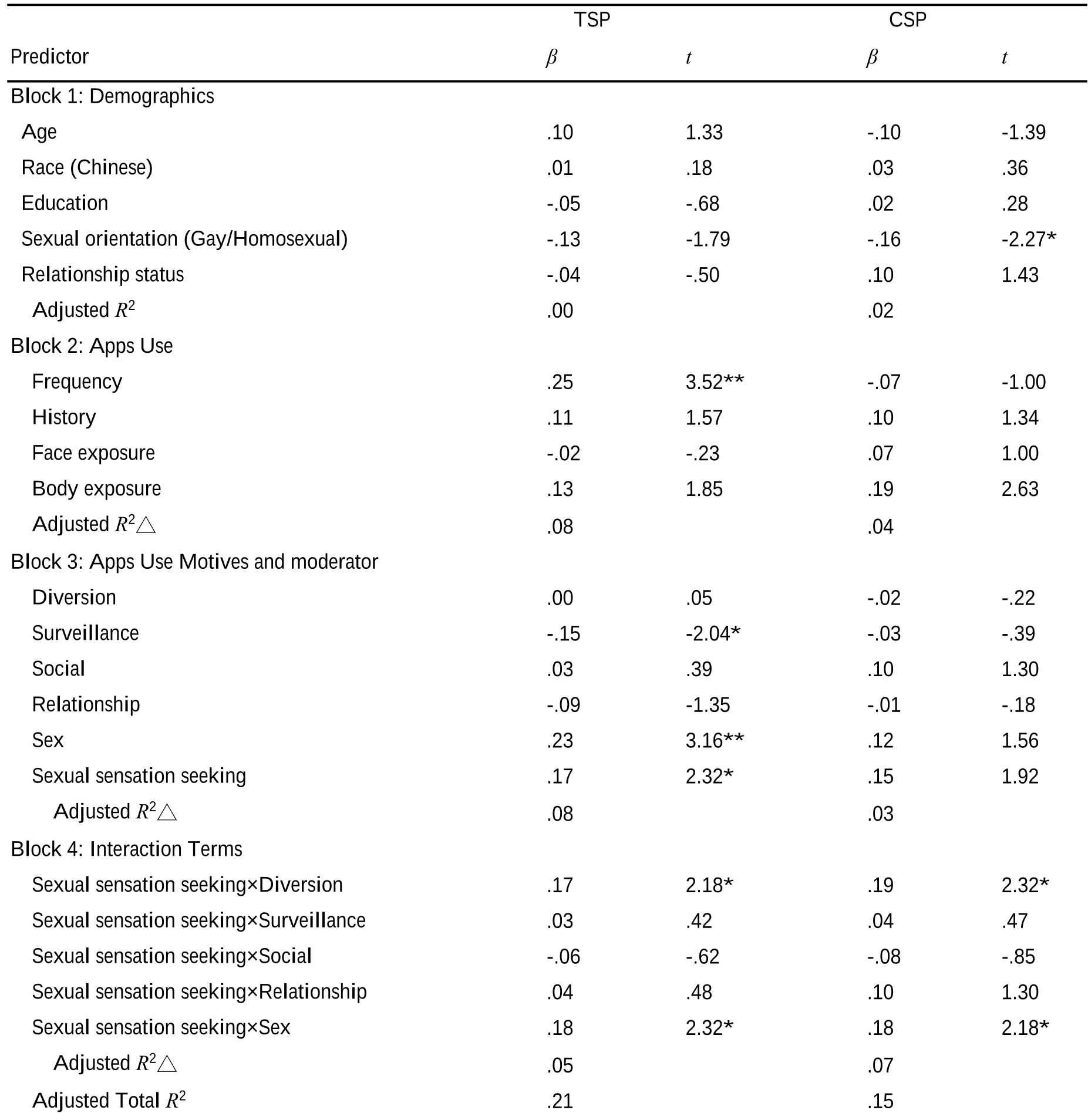 Table 3: Hierarchical regression predicting Total Partners vs. Condomless Partners.
- TSP (Total Partners): Explained well by app frequency and sexual motives ().
- CSP (Condomless Partners): Only explained significantly once the interaction terms (SSS Motive) were added, supporting the self-selection view.
Critical Analysis & Future Outlook
This work challenges the "technological determinism" prevalent in public health—the idea that the app itself is the "danger." Instead, it suggests that:
- Intervention must be Psychological: Health educators should target sensation-seeking traits rather than just telling people to delete apps.
- Social Inclusion is Key: Since "Social" and "Relationship" motives are high, apps can be leveraged as platforms for community building and mental health support, not just STI testing ads.
Limitations: The study is cross-sectional (a "snapshot" in time). Future research needs longitudinal data to confirm if behavior changes as a user spends more years on these apps.
Takeaway for the Industry: For developers and health policy makers, the message is clear: the app is a tool. The user's psychological "Inductive Bias" towards risk is what determines the public health outcome.