
Decoding the "Circle": The Psychological Infrastructure of Mobile Social Networks
A Study on the Connotation, Measuring Dimensions and Influence Factors of Sense of Circle in Mobile Social Networks
This paper explores the "Sense of Circle" within mobile social networks (MSNs), specifically WeChat, using grounded theory and empirical verification. It identifies a four-dimensional structure—Shared Beliefs, Reciprocal Exchange, Role Orientation, and Social Structure—establishing a SOTA conceptual model for understanding Chinese social psychology in digital environments.
TL;DR
This study bridges the gap between traditional Chinese "Circle Culture" (Quan-zi) and modern Mobile Social Networks (MSNs). By deploying grounded theory and empirical testing, the researchers constructed a four-dimensional model—Shared Beliefs, Reciprocal Exchange, Role Orientation, and Social Structure—to quantify how users perceive and interact within digital boundaries. The standout revelation? Reciprocal Exchange (utility) and Role Orientation (responsibility) are the primary drivers of digital social cohesion, far outweighing simple shared hobbies.
The "Differential Pattern" Goes Digital
In Chinese sociology, Fei Xiaotong famously proposed the "differential pattern," suggesting society is like ripples in a pond, centered on the individual. In the era of WeChat, these ripples have become "Network Circles." However, prior work focused largely on qualitative descriptions of offline circles. This paper addresses the "Sense of Circle"—the subjective cognition that guides how we express relationships and coordinate resources in a digital-first world.
Methodology: From Interviews to Equations
The researchers utilized a two-step validation process:
- Grounded Theory: Through deep interviews, they extracted 230 statements, distilled into 12 categories.
- Empirical Testing: A questionnaire was administered to 277 active WeChat users. Using Confirmatory Factor Analysis (CFA), they verified that these dimensions weren't just theoretical fluff but statistically significant constructs.
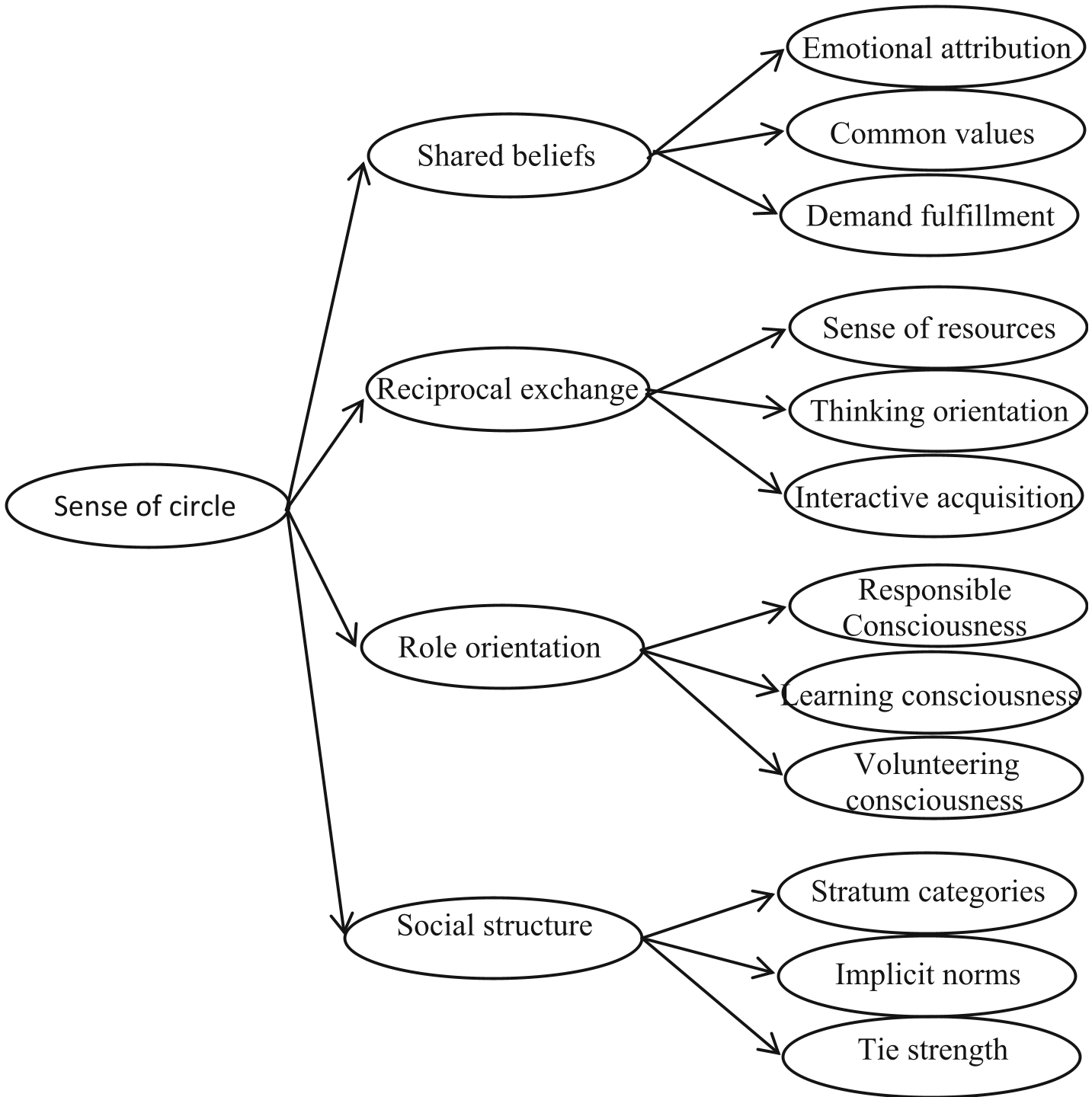 Figure 1: The proposed conceptual model showing the multi-dimensional structure of the Sense of Circle.
The Four Pillars of the Digital Circle
The study breaks down the "Sense of Circle" into four critical dimensions:
- Reciprocal Exchange (The Utility Factor): This emerged as the most significant dimension. It involves the sense of resources, thinking orientation (following the circle's logic), and interactive acquisition of skills.
- Role Orientation (The Identity Factor): A novel contribution of this paper. It measures Responsible Consciousness and Learning Consciousness. It turns out that users feel a stronger connection when they believe they have a "mission" or "role" to fulfill within the group.
- Social Structure (The Boundary Factor): Even in digital spaces, "Stratum Categories" and "Implicit Norms" exist. Power dynamics and unwritten rules (like WeChat group etiquette) dictate the circle's durability.
- Shared Beliefs (The Emotional Factor): While foundational, this was found to be the least significant of the four, suggesting that interest-based commonality is merely the "ticket to entry," not the glue that maintains long-term participation.
Deep Insight: Why This Matters for Tech Strategy
The study provides a sobering check for "Interest Graph" platforms. Simply grouping people based on shared hobbies (Shared Beliefs) is insufficient for building a "sticky" network.
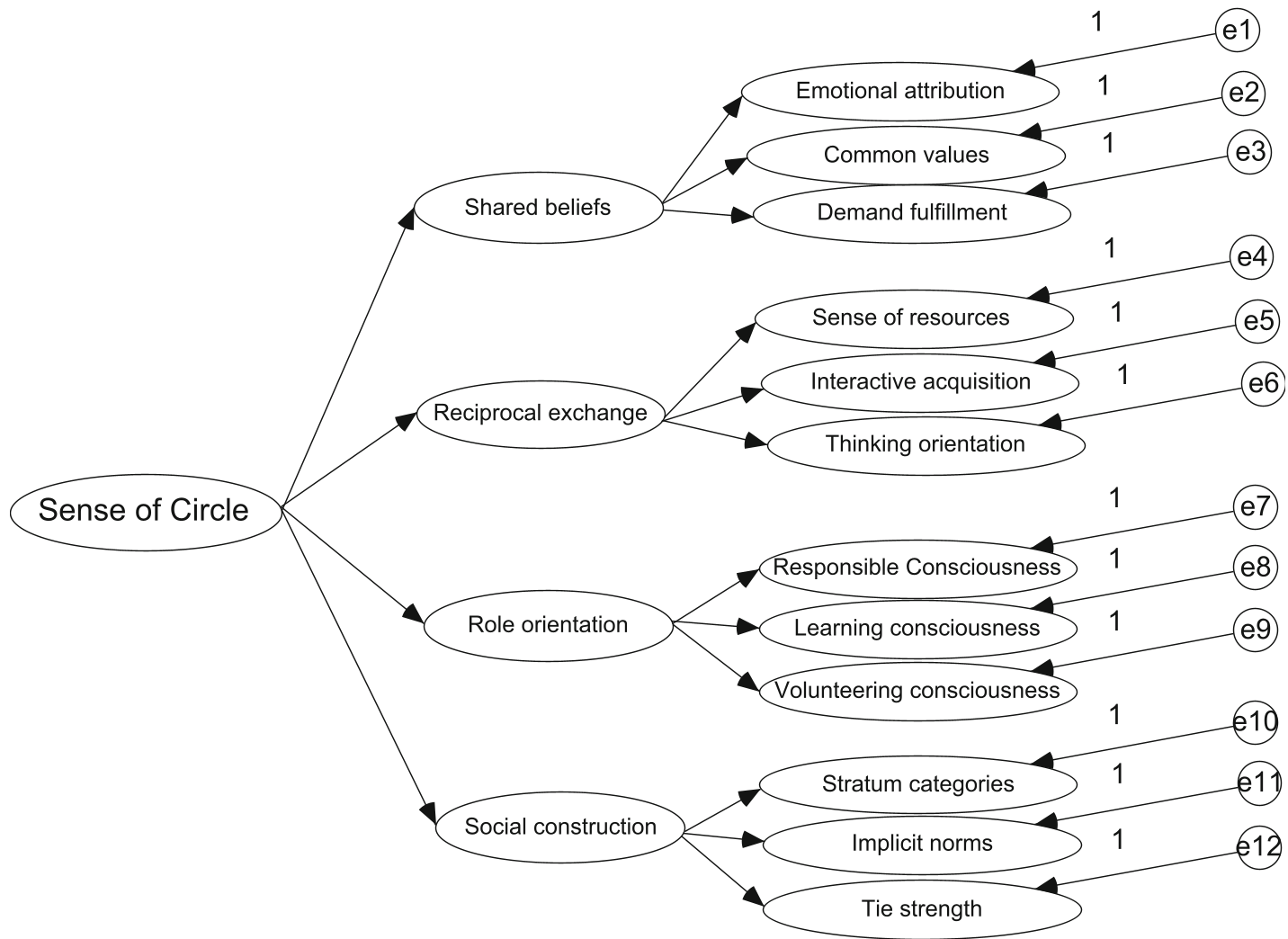 Figure 2: Statistical validation of the structural relationships between dimensions.
Key Takeaways for Product Managers:
- Build Resource Channels: Since Reciprocal Exchange is paramount, circles must provide tangible value (information, networking, exclusive access).
- Assign Responsibility: To increase the "Sense of Circle," platforms should design mechanisms that allow users to take on roles (e.g., moderators, contributors), tapping into Role Orientation.
- Formalize the Informal: Acknowledge Social Structure. By making "Implicit Norms" clear, you reduce perceived risk and increase trust.
Critical Analysis & Future Outlook
While the study is rigorous, its sample is heavily weighted toward college students (nearly 96% under age 25). The social dynamics of a Gen Z student circle may differ vastly from corporate or senior circles where "Tie Strength" and "Resource Exchange" might carry different weights.
Future Work should look into how these dimensions shift in the context of Web3 and DAOs, where "Role Orientation" and "Reciprocal Exchange" are explicitly encoded into smart contracts. The "Sense of Circle" is no longer just a psychological state; it is becoming a programmable economic reality.