
Digital Pulse of Democracy: Decoding the 2016 Facebook Election Dynamics
An analysis of sentiments on Facebook during the 2016 U.S. presidential election
This study presents a computational analysis of the 2016 U.S. Presidential Election by examining 9,700 Facebook posts and over 12 million comments. Using a combination of Latent Dirichlet Allocation (LDA) for topic modeling and Wavelet Transforms for trend detection, the researchers successfully mapped the interplay between candidate messaging and public sentiment.
TL;DR
By analyzing 12 million Facebook comments from the 2016 U.S. Election, researchers at Arizona State University have moved beyond simple "like" counts. Using Wavelet Transforms and LDA Topic Modeling, they demonstrated how candidates drive specific policy agendas and how the public reacts to offline events—revealing that online sentiment is a sharp, albeit noisy, indicator of a candidate's perceived credibility on specific issues.
The Problem: The Noise in the Machine
In modern politics, Social Networking Sites (SNS) are no longer optional "add-ons"; they are the primary arena for engagement. However, the sheer volume of data creates a "noise" problem. Previous studies often failed to distinguish between temporary social media "fluff" and meaningful shifts in public opinion. The challenge lies in connecting the What (topics discussed), the How (sentiment of the reaction), and the When (correlation with offline events like debates).
Methodology: Signal vs. Noise
The researchers employed a multi-stage computational pipeline to transform raw Facebook data into actionable insights:
- Topic Inference (LDA): Categorizing thousands of posts into 17 distinct latent topics (e.g., Planned Parenthood, Wall Street, ISIS).
- Sentiment Analysis: Assigning scores (0-4) to millions of comments to gauge the "emotional temperature."
- Wavelet Transforms (WT): This is the secret sauce. Borrowing from status-quo methods in engineering, WT was used to "de-noise" sentiment time series, allowing researchers to see the "signal" of public reaction amidst the daily chaos of social media.
Core Insights: Partisan Priorities
The study highlights a fascinating split in how political parties utilize Facebook:
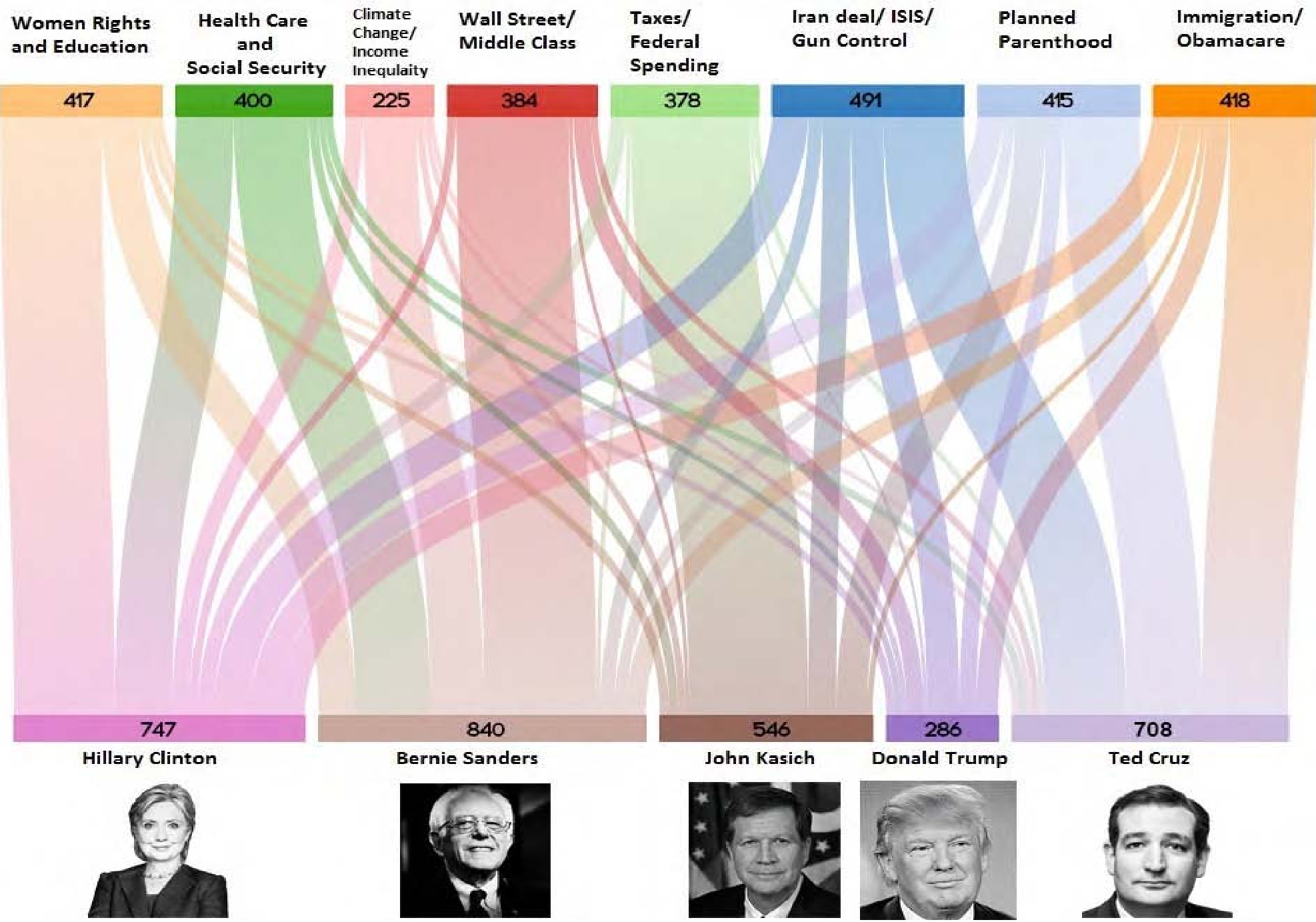
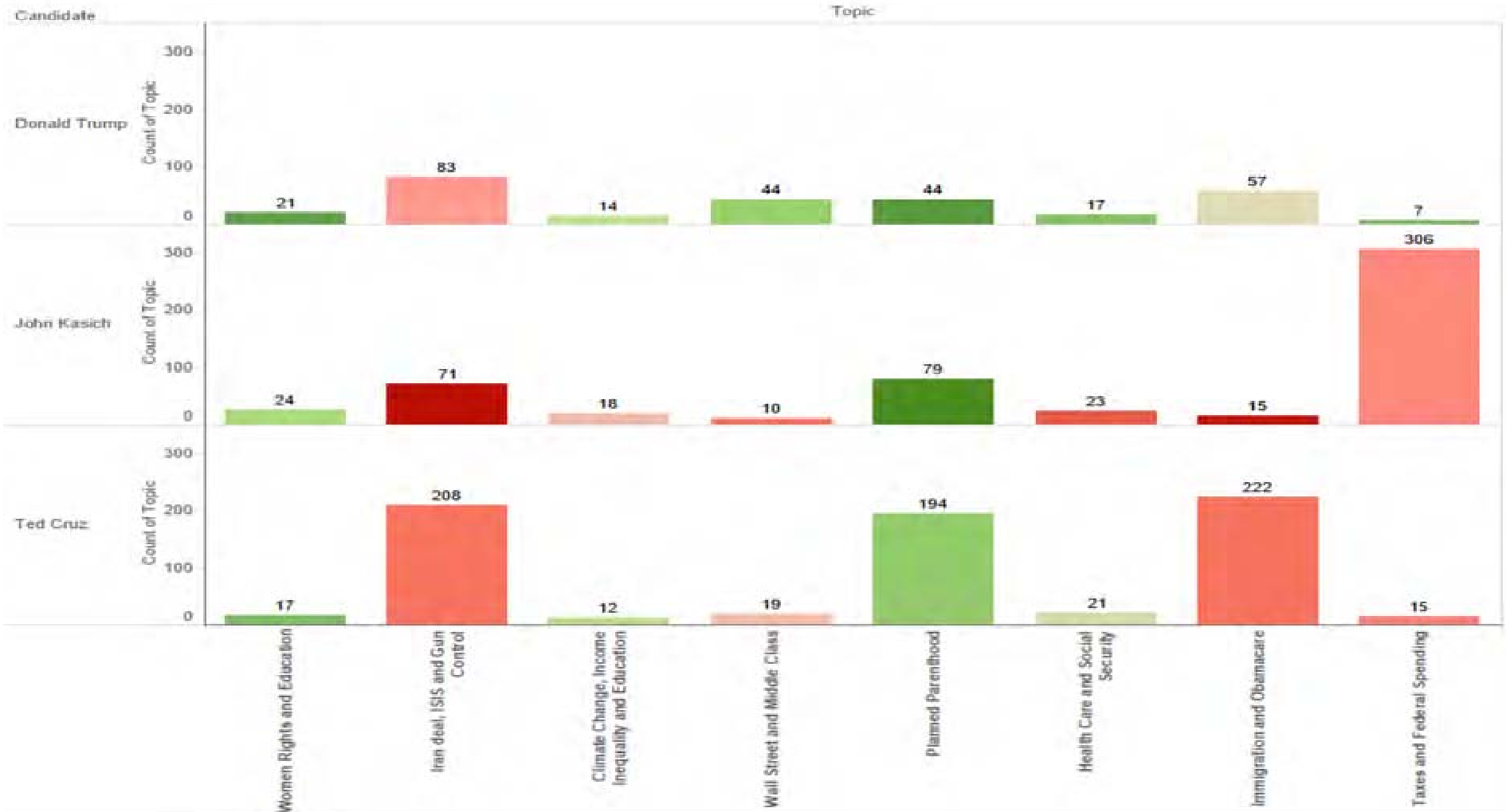
- Republicans: Actively shared information on controversial external events. Ted Cruz, for instance, focused heavily on the Iran Deal, ISIS, and Gun Control. Interestingly, these posts often sparked "outrage" comments, resulting in lower sentiment scores.
- Democrats: Focused on domestic social policies. Bernie Sanders dominated the "Wall Street and Middle Class" conversation, while Hillary Clinton leaned into "Women's Rights and Education."
The "Debate" Effect
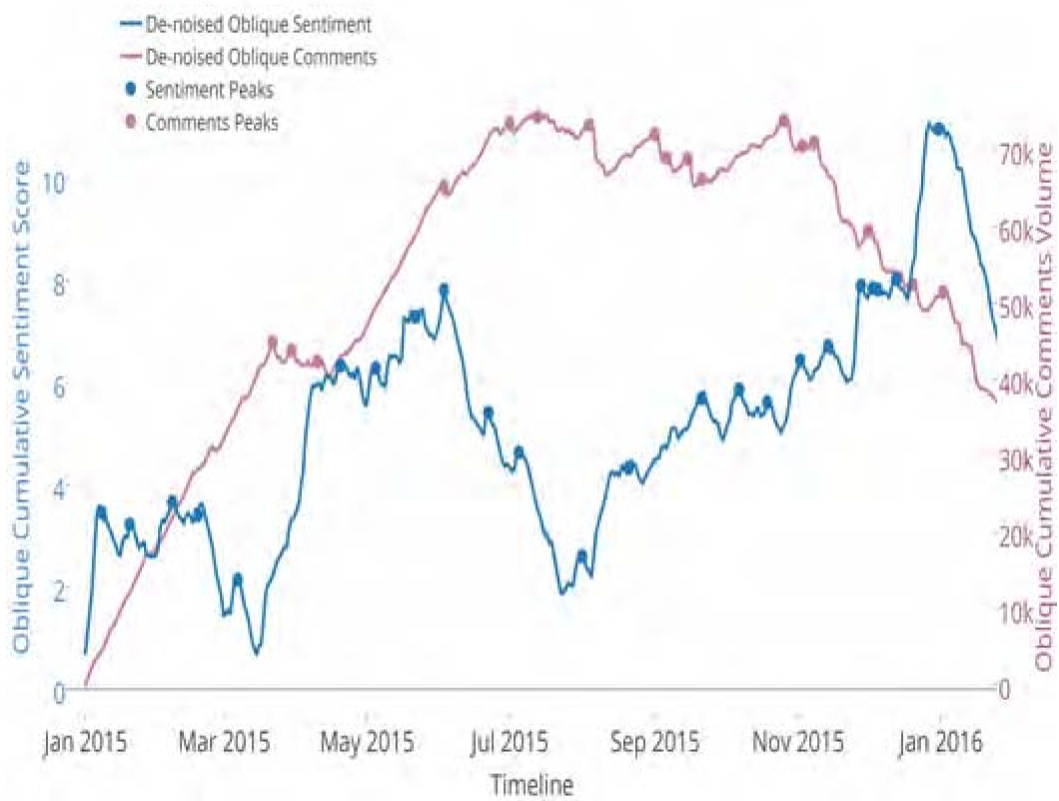
One of the most compelling findings was the impact of offline debates. For example, after the first GOP debate on August 4th, 2015, Ted Cruz’s cumulative sentiment curve dropped significantly, indicating a poor public perception of his performance that was immediately quantifiable online.
Results: Beyond the Surface
The study proves that sentiment is not just "positive" or "negative" in a vacuum; it is tied to perceived credibility.
- Bernie Sanders saw high positive sentiment regarding Wall Street reform, suggesting a strong "issue ownership."
- Donald Trump received positive reactions to his tax and spending posts, despite their lower frequency compared to his other topics.
- Hillary Clinton maintained a consistent positive sentiment lead in topics related to Women's Rights.
Critical Analysis & Future Outlook
The strength of this work lies in its methodological rigor—specifically the use of wavelet transforms to handle the non-stationary nature of social media signals. It moves computational political science away from "static snapshots" toward "dynamic tracking."
Limitations: As the authors note, the study is limited to Facebook. In 2016, Twitter was the epicenter of "elite" political discourse and news-breaking, which this study does not capture. Additionally, the analysis is retrospective; the "Holy Grail" remains a real-time predictive model that can forecast election outcomes based on these de-noised sentiment signals.
Takeaway: For researchers and campaign managers, this paper proves that what you post determines the mood of your followers, but when you post relative to offline events determines your momentum.