
Deciphering the Social Sensor: Multimodal Subjectivity Classification in the Age of Twitter
Sentiment Analysis for Social Sensor
The paper introduces a multimodal "Social Sensor" framework for sentiment analysis on Twitter, specifically targeting video and text subjectivity classification. By fusing textual (POS/Lexicon), visual (CNN-BoVW/Human Detection), and acoustic (MFCC/Speaker Diarization) features, the authors achieve high-accuracy classification for social media multimedia content.
TL;DR
This research conceptualizes social media users as "Social Sensors" who report on events via multimedia. The paper proposes a framework to classify whether these reports are subjective (opinions) or objective (facts) by fusing textual, acoustic, and visual features. Their findings reveal that combining visual and acoustic signals achieves a staggering 90.3% accuracy in video sentiment analysis.
Background & Positioning
In the landscape of Sentiment Analysis, we have historically moved from long-form document analysis (reviews) to micro-blogging (Twitter). However, the "Social Sensor" perspective is a unique paradigm shift—it views every tweet not just as text, but as a sensor reading from a human observer. This paper fills the gap between traditional NLP and Multimodal Video Analysis, positioning itself as an early pioneer in handling mismatched sentiment across different data streams in a single post.
Problem & Motivation: The Multimedia Blind Spot
Why is textual analysis alone no longer enough?
- Multimedia Dominance: Tweets are increasingly visual. A user might post a factual caption ("The protest is starting") but accompany it with a highly subjective video (focusing on emotional close-ups of participants).
- Short-form Constraints: Twitter's character limit makes text ambiguous, requiring external modalities (sound and sight) to provide context.
The authors identified that in only 59% of cases were the text and video subjectivity labels consistent. This "Modal Dissonance" is the primary hurdle for modern sentiment systems.
Methodology: The Sensor Fusion
The authors breakdown the "Social Sensor" data into three distinct streams:
1. The Visual Stream (Visual Feature)
Instead of just looking at the background, the authors focus on the "human element."
- Human-Centric: They count faces and bodies and calculate the ratio of the human area to the frame—subjective videos often focus more on people.
- Deep Representation: They utilize CNN features (from the fc7 layer) and apply a "Bag of Visual Words" (BoVW) approach to represent the scene.
2. The Acoustic Stream (Acoustic Feature)
Sound is often the forgotten modality. The authors used:
- Audio Words: MFCC features clustered into a vocabulary.
- Speaker Diarization: Measuring the number of unique speakers and the frequency of "speaker changes" to gauge the narrative nature of the video.
3. The Textual Stream (Textual Feature)
Beyond simple word counts, they looked at:
- POS Tags: High frequency of adjectives and pronouns often signals subjectivity.
- Effect Lexicons: Counting words with prior positive/negative polarity.
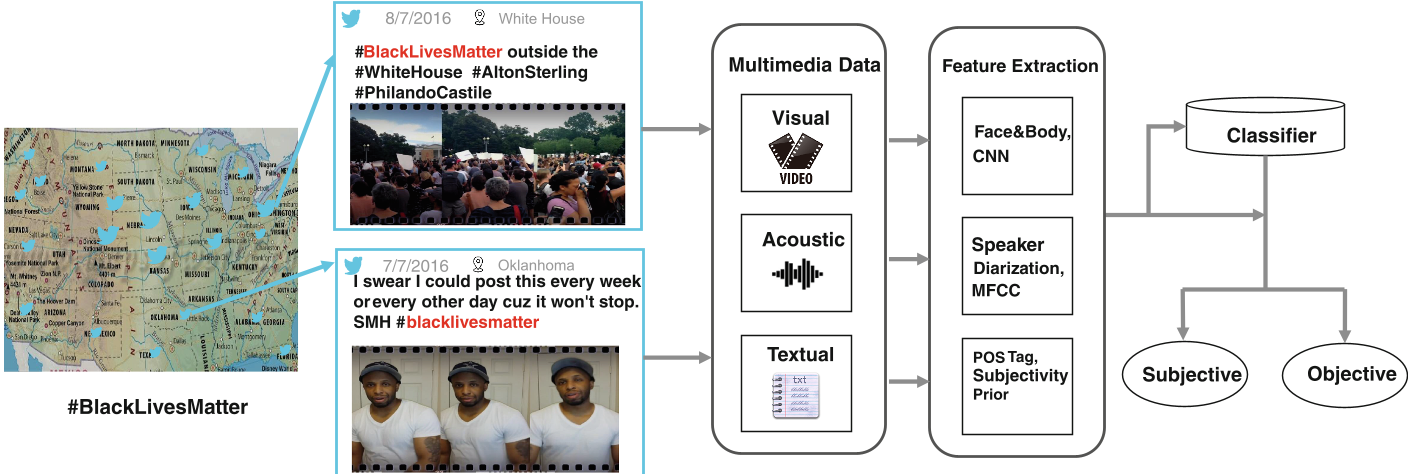 Figure 1: The proposed hybrid social sensor sentiment analysis framework.
Experiments & Critical Results
Focused on the #BlackLivesMatter topic, the study analyzed 434 unique multimedia posts.
Performance Breakdown
| Modality Combination | Video Subjectivity Accuracy | Text Subjectivity Accuracy |
|---|---|---|
| Text Only (T) | 71.7% | 76.5% |
| Visual + Acoustic (V+A) | 90.3% | 61.3% |
| Text + Acoustic (T+A) | 84.3% | 77.0% |
| All (T+V+A) | 88.7% | 74.9% |
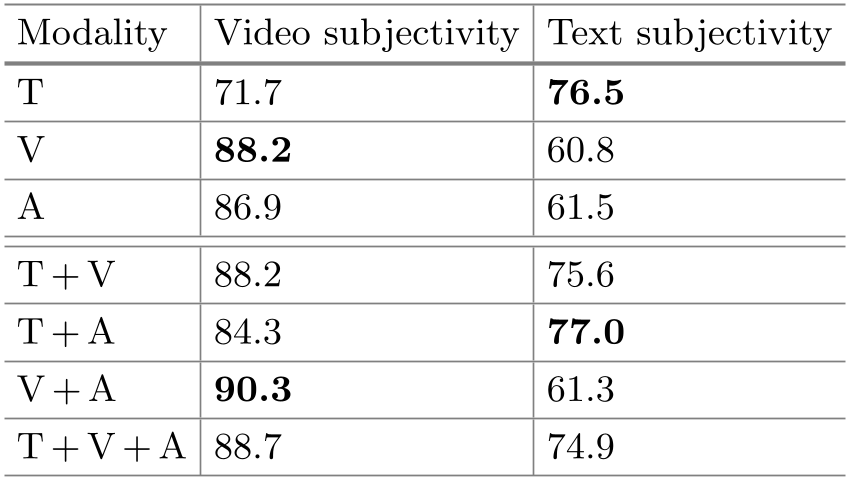
Key Insights from results:
- The Acoustic Bridge: Adding audio features improved accuracy in every single category. This suggests that the way people speak or the background noise of an event is a potent indicator of whether a report is factual or emotional.
- The Fusion Paradox: Fusing all three modalities (T+V+A) actually decreased performance compared to (V+A). This confirms that text and video in social media are often "uncoupled"—one might be fact while the other is an opinion.
Critical Analysis & Future Outlook
Takeaway
The "Social Sensor" approach is vital for journalism and disaster response. Understanding that a sensor's readings (text vs. video) can disagree is the first step toward more robust AI situational awareness.
Limitations
The study relies on an SVM with RBF kernels, which is effective for small datasets but lacks the complex temporal modeling found in modern LSTMs or Transformers. Furthermore, the dataset (434 posts) is relatively small, which might lead to overfitting on specific event characteristics.
Future Work
The researchers aim to integrate geospatial data and social network metadata (likes/retweets). We expect that future iterations of this work will leverage Self-Supervised Learning to handle the "Noisy Label" problem inherent in social media data more effectively.