
Beyond Word Lists: Leveraging Fuzzy Ontologies for Social Media Sentiment Analysis
The Sentiment Analysis of Unstructured Social Network Data Using the Extended Ontology SentiWordNet
The paper introduces an original Model and Algorithm for Sentiment Analysis of social network texts using an extended fuzzy linguistic ontology based on SentiWordNet 3.0. By integrating subject-area subgraphs and syntagmatic unit evaluation, the method achieves a 76.9% accuracy on Russian VKontakte data, comparable to state-of-the-art machine learning classifiers.
TL;DR
Researchers have developed a hybrid sentiment analysis framework that combines the semantic depth of Fuzzy Ontologies with the lexical power of SentiWordNet. By moving from simple word-matching to "syntagmatic units" (groups of words) and accounting for domain-specific contexts, this method achieves over 76% accuracy on messy, unstructured social media data, rivaling complex deep learning models like LSTMs.
Contextual Intelligence: The Social Media Challenge
Social media text is a linguistic "Wild West." Users deploy slang, ignore grammar, use emojis for sentiment, and change their tone based on the subject matter. Traditional sentiment analysis often treats words as isolated tokens, failing to realize that "sick" might be negative in a medical context but positive in a music review.
The authors identify a critical gap: Prior works either rely on massive labeled datasets (Machine Learning) which are hard to aggregate for niche domains, or static dictionaries that miss the nuance of "syntagmatic structures"—the semantic and grammatical bonds between words.
Methodology: The Power of Fuzzy Ontologies
The core innovation lies in the Ontological Algorithm, which treats sentiment not as a static value, but as a dynamic property dependent on the subject area ().
1. Syntagmatic Unit Analysis
Instead of analyzing "not good" as two separate words, the algorithm identifies it as a single unit. It applies an a priori modification coefficient (). For example:
- Amplification: "Very" increases the intensity.
- Negation: "Not" flips the polarity.
- Reduction: "Less" weakens the sentiment.
2. Domain-Specific Mapping
The model uses subgraphs within a fuzzy ontology. A term might have a high positive score in the "Film Premieres" domain but a neutral score in "IT Industry."
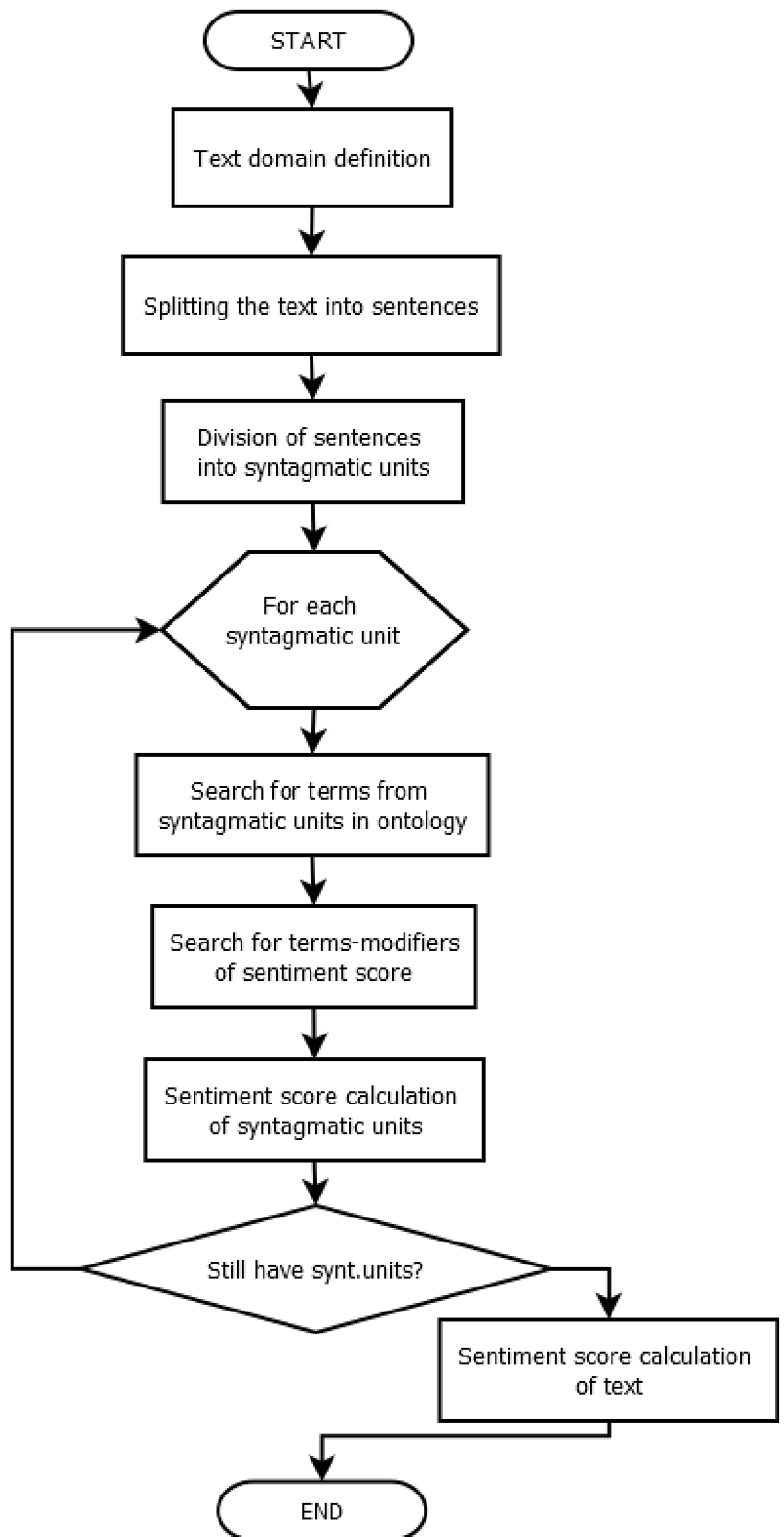 Figure 1: The general workflow, from data import to sentiment retrieval using domain-specific ontology subgraphs.
Experiments: Head-to-Head with Machine Learning
The team tested their algorithm against standard ML benchmarks (Naive Bayes, SVM, LSTM) using a dataset from VKontakte, the leading Russian social network. To create a "silver standard" for training without manual labor, they used emojis as markers (e.g., ":)" for positive, ":(" for negative).
Performance Comparison
The results reveal a surprising parity between the "hand-crafted" ontological approach and high-capacity neural networks:
| Algorithm | Accuracy (%) |
|---|---|
| Naive Bayes (Unigrams) | 78.33% |
| Ontology Algorithm | 76.90% |
| LSTM Network | 76.19% |
| SVM (Bigrams) | 75.25% |
| Linear Regression | 65.24% |
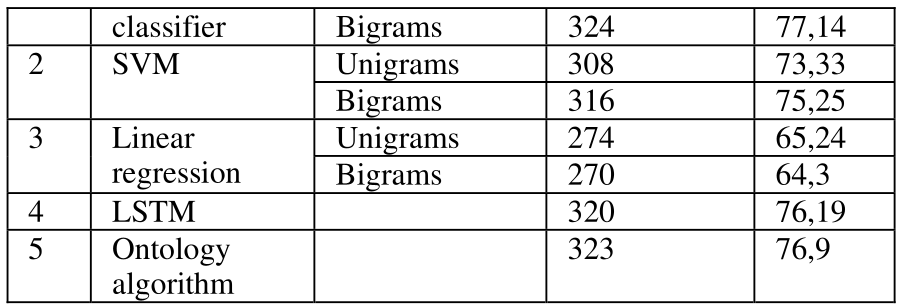 Figure 2: Comparative performance across different algorithms. The Ontological method holds its ground against LSTMs.
Critical Insight: Why Does It Work?
The effectiveness of the Ontological method (76.9%) stems from its ability to handle semantic relationships like synonymy and hyponymy. While an LSTM might struggle with a rare slang word it hasn't seen in training, the Ontology can map that slang word to its formal synonym, thereby "inheriting" the correct sentiment score.
Limitations & Future Work
Despite its success, the method currently requires manual or semi-automated extension of the ontology to keep up with evolving net-speak. The authors plan to automate the "core expansion" of the ontology using morphological analysis, potentially allowing the system to learn new slang in real-time.
Deep Takeaway
This paper serves as a reminder that Knowledge Graphs and Ontologies are not obsolete in the age of Deep Learning. When data is messy and context is king, a well-structured linguistic model can perform as well as a neural network while providing far better transparency into why a specific post was flagged as positive or negative.