
Enhancing Weibo Sentiment Analysis: Beyond Standard CNNs with Extended Vocabulary
Sentiment Analysis of Weibo Comment Texts Based on Extended Vocabulary and Convolutional Neural Network
The paper presents an enhanced Sentiment Analysis framework for Weibo (Chinese microblog) comments using an "Extended Vocabulary" and a Convolutional Neural Network (CNN). By integrating Wiki-Chinese data with platform-specific "cyberwords" and implementing a length-adaptive k-max pooling mechanism, the model achieves a SOTA accuracy of 97.06% on sentiment classification tasks.
TL;DR
This paper introduces a robust sentiment analysis framework specifically designed for the chaotic and evolving world of Weibo comments. By combining Wiki-Chinese data to expand word embeddings and replacing standard max pooling with length-adaptive k-max pooling, the authors achieved a remarkable accuracy of 97.06%, effectively solving the issue of "cyberword" recognition and feature loss in variable-length sentences.
1. The Context: Why Social Media is a Hard Nut to Crack
Sentiment analysis on platforms like Weibo is notoriously difficult. Traditional methods rely on fixed emotional dictionaries, but internet slang (cyberwords) evolves faster than dictionaries can be updated. Moreover, standard neural networks often treat all sentences with the same "pooling" intensity, which leads to:
- Information Loss: Max-pooling might pick one strong word but ignore the broader context of a long sentence.
- Padding Noise: Short sentences filled with blank vectors (padding) can dilute the actual feature signals.
2. Methodology: Triple Optimization
The authors propose a CNN-based architecture with three distinct improvements over the classic Kim CNN (2014) model.
A. Vocabulary Expansion and Custom Segmentation
Instead of training word embeddings solely on the sparse Weibo dataset, the authors integrated Wiki-Chinese corpora. This provides more context and reduces the "Unknown Word" (OOV) problem. Crucially, they customized the segmentation tool to recognize internet-specific terms, preventing cyberwords from being broken down into meaningless individual characters.
B. The CNN Architecture
The model follows a standard flow—Input Layer, Convolutional Layer, Pooling, and Fully Connected—but with a specialized pooling twist.
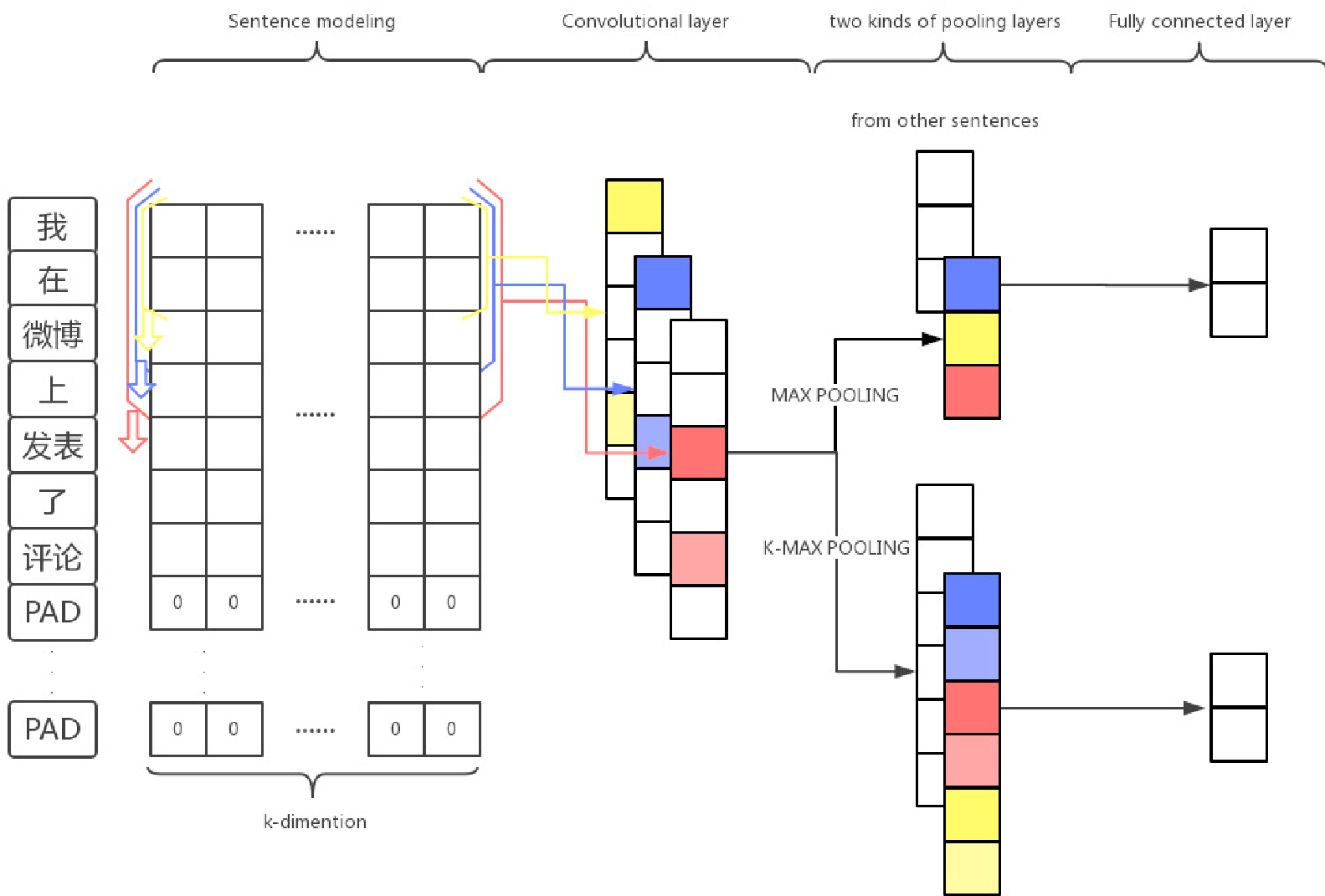 Figure 1: The proposed CNN architecture featuring improved pooling.
C. Length-Adaptive K-Max Pooling
The core mathematical innovation is the pooling strategy. Rather than taking just the single maximum value (), the model calculates a dynamic based on the sentence length : This ensures that longer, information-dense sentences contribute more features to the final classification layer than shorter ones, maintaining a better "signal-to-sentence" ratio.
3. Experimental Proof
The authors conducted rigorous ablation studies to verify each component's value.
Visualization of Word Embeddings
By using Word2vec and PCA dimensionality reduction, the authors demonstrated that their extended vocabulary successfully clustered semantically similar words, providing a solid foundation for the CNN.
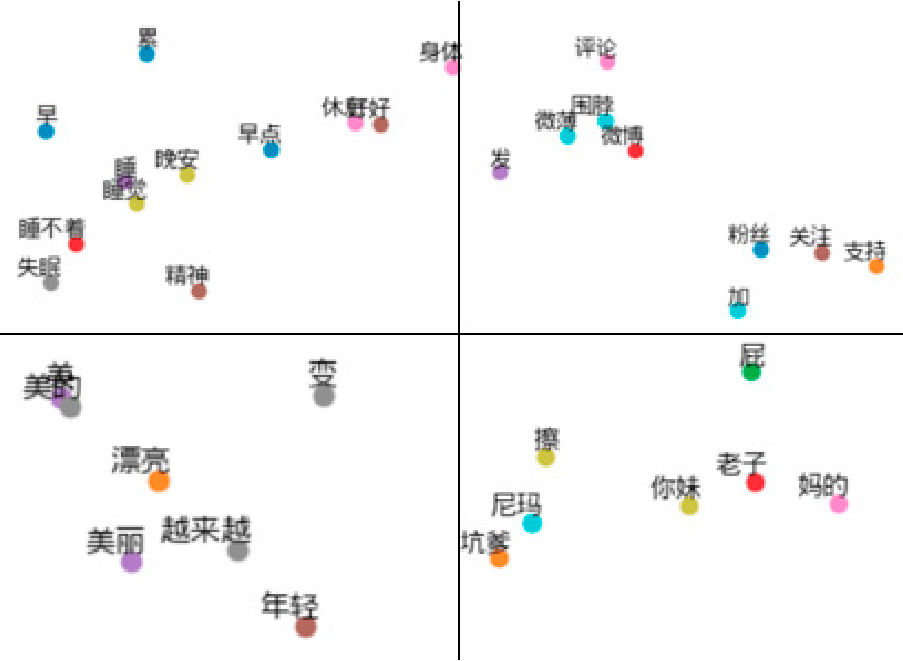 Figure 2: Aggregation of semantically similar words in the vector space.
Performance Gains
The results confirm that every "piece" of the strategy added value:
- K-Max Pooling vs. Max Pooling: Accuracy rose from 96.90% to 97.06%.
- Vocabulary Expansion: Increased accuracy on test data from 95.37% to 96.90%.
- Custom Segmentation: Boosted accuracy from 95.83% to 96.90%.
4. Critical Insight & Conclusion
While modern researchers often jump straight to Large Language Models (LLMs) like BERT or GPT for sentiment tasks, this paper proves that targeted architectural refinements (like adaptive pooling) and domain-aware data preprocessing (custom cyberword lexicons) can make mid-sized models like CNNs incredibly efficient and accurate for specific platforms.
Future Outlook: The next logical step for this research would be addressing data skew (imbalanced classes) and exploring how this length-aware pooling translates to newer architectures like Attention-based models.