
GOAALLL!: Why Negative Vibes Might Be the Secret Sauce of Sports Excitement
GOAALLL!: Using sentiment in the world cup to explore theories of emotion
This study utilizes sentiment analysis on a massive corpus of 680 million tweets from the 2014 FIFA World Cup to explore how natural sporting events act as laboratories for human emotion. Using a lexicon-based supervised learning method, the researchers correlate fan sentiment with game events to test the "Uncertainty of Outcome Hypothesis" (UOH) in sports economics.
TL;DR
Researchers analyzed millions of 2014 World Cup tweets to see what actually makes a soccer match "exciting." They discovered a surprising twist: contrary to long-standing economic theories, "close" games aren't always the biggest draw. Instead, games that turn into unexpected blowouts generate the most buzz—and that buzz is fueled primarily by negative emotions.
Background: Sports as a Natural Lab
For decades, social scientists have used sports as a "natural laboratory." Because sports have fixed rules, repeated structures, and high stakes, they provide a perfect window into human psychology. From the "hot hand fallacy" in basketball to the "prospect theory" of Olympic medalists, athletics help us understand how we process wins and losses.
The 2014 World Cup, with its 672 million tweets, provided the largest dataset ever for studying these emotions "in the wild."
The Problem: The Flaw in the "Uncertainty of Outcome"
In sports economics, the Uncertainty of Outcome Hypothesis (UOH) is king. It suggests that fans want suspense; if you know who’s going to win before the game starts, you won't watch.
However, the authors of this paper noticed a gap: UOH assumes excitement is tied to suspense (a cognitive state), but it doesn't measure the actual feelings expressed by fans. Furthermore, dynamic measures of TV viewership have shown that sometimes fans actually switch away from close games and flock to high-scoring blowouts.
Methodology: Reading the Digital Room
To bridge this gap, the team used a sentiment analysis pipeline to process tweets from 60 World Cup matches.
- Sentiment Classification: Using a supervised method (SentiWordNet and other lexica), they tagged tweets as Positive, Neutral, or Negative.
- Quantifying "Excitement": They used Tweets Per Minute (TPM) as a proxy for audience attention and excitement.
- Measuring the Unexpected: They compared Vegas betting odds (expected outcome) with the final score (actual outcome) to calculate "unexpected certainty."
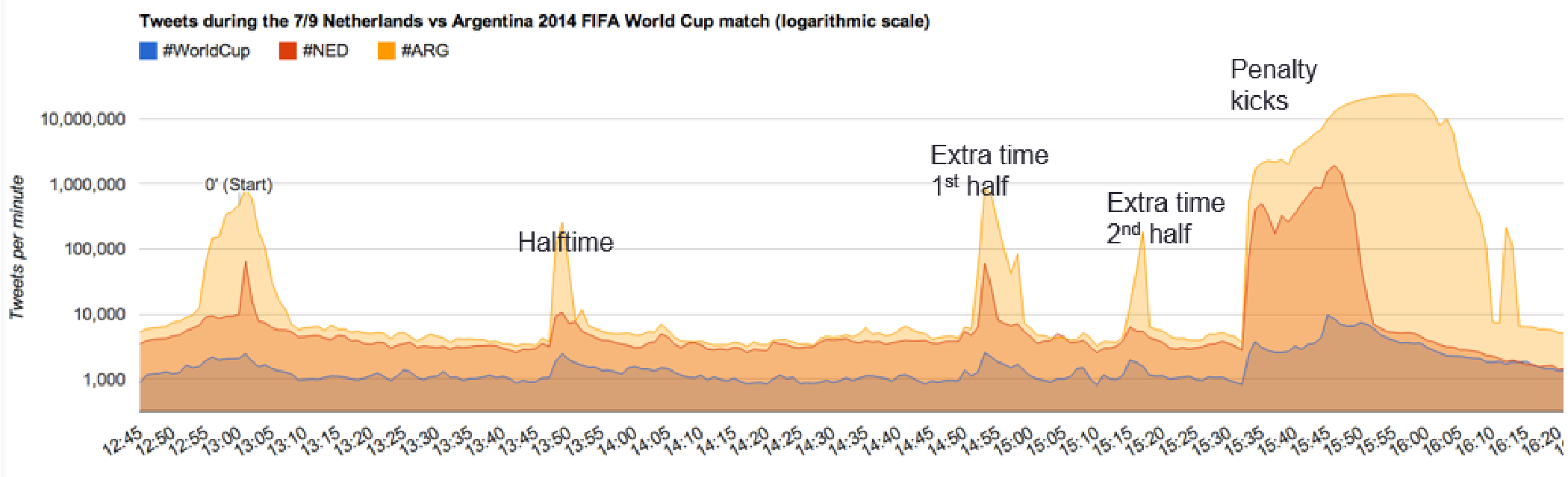 Figure 1: Spikes in tweet volume directly correspond to game-changing events like goals, providing a real-time "excitement" map.
The Counter-Intuitive Result
The results flipped traditional UOH on its head.
- Blowouts Win Attention: Games that were predicted to be close but ended in massive score differences (low uncertainty) actually had higher tweet volumes.
- The Power of Negativity: Most surprisingly, higher excitement (TPM) was correlated with negative sentiment. Negative tweets (complaints about missed shots, anger at referees, or mocking the losing team) were the primary drivers of engagement.
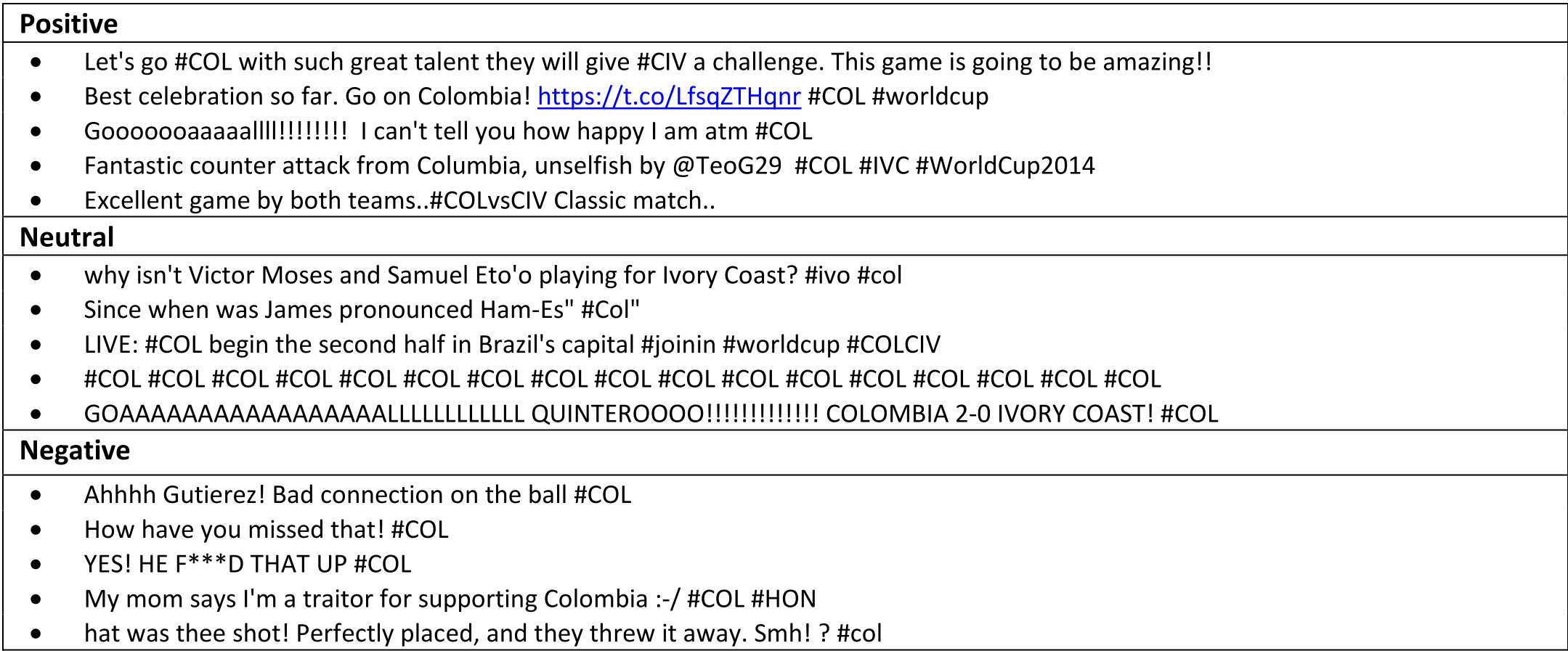 Table 1: Examples of how the classifier sorted fan reactions into emotional buckets.
Critical Insight: Why Does This Happen?
Why would a blowout filled with negative tweets be more "exciting" than a close game?
The authors suggest that when a game becomes a disaster (like Germany’s 7-1 thrashing of Brazil), it creates a social "event." People aren't just watching for the score; they are watching to participate in the collective shock, the memes, and the shared venting of frustration. In the digital age, sporting "excitement" is as much about social venting as it is about competitive suspense.
Conclusion & Limitations
This preliminary study proves that sentiment analysis can successfully challenge decades-old economic theories. However, the researchers admit to some "language lag"—their current model only processed English tweets and sometimes struggled with soccer-specific slang (e.g., misclassifying "Gooooaaaalll!" as neutral rather than positive).
Future Outlook: As we move toward more immersive sports viewing, platforms shouldn't just focus on the scoreboard. They should focus on the conversation. If negative emotion is a key driver of engagement, features that allow fans to "commiserate" or "riot" digitally might actually be what keeps them glued to the screen during a 5-0 drubbing.