
Sequential Intelligence: Why API Order is the Key to Unlocking Malware Behavior
To Incorporate Sequential Dynamic Features in Malware Detection Engines
The paper introduces a novel feature extraction framework for malware detection that combines dynamic analysis with N-gram sequence modeling of API calls. By capturing the sequential order of system interactions in a controlled Sandbox environment, the authors significantly improve the detection of metamorphic and obfuscated malware compared to traditional frequency-based methods.
TL;DR
Static analysis is dying at the hands of metamorphic malware. This paper demonstrates that it's not just what a program does (which APIs it calls), but how it does it (the sequence of calls) that reveals its true intent. By using dynamic analysis and an N-gram window of , the researchers achieved a 98.5% detection accuracy, significantly outperforming traditional frequency-based models.
Background: The Limits of Static Sight
In the cat-and-mouse game of cybersecurity, malware authors have mastered evasion. Polymorphic and metamorphic threats use encryption engines and code obfuscation to change their digital fingerprint for every infection.
The authors argue that static analysis—looking at code without running it—is fundamentally flawed because:
- Opaque Code: Encrypted payloads are unreadable until execution.
- Branch Ambiguity: Static analyzers struggle to predict which path a conditional jump will take, leading to "confused" behavior models.
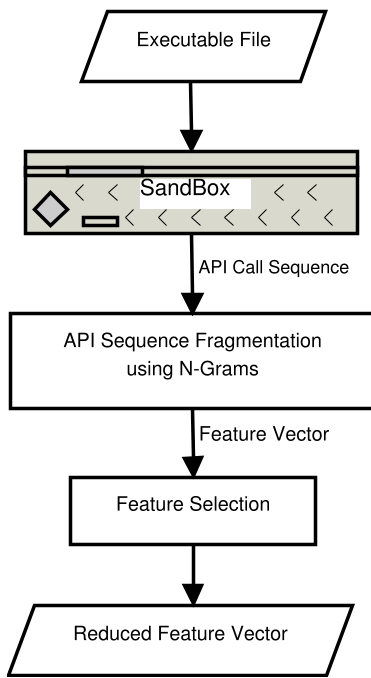 Figure 1: The overall workflow from Sandbox execution to N-gram feature construction.
Methodology: Capturing the "Behavioral DNA"
The proposed solution moves the battlefield to Dynamic Analysis. By running the suspicious file in a Sandbox, the system observes the actual requests made to the Operating System.
The N-gram Innovation
The core insight is that an API call like ZwQueryInformationProcess takes on different meanings depending on what precedes and follows it. To capture this without losing the ability to use standard machine learning, the authors used N-grams on sequences.
Instead of just listing APIs, they create a sliding window of length .
- N=1: Traditional approach (just presence/absence).
- N=4: Captures the "phrase" or "logic" of the malware (e.g., Open File -> Read -> Encrypt -> Write).
This transforms a variable-length execution trace into a fixed-width feature vector suitable for high-performance classifiers.
Experimental Showdown
The researchers tested several heavyweights in the machine learning world: Naïve Bayes, SMO (SVM), Random Forest, and Logistic Regression.
Finding the "Sweet Spot" ()
The most striking result from the study is the "hump" in performance. As the window size increases, accuracy improves because the model gains more context. However, once exceeds 4, performance begins to drop.
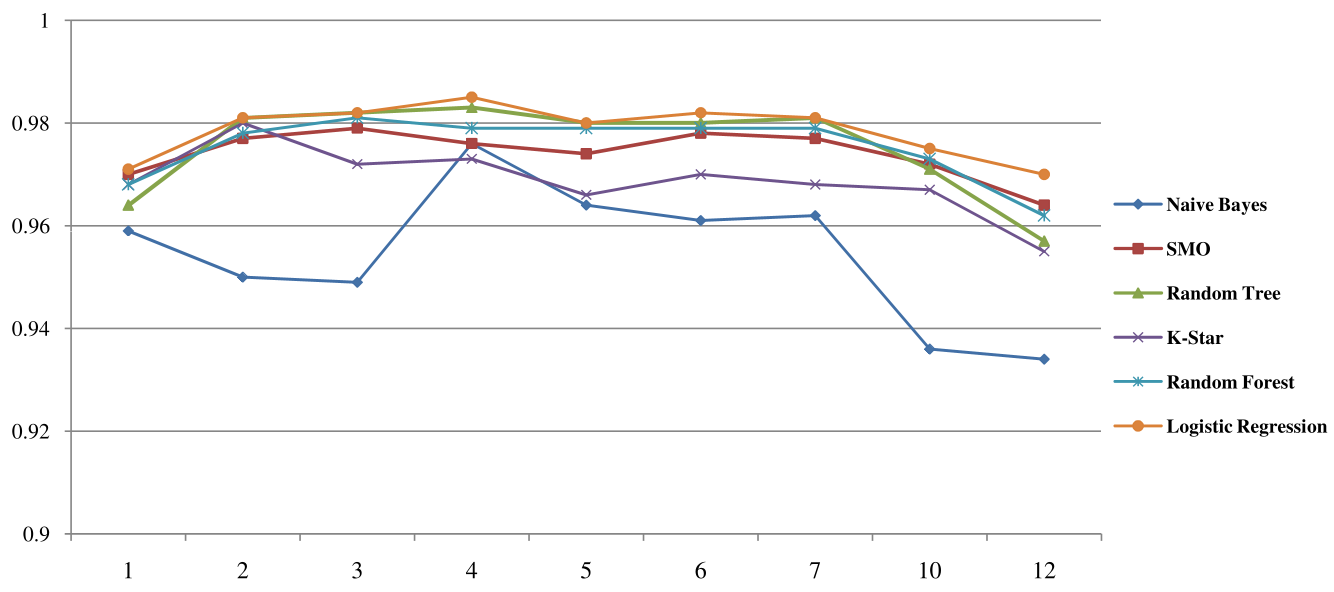 Figure 2: Performance peaks at N=4. Too little context (N=1) or too much noise (N>4) degrades result.
| Classifier | Traditional () | Proposed () |
|---|---|---|
| Naïve Bayes | 0.959 | 0.976 |
| Random Tree | 0.964 | 0.983 |
| Logistic Regression | 0.971 | 0.985 |
Logistic Regression emerged as the most robust architecture, maintaining high accuracy across various window lengths.
Critical Insight: Why Does Performance Drop After ?
One might assume more context is always better. However, in technical terms, as increases, the feature space becomes increasingly sparse. Specific sequences of 5 or 6 APIs might be unique to a single piece of code rather than a general "malicious behavior pattern." This leads to overfitting, where the model learns specific samples rather than generalizable traits.
Conclusion
This work highlights a critical shift in malware analysis: moving from "what files are here" to "what is the intent of this sequence." By optimizing the N-gram length, the authors provide a blueprint for more resilient antivirus engines that can look past the "mask" of obfuscation to see the malicious logic underneath.
Future Outlook: The next frontier involves Adaptive Window Lengths, where the system automatically adjusts based on the complexity of the API group being analyzed—a necessary step as malware becomes increasingly sophisticated.