
Serious Games for Autism: Moving Beyond Social Skills to Sensory Integration
A Review of Serious Games for Children with Autism Spectrum Disorders (ASD)
This paper provides a comprehensive review of 40 serious games (2004–2014) designed for children with Autism Spectrum Disorder (ASD). It classifies these interventions across technology platforms, computer graphics, and user interaction, highlighting the shift toward mobile and touchscreen-based therapeutic tools.
TL;DR
This research reviews a decade of serious games designed for children with Autism Spectrum Disorder (ASD). While technology has successfully improved communication and social interaction, there remains a massive gap in addressing Sensory Processing Disorders (SPD) and repetitive behaviors. The study advocates for a shift toward mobile touchscreen devices and multi-sensory game design to create more holistic therapeutic outcomes.
Background: The Rise of Digital Therapeutics
ASD is a neurodevelopmental disorder characterized by challenges in socialization and communication. Interestingly, children with ASD often exhibit a natural affinity for technology, finding digital environments more predictable and less overwhelming than the physical world. This research maps the "state of play" for serious games, identifying what works and—more importantly—what is missing.
Motivation: The Missing Piece of the Puzzle
Current research heavily favors Communication and Social Skills (54%), largely ignoring the biological reality of many ASD patients: Sensory Processing Disorder (SPD). Whether it is hypersensitivity to sound or hyposensitivity to touch, these sensory issues can be as debilitating as social anxiety. The authors argue that if games don't address sensory integration, they are only solving half of the problem.
Analysis of the Methodology
The paper categorizes 40 studies based on four pillars:
- Technology Platform: Transitions from bulky desktops to intuitive tablets.
- Computer Graphics: The balance between 2D clarity and 3D immersion.
- Gaming Aspects: Use of "leveling up," puzzles, and collaborative play.
- User Interaction: Moving from "Ordinary I/O" (mouse/keyboard) to "Natural I/O" (touch, camera, and EEG).
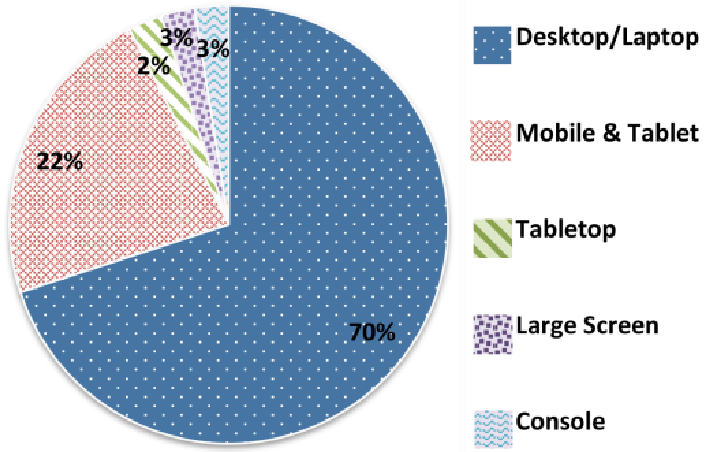 Fig 1: Distribution of serious games by learning objectives, showing a heavy bias toward social and communication skills.
The Intuition of Touch
A critical insight from the review is that touchscreens are vastly superior to mouse-based interactions for ASD children. Touch offers "direct manipulation"—there is no cognitive gap between the hand's movement and the screen's response. This reduced learning curve allows the child to focus on the therapeutic content rather than the mechanics of the controller.
Key Findings and Experimental Results
The review highlights a significant mismatch between clinical needs and available technology:
- The Overlooked 2.5%: Out of 40 games, only one addressed sensory integration, and it was restricted to visual motor coordination.
- Repetitive Behavior Trap: Many games inadvertently encourage repetitive behaviors. For example, some children would intentionally select wrong answers just to hear a specific "error sound" they found stimulating.
- The Mobile Advantage: Mobile apps like PixTalk and Balance Ball are highlighted for their ability to be used in naturalistic settings (home/school) rather than just clinical labs.
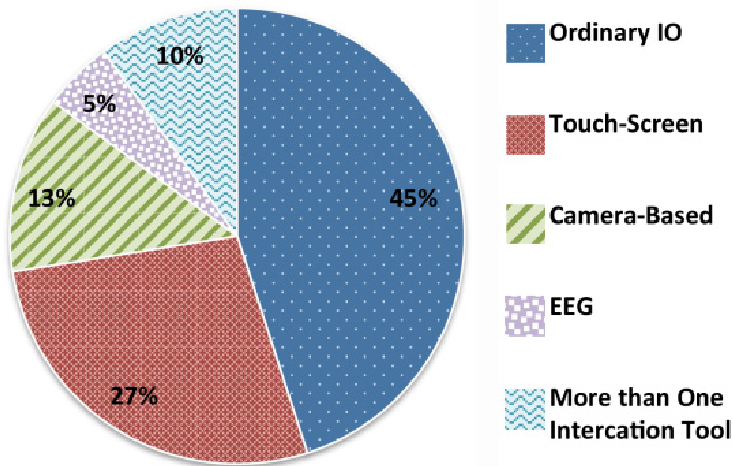 Fig 2: Modes of User Interaction, with Desktop/Laptop still dominating the landscape despite the effectiveness of touch.
Critical Insight: The Need for Customization
One of the most profound takeaways is the demand for Customization Mechanisms. Since ASD is a "spectrum," no two children have the same sensory profile.
- The Fix: Serious games must allow teachers and parents to toggle auditory feedback, visual clutter, and difficulty levels to prevent "looping" or sensory overload.
- Data as Therapy: The authors suggest that games should incorporate data visualization tools so that therapists can objectively track improvement over time rather than relying on subjective observation.
Conclusion and Future Outlook
The next generation of ASD serious games must evolve. We are moving away from simple "matching" games toward immersive, multi-sensory experiences that utilize Haptics (touch) and even Digital Scent Technology to simulate the real world's sensory complexity. By integrating customization and progress tracking, serious games can become a primary tool in helping ASD children gain independence in adulthood.
Takeaway for Developers
If you are building for the ASD community: Think Touch-First, Multi-Sensory, and Always User-Customizable.