
Crowdsourcing Enterprise Readiness: Solving the "Last Mile" of IT Service Deployment
Assessing service deployment readiness using enterprise crowdsourcing
This paper introduces an enterprise crowdsourcing framework integrated with the BizRay service to automate the assessment of IT service deployment readiness. By engaging 250 distributed experts across 1,300 customer environments, the method quantifies deployment complexities for Identity Access Management (IAM) services, achieving a 52% task completion rate within the first day of deployment.
TL;DR
Deploying a new service (like Identity Access Management) across 1,300 diverse corporate customers is a logistical nightmare. IBM researchers solved this by leveraging Enterprise Crowdsourcing, turning system administrators into a "human sensor network." By using the BizRay platform to gather non-discoverable infrastructure data, they reduced the time to assess deployment readiness from weeks to hours, providing a quantitative rubric for technical complexity.
The "Knowledge Gap" in Global Delivery
In the modern global delivery model, system administrators (SAs) manage thousands of processes across heterogeneous environments. When a new service is rolled out, deployment teams usually face a "black box":
- Heterogeneity: One customer uses VPN; another uses Citrix; a third has rigid German-language requirements.
- Information Decay: Documentation is often outdated or incomplete.
- Fragmentation: The actual "truth" about a server’s configuration often lives only in the head of an admin in a different time zone.
Existing SOTA methods for automated discovery often fail to capture governance and operational workflows—the "human" part of the stack that determines if a deployment will succeed or crash.
Methodology: Turning Experts into Data Points
The authors leverage a framework called BizRay, extending it to handle the specific complexities of IT deployment.
1. The Complexity Model
Instead of a "pass/fail" check, the system calculates a Deployment Complexity Score. As shown in the hierarchy below, complexities are categorized into Application, Network Topology, and Business Operations.
2. Intelligent Questionnaires
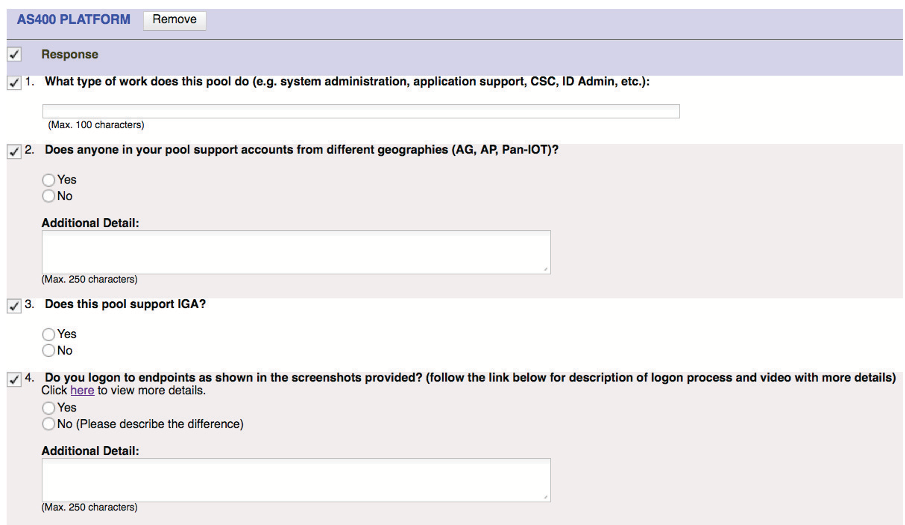
The core innovation is the use of "Hide-able" Sections. Early attempts were met with "survey fatigue" (250 questions!). The revised method uses conditional logic: if an admin doesn't manage an AS400 system, those questions remain hidden. This keeps the UX clean while allowing for deep-dive technical data collection when necessary.
3. Architecture of the System
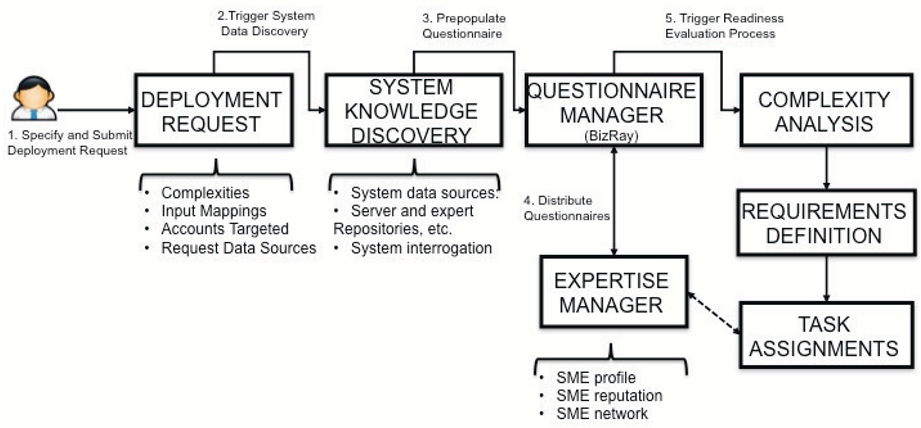
The system architecture integrates a Request Manager, a Questionnaire Manager, and an Expertise Manager. The latter is crucial: it builds a profile of which experts know about which accounts, creating a "live map" of human expertise within the enterprise.
Experimental Results: From 13 Days to 24 Hours
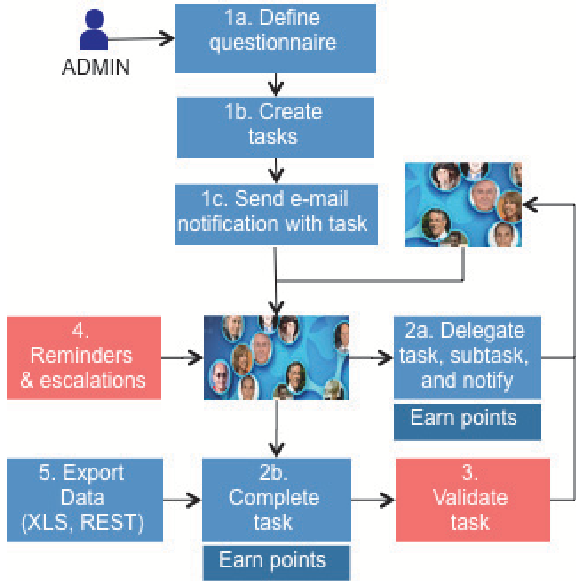
The researchers conducted two major campaigns. The first was a traditional survey, which saw its first response only after 13 days.
The second campaign utilized the crowdsourcing process (delegation, sub-tasking, and targeted questionnaires). The results were transformative:
- Speed: Across EMEA, India, and the Americas, 52% of tasks were completed within the first day.
- Discovery: Identified 62 non-standard accounts that would have otherwise broken the IAM deployment.
- Scale: Effectively managed 1,300 tasks with nearly 500 unique subject matter experts (SMEs).
Critical Insight & Conclusion
This paper proves that the "bottleneck" in IT deployment isn't always technical capability—it's information logistics. By treating the global workforce as a queryable database, the authors moved from reactive troubleshooting to proactive readiness assessment.
Key Takeaway: For high-stakes enterprise deployments, quantitative readiness isn't just about pinging a server; it's about crowdsourcing the operational context that only humans possess.
Limitations: The study notes that even mandated tasks face "participation friction." Future work suggests a decision-theoretic model to route tasks based on a trade-off between the cost of an expert's time vs. the cost of a failed deployment.