
The Language Grid: Orchestrating Collective Intelligence for Intercultural Collaboration
Service-Oriented Collective Intelligence for Intercultural Collaboration
The paper introduces the Language Grid, a service-oriented collective intelligence infrastructure designed to enhance intercultural collaboration. It wraps diverse language resources—such as machine translators, morphological analyzers, and bilingual dictionaries—into standardized Web services, allowing users to create customized multi-language workflows (e.g., back-translation, cascaded translation).
TL;DR
In an increasingly globalized world, language remains a stubborn barrier to mutual understanding. This paper presents the Language Grid, an innovative service-oriented infrastructure that allows users to wrap, share, and combine fragmented language resources (dictionaries, MT engines) into customized workflows. It shifts the focus from "finding a perfect translator" to "building a collaborative ecosystem" that supports real-world community needs.
Problem & Motivation: The Failure of "Off-the-Shelf" Translation
While we have access to numerous translation portals, they frequently fail in specialized contexts. The author highlights several critical pain points:
- Vocabulary Gaps: General-purpose translators often miss school-specific or technical terms (e.g., misunderstanding "cleanup duty" in a Japanese school context).
- The "Squid/Octopus" Problem: In cascaded translations (e.g., Japanese -> English -> German), inconsistencies between different engines often lead to semantic drift where back-translation reveals a total loss of original meaning.
- Integration Friction: Combining a specialized dictionary from a university with a translation engine from a corporation typically requires complex legal contracts and incompatible APIs.
Methodology: A Service-Oriented Collective Intelligence
The core insight of the Language Grid is to treat language resources as Web Services. Instead of building one giant system, the grid acts as a layer of "Collective Intelligence" that coordinates four types of stakeholders:
- Language Resource Providers: Universities or labs offering dictionaries and analyzers.
- Computation Resource Providers: Entities providing the servers to run these instances.
- Language Service Users: End-users (schools, hospitals) who build local applications.
- Language Grid Operators: Coordinators who manage intellectual property and usage monitoring.
The Architecture of Collaboration
The system leverages Atomic Services (standalone tools like a morphological analyzer) and Composite Services (workflows created via BPEL). For example, a "Back-translation Service" is a workflow that combines two different translation services and a dictionary service to ensure quality control.
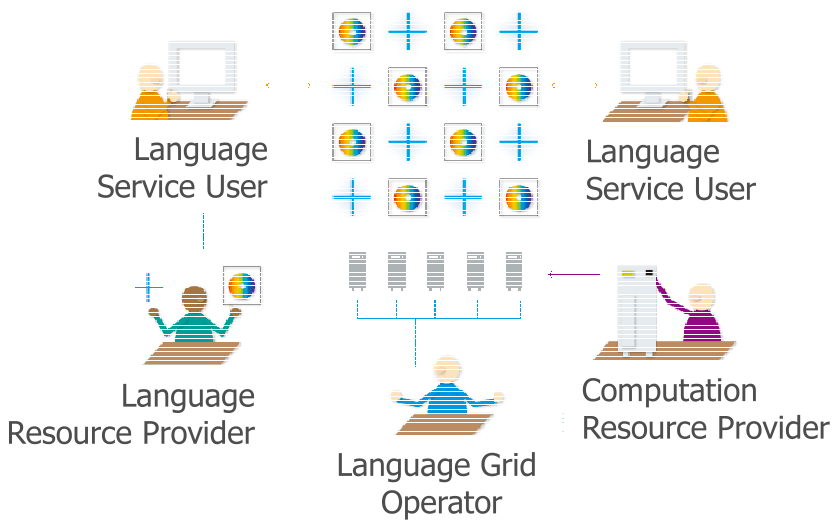 Figure 1: The ecosystem of stakeholders involved in the Language Grid.
By standardizing these resources as WSDL/SOAP services, the grid eliminates the need for users to understand the underlying code of every specific tool, focusing instead on the composition of services.
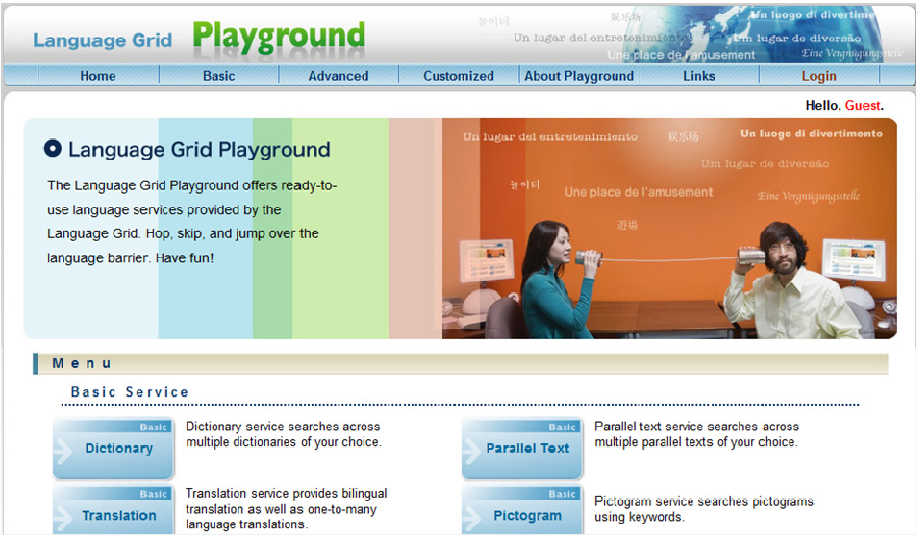 Figure 2: The Playground environment where users can experiment with combining various language components.
Experiments & Real-World Results
The Language Grid ceased being a theoretical model and became a living laboratory. Key achievements include:
- Resource Diversity: Integration of translators covering major Asian and European languages, alongside specialized dependency parsers and domain-specific dictionaries (e.g., for disaster management).
- Community Empowerment: The "NICT Language Grid Project" successfully signed 70 groups, including NPOs and universities, to support collaboration in schools and hospitals.
- Scalability: By using a P2P-inspired architecture and a non-profit operation model, the grid managed intellectual property concerns while providing real-time monitoring of resource usage.
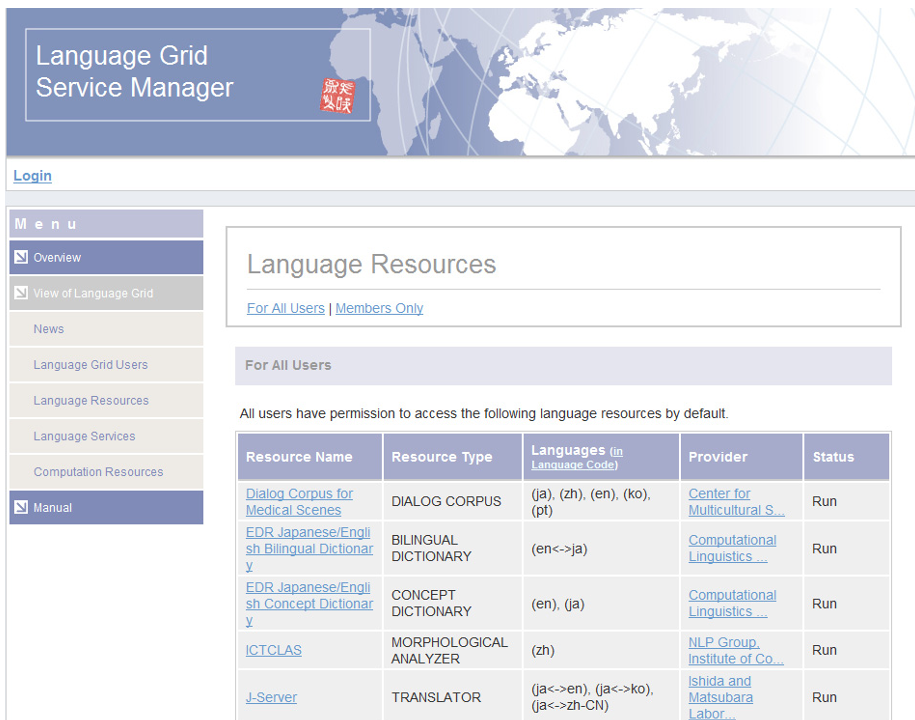 Figure 3: Monitoring tools allow operators to track service health and resource consumption.
Critical Insight & Conclusion
The Language Grid’s greatest contribution is its recognition that translation is a social activity, not just a technical one. Even a "perfect" translation may fail if the cultural concept (like Japanese "cleanup duty") does not exist in the target culture.
Takeaways for the Future:
- Context is King: High-quality translation requires community-driven customization.
- Orchestration over Invention: In the era of LLMs, the "Language Grid" philosophy suggests that we should focus on how to orchestrate various models and local knowledge bases rather than relying on a single monolithic black-box.
- Limitations: The reliance on legacy protocols like SOAP/WSDL may feel dated in the modern era of RESTful APIs and JSON, yet the underlying logic of service composition remains more relevant than ever in the age of Agent-based AI.
The Language Grid serves as a blueprint for how we might build a global "Language Commons" where professional resources and community expertise meet to solve the oldest barrier in human history.