
S-InTime: Redefining Live Social Analytics via In-Memory Microservices
Designing a Service Oriented System for social analytics
This paper presents S-InTime, a Service Oriented System designed for real-time social analytics using the SAP HANA Cloud Platform (HCP). By leveraging in-memory database technology and microservices, the system achieved sub-second latency in processing and visualizing heavy streams of social media data during a live cultural exhibition.
TL;DR
The S-InTime system addresses the lag in traditional social media monitoring by leveraging the SAP HANA Cloud Platform (HCP). By moving complex analytical logic directly into the in-memory database through specialized "Views," the authors achieved zero-latency "Live Analytics." This was validated at a Neapolitan art exhibition where visitors' tweets triggered instant updates on public digital dashboards.
The "Disk-Access" Bottleneck in Social Analytics
Traditional Service Oriented Architectures (SOA) often treat the database as a passive storage layer. When a social event triggers a spike in Twitter traffic, the application layer must fetch massive datasets, process them, and then push results to the UI. This creates a lethal I/O bottleneck.
The authors argue that for "Live Analytics," which requires comparing historical trends with incoming volatile emotional reactions (like short-lived hashtags), the architecture must evolve. The focus shifts from "Data-to-Code" (moving data to the processing logic) to "Code-to-Data" (executing logic where the data resides).
Methodology: The Power of In-Memory "Views"
The core of S-InTime is its reliance on SAP HANA’s in-memory computing. Instead of materializing data into static tables, the system uses dynamic, non-materialized views to perform on-the-fly aggregations.
The Three Pillars of HANA Modeling:
- Attribute Views: Used for modeling entities and basic relationships (e.g., linking a tweet to a specific geographic region).
- Analytical Views: These leverage the Massive Parallel Processing (MPP) power of HANA to create multidimensional Star Schemas for fast aggregation.
- Calculation Views: Reserved for complex business logic that standard SQL cannot handle, mapping data to OData service endpoints for microservice consumption.
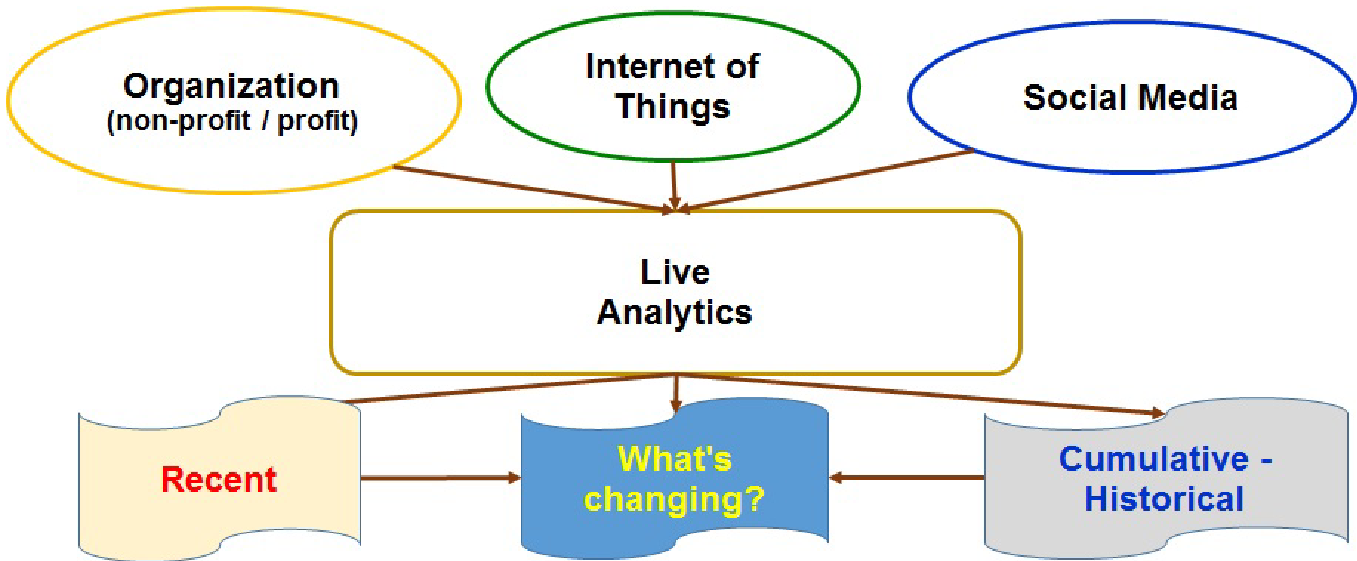 Figure 1: The S-InTime architecture showing the integration of IoT, Social Media, and Semantic resources through the SAP HANA Cloud Platform.
Experimental Validation: The Castel Nuovo Smart Tour
The authors deployed a prototype during the Castel Nuovo Smart Tour, an art exhibition in Naples. The system monitored tweets across the Entire Campania region, identifying "CH-sensitive" (Cultural Heritage) terms.
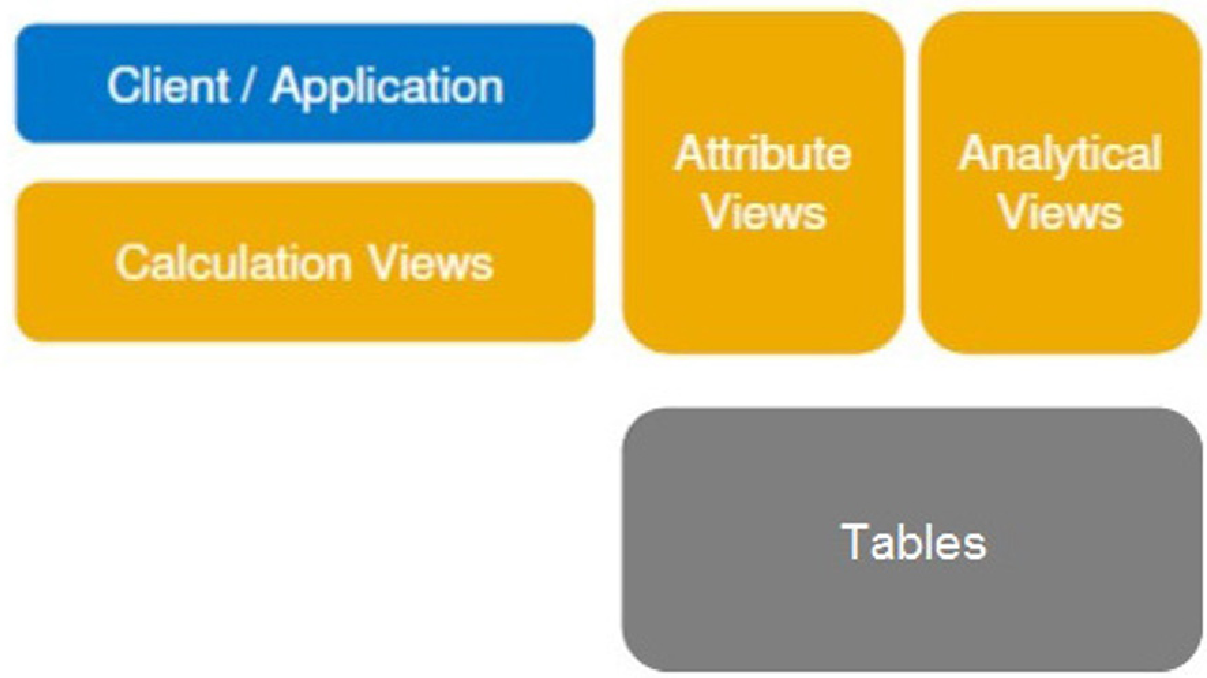 Figure 2: The analytical modeling process within SAP HANA, moving from physical tables to logical calculation views.
Key Findings:
- Data Volume: The system ingested over 1.1 million messages and 3,600 unique hashtags.
- User Engagement: By providing a "Social Stress Test," the researchers saw that users were highly motivated to interact when they observed their tweets appearing on the exhibition screen almost instantly.
- Microservices Mapping: The research successfully mapped different HANA database schemas to OData services, creating a reusable microservice template for future social analytics projects.
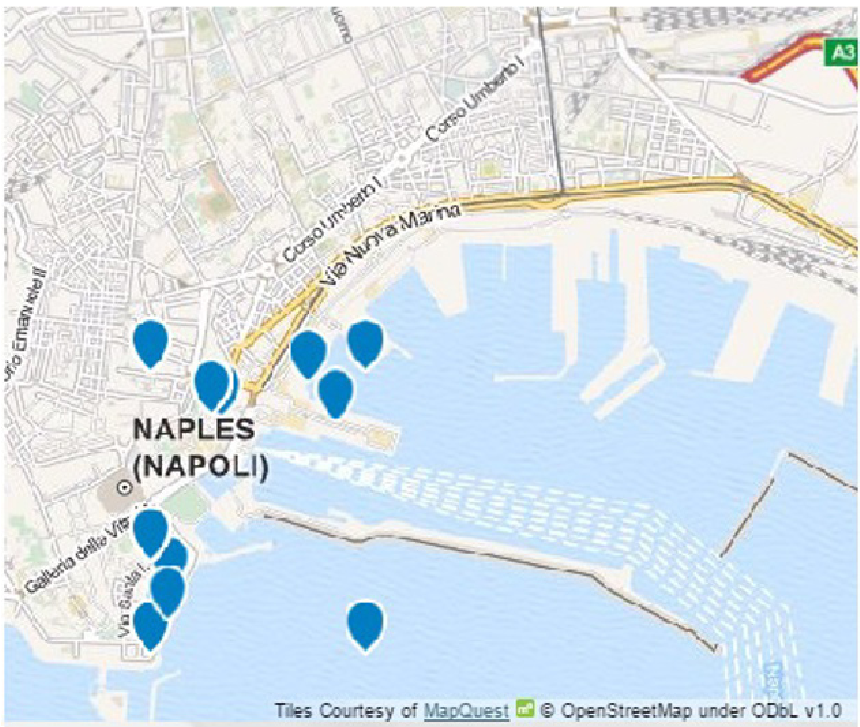 Figure 3: Real-time geo-referencing of cultural-heritage-related tweets in the surroundings of the exhibition site.
Conclusion & Future Outlook
S-InTime demonstrates that the future of Social Analytics isn't just about "Big Data," but about "Fast Data." By utilizing the SAP HANA Cloud Platform, the authors transitioned from traditional batch processing to a stream-based microservice architecture.
While the results are promising, many questions remain regarding the cost-efficiency of in-memory platforms at an even larger global scale and the integration of more advanced Sentiment Analysis (beyond keyword matching). Nevertheless, this work provides a robust blueprint for how cultural institutions and smart cities can turn social noise into actionable, real-time insights.