
Shaping Digital Identities: The Myth of the Privacy-Conscious User
Shaping Digital Identities in Social Networks: Data Elements and the Role of Privacy Concerns
This study investigates how users construct digital identities on Social Network Sites (SNS) and the impact of privacy concerns on information disclosure. Through a survey of 759 participants, it identifies key "identity-shaping" data elements and examines how different SNS platforms (e.g., Facebook vs. LinkedIn) dictate user behavior.
TL;DR
In the digital age, we don't just "have" an identity; we curate it. This paper explores the "identity-kit" users use to build their online selves. Surprisingly, despite high-profile data leaks and rising privacy awareness, the research confirms a blunt reality: our desire to be seen and "networked" far outweighs our fear of privacy violations.
The Conflict: Fluid Selves vs. Static Privacy
Modern anthropology suggests identity is no longer static; it is a "fluid" concept that changes depending on the audience. On LinkedIn, you are the consummate professional; on Instagram, a passionate traveler. However, this fluidity requires a constant stream of personal data disclosure.
The authors identify a core tension: The Privacy Paradox. Users claim to value privacy, yet they continue to feed the "identity machine" of SNS platforms to avoid "isolation anxiety."
Methodology: Mapping the Digital Self
The researchers surveyed 759 users to rank the elements that constitute a digital identity. They categorized privacy threats into:
- Social Threats: Fear of embarrassment or loss of control over what friends share.
- Organizational Threats: Fear of how SNS providers (like Meta) store or sell data.
The Identity Ranking
What makes "you" online? According to the study, users prioritize specific elements to "express who they are":
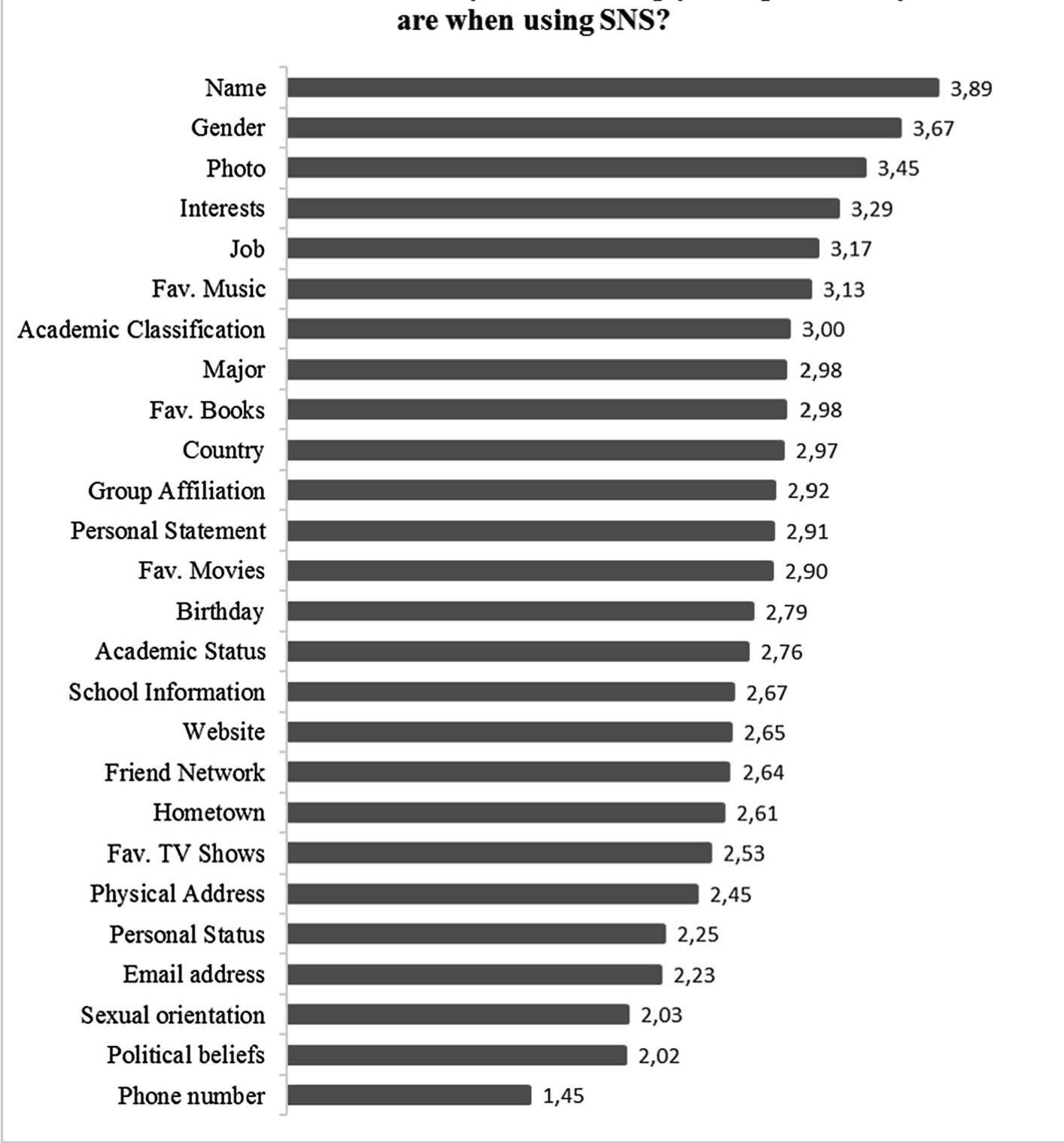 Figure: The hierarchy of data elements used in identity shaping, where Name, Gender, and Photos remain the pillars.
Key Insights: Why Privacy Doesn't Stop Disclosure
The study tested three major hypotheses, leading to some counter-intuitive findings:
1. The Privacy Paradox is Real
The researchers found no evidence that increased privacy concerns lead to reduced information disclosure (H1 rejected). Users who are worried about their data still post just as much as those who aren't. Why? Because the "cost" of not participating—digital invisibility—is perceived as higher than the "risk" of data misuse.
2. The Platform Differentiator
The type of SNS (Facebook vs. LinkedIn vs. Twitter) is the strongest predictor of behavior.
- LinkedIn: Users disclose highly accurate, honest, and voluminous data because the "reward" (a job) requires it. Trust is high, and privacy concerns are relatively low.
- Facebook: Users express the highest privacy concerns but continue to disclose vast amounts of personal life data.
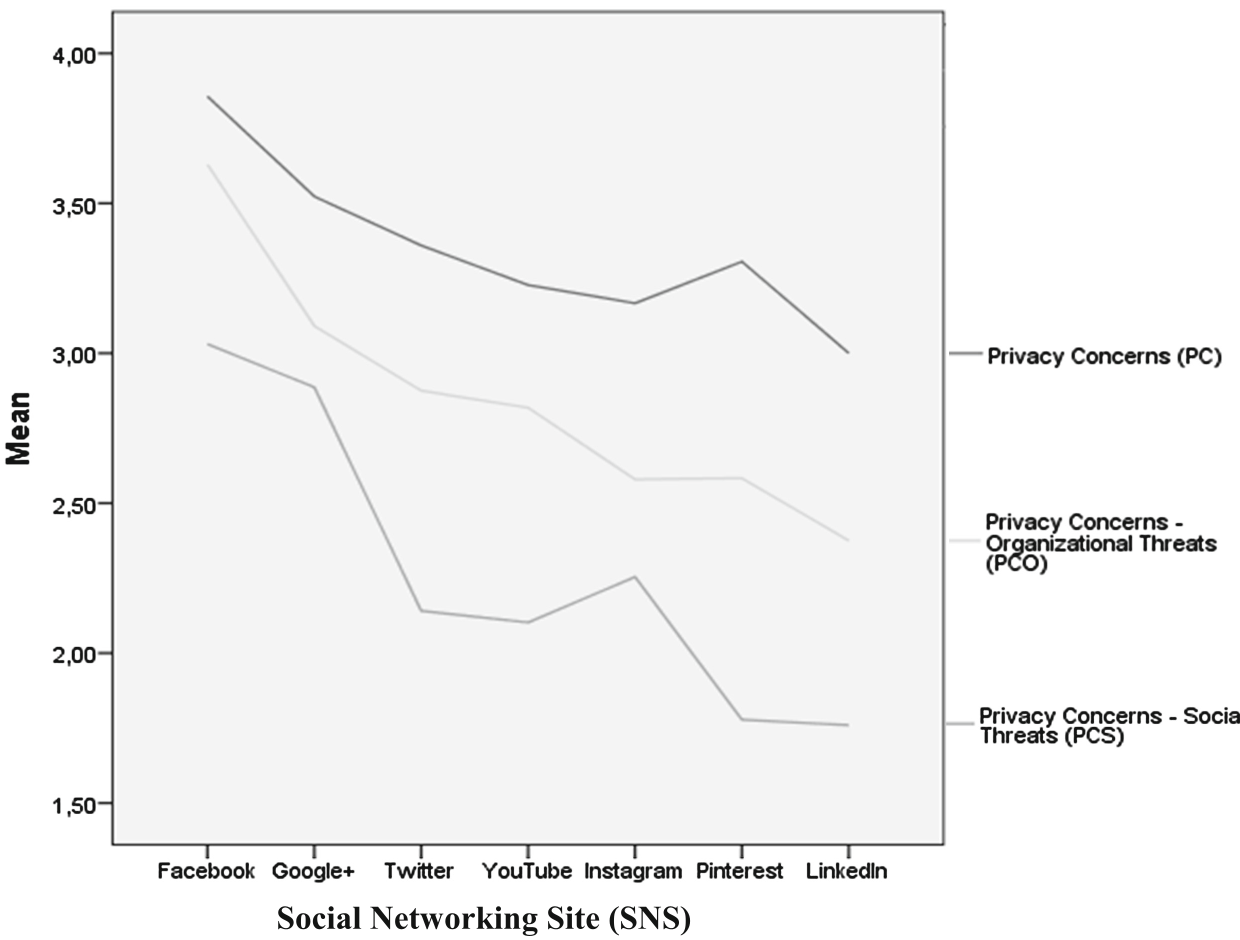 Figure: Comparison of privacy concern levels across various social networks, showing Facebook leading in user anxiety.
Experiments & Results
Through One-Way ANOVA, the study proved that the "Amount of Discovery" varies significantly by platform. Facebook and LinkedIn showed the highest disclosure rates, while platforms like Twitter or YouTube were used with more anonymity.
Interestingly, Social Threats (being embarrassed by friends) actually correlated more with disclosure patterns than Organizational Threats (the platform stealing your data). We care more about what our neighbors think than what the algorithm does.
Critical Analysis & Conclusion
Takeaway
The study proves that digital identity formation is a strategic act of Impression Management. Users are willing to "trade" their privacy for social capital or professional gain.
Limitations
The study is focused on the Greek population (2017 context) and relies on self-reported data. Modern platforms like TikTok, which rely heavily on algorithmic curation rather than manual profile building, might yield different results today.
Future Outlook
As we move toward a "Post-Privacy" era, SNS designers must realize that "Privacy Settings" are often just psychological safety nets. The real frontier of digital identity lies in contextual integrity—making sure that our "LinkedIn self" never accidentally meets our "Reddit self."