
Users are More Patient Than You Think: The Non-Linear Cost of Algorithmic Exploration
Short-Term Satisfaction and Long-Term Coverage: Understanding How Users Tolerate Algorithmic Exploration
This paper investigates the trade-off between short-term user satisfaction and long-term algorithmic exploration in recommender systems. By conducting a behavioral study with over 600 users, the authors analyze how different "mix-in" strategies of exploratory items affect user perception and feedback quality, achieving a nuanced understanding of user tolerance for non-relevant but informative recommendations.
TL;DR
How many "bad" recommendations will a user tolerate before they give up? This WSDM paper reveals a surprising threshold: in a list of five recommendations, you can "hide" up to three random exploratory items without significantly damaging user satisfaction. However, crossing that line triggers a sharp drop-off in both perceived quality and the quantity of feedback the system receives.
The "Exploration Tax": Why Recommenders Must Annoy Users
To provide better recommendations tomorrow, a system must "explore" today—showing you items it is unsure about. This is the classic Exploration-Exploitation trade-off. Exploitation makes users happy now by showing what they like; exploration helps the system learn for the future.
The problem is that exploration is essentially a "tax" on user experience. If a system explores too much, the user sees garbage and leaves. If it explores too little, it gets stuck in a "filter bubble." This paper asks: What is the exact price of this tax?
Methodology: The Mix-In Experiment
The researchers conducted a study with 610 participants using an interactive movie recommendation interface. They introduced Mix-in Exploration, where they blended items from a Base (personalized) strategy with a FullExplore (random) strategy.
Participants were assigned to one of six conditions, varying the number of random items from 0 (Base) to 5 (FullExplore).
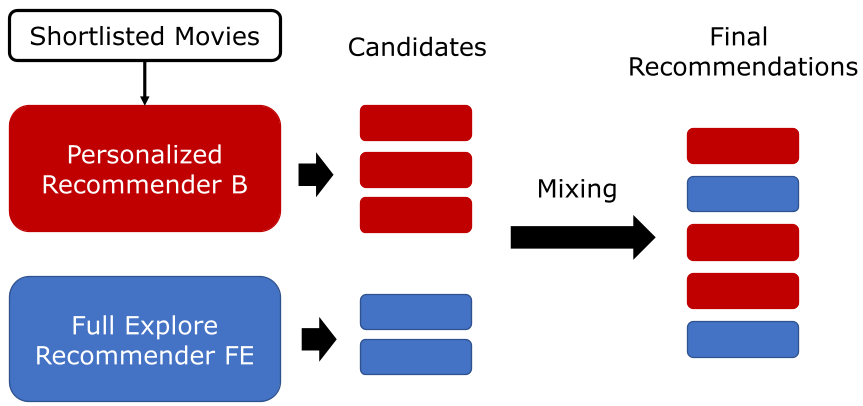 Figure: The Mix-in approach where random items are interweaved with personalized ones.
Key Insight: The 60% Tolerance Threshold
The most striking finding is that the cost of exploration is non-linear.
Looking at the experimental results, measures like "Accuracy," "Helpfulness," and "Transparency" do not decline steadily. Instead, they remain relatively stable for Mix-1, Mix-2, and Mix-3. It is only when the list contains 4 or 5 random items that the user scores plummet.
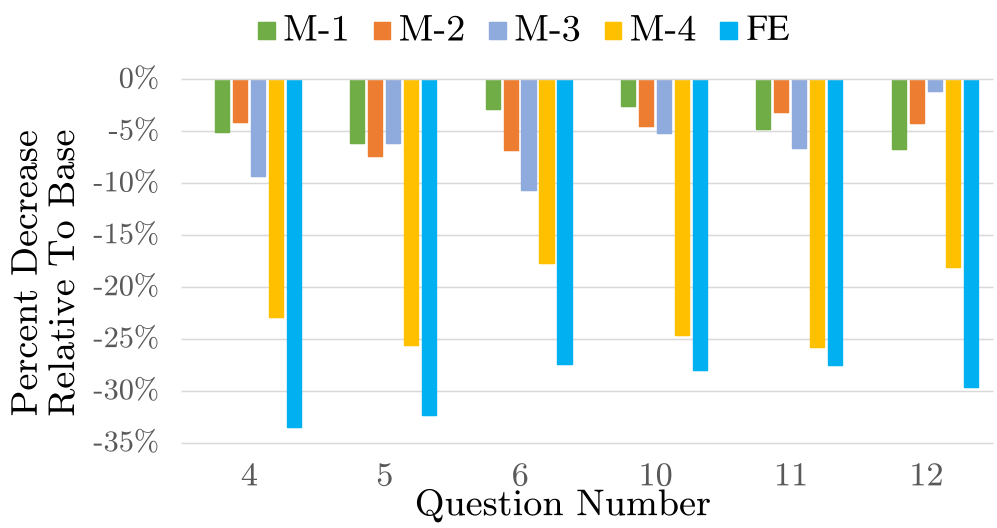 Figure: Likert scores showing the sharp transition in user perception once exploration exceeds 3 items.
Why does this happen?
Users appear to be "satisficers." As long as there are at least 2 relevant items in a list of 5, they feel the system is working. They simply ignore the "noise" of the other 3 items. This suggests that users have a high Inductive Bias toward expecting some irrelevance and have developed mental filters to skip over it.
Feedback Quality: Beyond the Click
Exploration is useless if the user doesn't provide feedback. The study analyzed three types of implicit signals:
- Examines (Clicks): Surprisingly rare (less than 10% of sessions).
- Shortlisting: Adding a movie to a "watch later" list. High quality, present in 38% of sessions.
- Hovers: Moving the mouse over a poster for >0.5s. The most abundant signal (62% of sessions).
The researchers found that while exploration reduces the total amount of feedback (users interact less when they are annoyed), the quality of the feedback remains high if you look at the right signals. Both Shortlisting and Hovering were excellent at identifying when a user preferred a personalized item over a random one.
Experimental Battleground
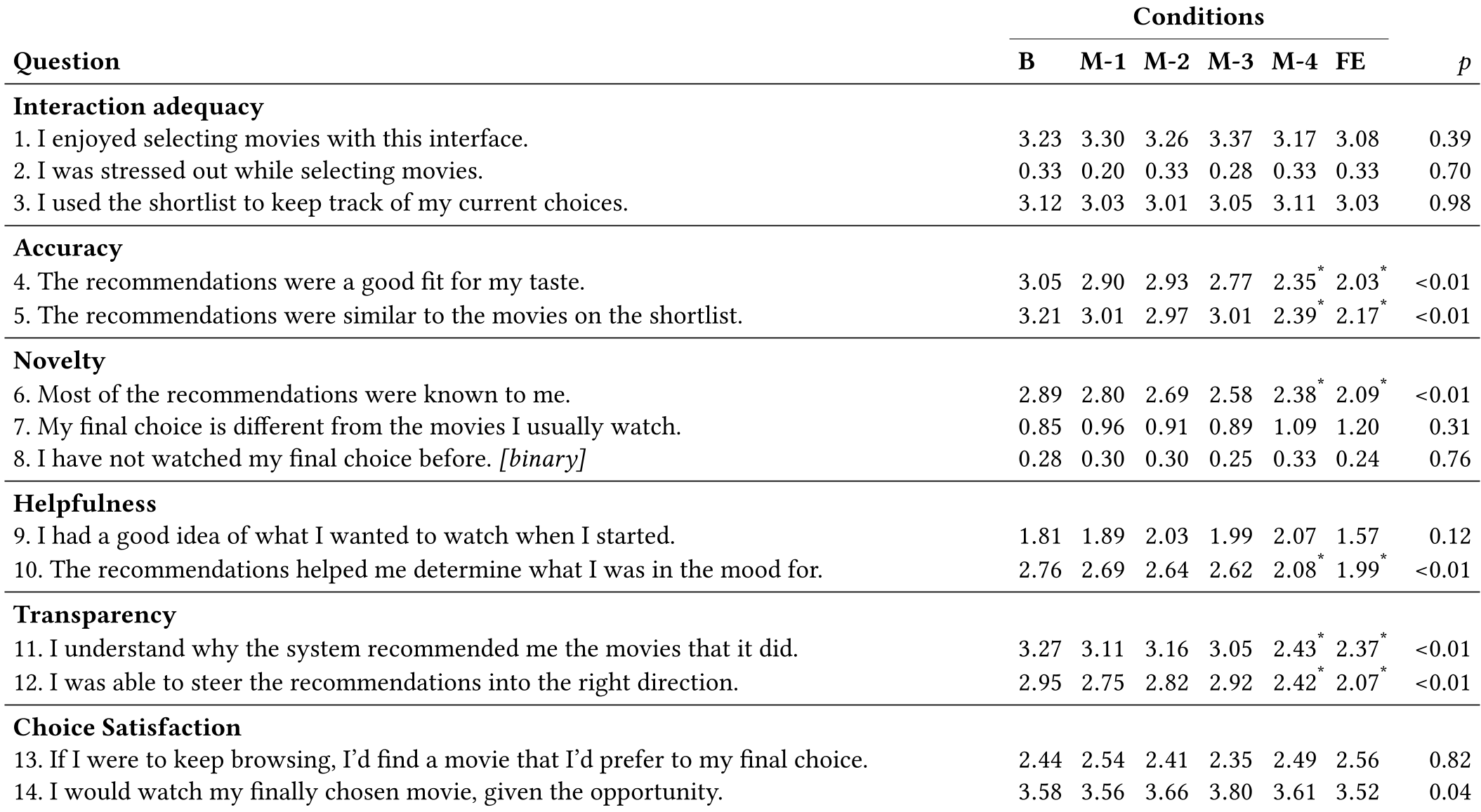
The table below summarizes the user survey across all conditions. Note how the "B" (Base) through "M-3" (Mix-3) columns often share similar scores, while "M-4" and "FE" (FullExplore) show significant degradation (marked with asteroids).
Critical Analysis & Takeaways
- The "Broad and Shallow" Strategy: For AI engineers, this paper provides a clear directive. Don't dedicate specific "Discovery" pages that are 100% exploration. Instead, sprinkle 1-2 exploratory items into every personalized feed. The "UX cost" is virtually zero, but the "data gain" for the model is massive.
- The Value of "Low-Stakes" Interaction: The success of "Hovering" as a signal suggests that we should design interfaces that encourage low-effort interactions. If you only track "Purchases" or "Clicks," you are losing 90% of the learning signal.
- Limitations: The study used random exploration. In the real world, "intelligent" exploration (e.g., Upper Confidence Bound) might be even better tolerated because the exploratory items wouldn't be completely random.
Conclusion
This work challenges the assumption that exploration is always painful for the user. By understanding the non-linear nature of human tolerance, we can build recommendation engines that learn aggressively without sacrificing the short-term joy of the user experience.