
Beyond Single Networks: Recommending in the Age of Social Internetworking
Recommendation of similar users, resources and social networks in a Social Internetworking Scenario
This paper introduces a recommendation framework for Social Internetworking Systems (SIS) that identifies similar users, resources, and social networks across multiple platforms. It utilizes a hypergraph-based model to integrate diverse user actions (membership, friendship, posting, evaluation) and a recursive similarity computation algorithm inspired by the Katz coefficient.
TL;DR
As users increasingly fragment their digital lives across platforms like Facebook, LinkedIn, and specialized forums, the "Social Internetworking System" (SIS) becomes the new frontier. This paper proposes a hypergraph-based recommendation engine that looks past explicit friends to find "behavioral twins" across multiple networks using a recursive similarity algorithm. It proves that by considering global paths and implicit actions (like resource evaluation), we can recommend not just friends, but entirely new social networks that fit a user's evolving interests.
Problem & Motivation: The Silo Limitation
Most recommendation algorithms suffer from "local vision." They suggest friends based on mutual connections (triadic closure). However, in a globalized internet, two users might have identical interests in technology and travel but zero common friends because they reside in different sub-networks.
The authors identify two fatal flaws in the SOTA:
- Implicit Bias: Systems ignore "quiet" signals like resource ratings or membership patterns.
- Semantic Chaos: Metadata like tags are plagued by synonymy (different words, same meaning) and homonymy (same word, different meanings).
Methodology: The Power of Hypergraphs and Recursive Similarity
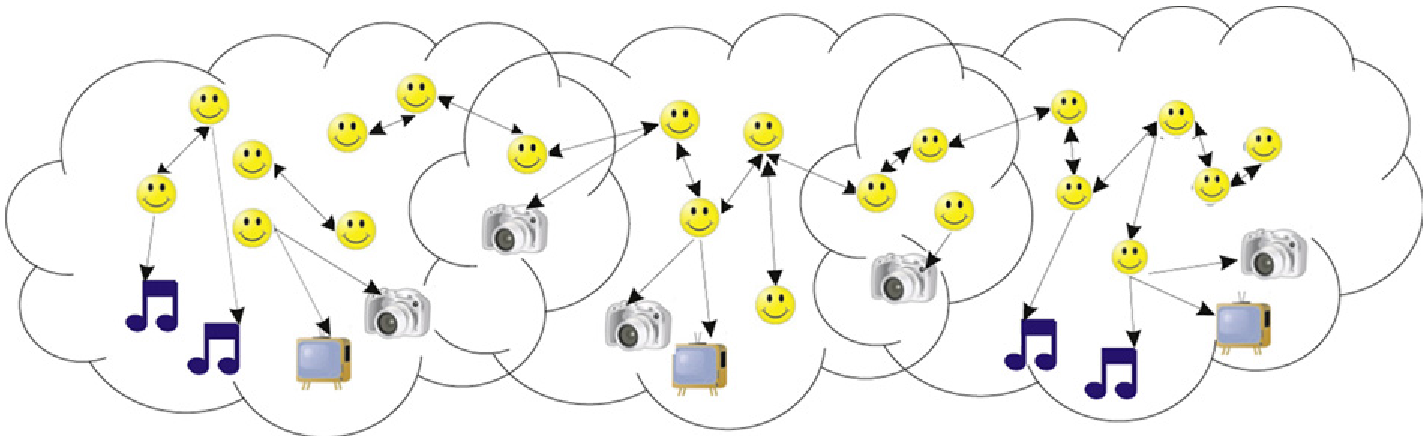
The core innovation lies in the SIS Hypergraph Model. Unlike a simple graph, a hypergraph allows an edge to connect more than two nodes, perfectly representing an action like "User A posted Resource B in Social Network C."
1. Modeling the Multiverse
The system tracks four primary action types:
- Membership: Which "clouds" (social networks) do you inhabit?
- Friendship: Who are your explicit allies?
- Posting/Evaluation: What content do you create and how do you judge others' work?
2. Recursive Global Similarity
Taking inspiration from the Katz Coefficient, the authors define similarity as a recursive property. Two users are similar if they are connected to other similar users. By solving this via the Neumann Series, the system calculates similarity through all possible paths of arbitrary length, not just immediate neighbors. This allows the system to bridge gaps between isolated clusters.
Experiments: Correctness vs. Novelty
The researchers tested this on a real-world SIS involving university students. They measured two conflicting but vital metrics:
- Correctness: Did the user actually like the recommendation?
- Novelty: Did the system suggest something the user didn't already know?
Key Result: Outperforming SimRank and Jaccard
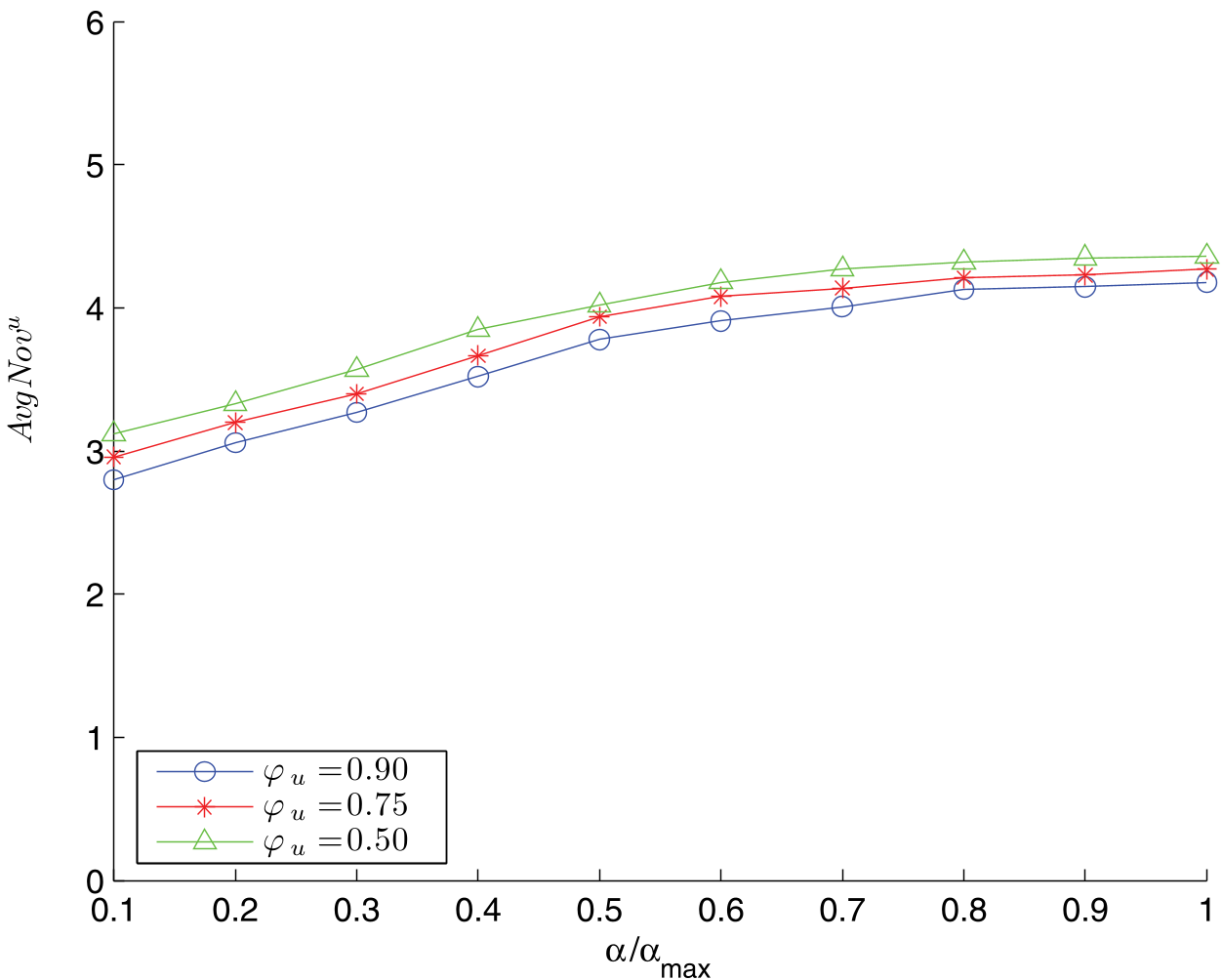
The proposed approach demonstrated a superior ability to find "novel" recommendations. While SimRank only considers even-length paths in a graph, the authors' recursive method considers both even and odd paths, capturing a much richer set of social nuances.
Improving Network Health
Crucially, the study showed that these recommendations increase the Structural Cohesion of the internetworking system. By connecting distant but similar users, the system "knits" the social fabric tighter, preventing the formation of isolated, fragile silos.
Critical Analysis & Conclusion
Takeaway
This work shifts the recommendation paradigm from "Who do you know?" to "How do you behave across the web?" By aggregating actions across social boundaries, we can create a much more accurate digital twin of user preferences.
Limitations
The primary challenge remains Computational Complexity. Calculating (I - αN)⁻¹ for millions of users in a real-world SIS like the modern web is daunting. While the authors suggest Neumann Series truncation, the scale of data in 2024 would likely require distributed graph processing or approximate nearest neighbor (ANN) embeddings.
Future Outlook
The authors hint at "Network Splitting/Merging." Imagine a future where social networks aren't static platforms but dynamic entities that merge when their user bases become identical, or split when interests diverge—a truly fluid Social Internetworking Scenario.