
Social Lab: Gamifying Teacher Competence to Defeat Social Engineering
12904_Use of a Simulated Social Network as an Educationa
This study presents "Social Lab," a simulated social network used as a gamified educational tool to improve Teacher Digital Competence (TDC). By implementing a social engineering wargame within a MOOC framework, the authors achieved an 84% recommendation rate and significant improvements in teachers' awareness of cyber-risks and social engineering defense.
TL;DR
To bridge the gap in teacher digital safety, researchers developed Social Lab, a simulated social network that uses automated bots to host "social engineering wargames." Instead of reading manuals, teachers learn by attempting to "hack" simulated users, resulting in high engagement (84% recommendation rate) and tangible improvements in identifying online risks.
Background: The Digital Competence Gap
Modern education faces a paradox: while students are "digital natives," they—and their teachers—often lack the critical competence to navigate technology safely. Specifically, the European Digital Competence Framework (DigComp) highlights security as a major weakness. Traditional training fails because cybersecurity is often seen as a barrier to social interaction. The authors' insight? To teach defense, you must first teach the art of the attack.
Methodology: The "Social Sandbox" and Wargaming
Social Lab isn't just a tutorial; it is an open-source, web-based platform that mirrors the functionality of Facebook or LinkedIn. The secret sauce lies in its Social Bots.
The Wargame Architecture
The platform hosts 10 challenges of increasing difficulty. Participants follow the standard phases of a social engineering attack:
- Formulation: Defining the target.
- Information Gathering: Scouring profiles for clues.
- Preparation/Relationship Development: Crafting the perfect friend request or message to gain trust.
By forcing teachers to manipulate bot interactions (e.g., changing their profile location to match a victim's to get a "friend" approval), the tool builds an intuitive understanding of how malicious actors operate.
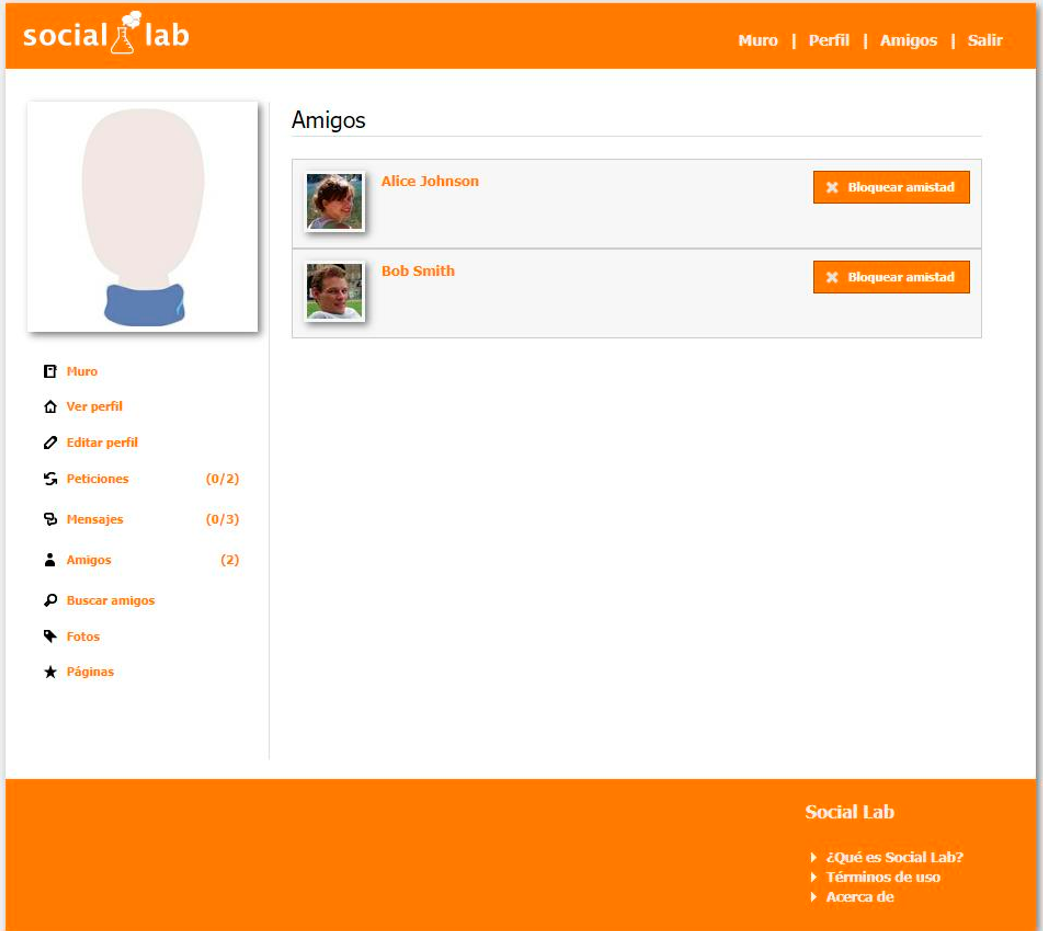 Figure 1: The Social Lab interface, mimicking a standard social network to ensure environmental fidelity.
Experimental Analysis: Does it Work?
The tool was integrated into a MOOC for 176 participants. The study focused on 70 teachers (avg. age 42.6) who completed an ad-hoc Likert-scale questionnaire.
Key Findings:
- Instructional Effectiveness: Teachers rated the improvement of their social engineering knowledge at 3.7/5.
- Gamification Success: Unlike dry security seminars, participants found the experience "Fun" (M=3.7), which is critical for MOOC retention.
- The "Difficulty Wall": Results showed a significant drop-off in perceived "affordability" after Level 6. Only 54 participants felt confident in the later, more complex social engineering tasks.
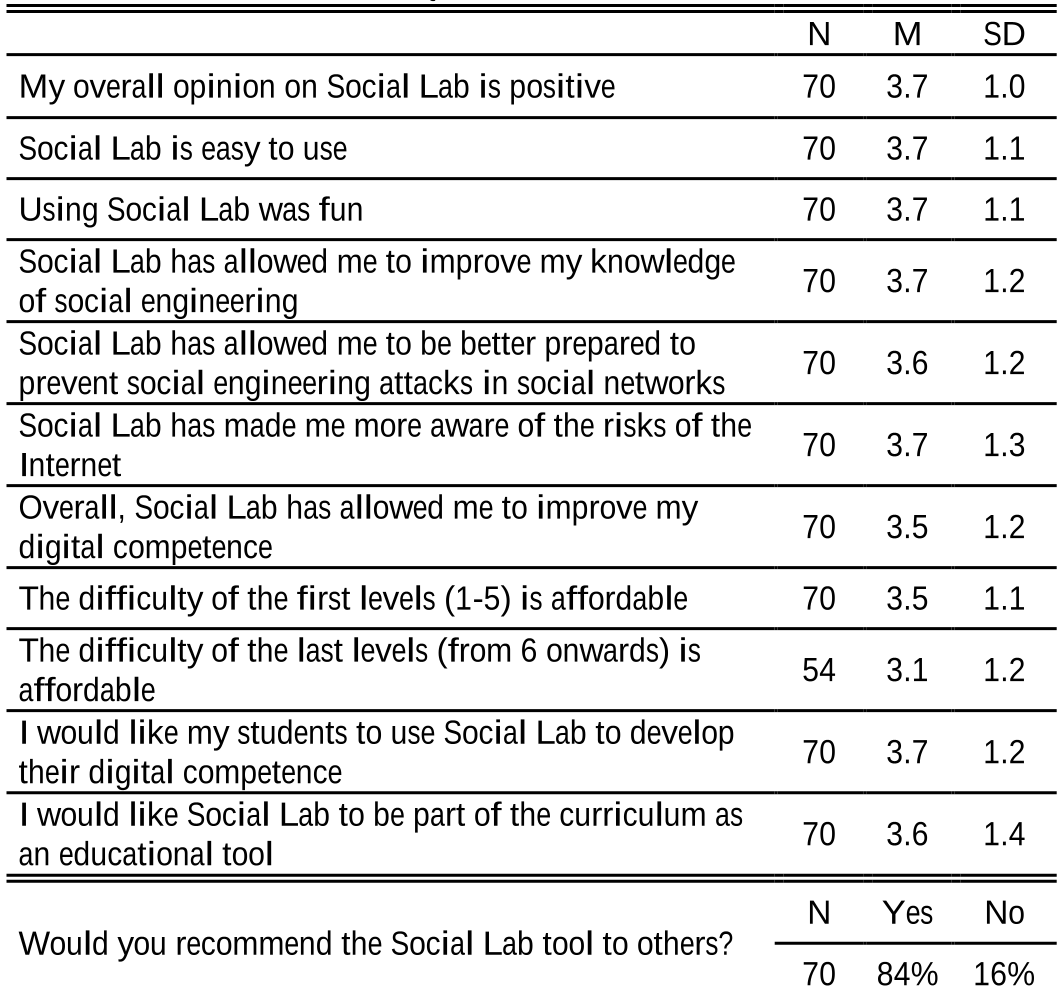 Table 2: Participant metrics highlighting the perceived usefulness vs. the difficulty of advanced levels.
Critical Insight: The Need for Adaptive Scaffolding
While the "learning-by-doing" model was successful, the study revealed that teachers with lower baseline digital competence struggled significantly with the "hacking" mindset. This suggests that future iterations of Social Lab need Automated Hint Systems—perhaps using quiz-based unlocks—to prevent frustration and drop-outs during advanced levels.
Conclusion & Future Outlook
Social Lab proves that simulation is the superior path for cybersecurity education. By turning teachers into "ethical hackers" for a day, the platform builds a specialized "Teacher Digital Competence" that is practical rather than just theoretical. The authors now aim to bring this tool directly into the primary and secondary education curriculum, allowing students to learn the dangers of "oversharing" in a safe, controlled environment.
Takeaway for Educators: Don't just tell them to be safe; show them how easy it is to be fooled.